Young Zoo Animals Learn Survival Skills From Adults — and So Can You
TL;DR: Young animals in zoos acquire essential survival skills — foraging, shelter-building, and hazard avoidance — by observing adult animals, a process called high-fidelity social learning that mirrors the most effective human emergency preparedness training methods available today.
The most efficient way to build life-saving skills is to watch a competent adult do them first, then practice under supervision. That conclusion, long known to wildlife researchers, was reinforced in a March 2025 study published in Communications Biology (Nature Publishing Group) titled "Observational social learning of 'know-how' and 'know-what' in wild orangutans". The researchers documented that juvenile Bornean orangutans at the Tuanan Research Station in Indonesia preferentially watched experienced adult females before attempting complex foraging tasks — exactly the mentorship dynamic that emergency preparedness trainers advocate for neighborhood disaster-response teams.
For preppers, the parallel is immediate: skill transfer happens fastest when novices observe demonstrated experts, not when they read manuals in isolation.
What High-Fidelity Social Learning Actually Means
The term sounds academic, but the mechanics are concrete. According to a January 2025 review published on PubMed Central (PMC11732129), "The development of social attention in orangutans," immature orangutans selectively fix their gaze on older, socially competent individuals when those models are performing unfamiliar tasks. The juveniles do not watch randomly — they filter for the most skilled demonstrator available.
Three specific behaviors transfer through this process:
- Foraging technique — which plants are edible, how to process them, what to avoid.
- Tool use — using sticks to extract insects, leaves as rain shields.
- Hazard recognition — which predator calls require immediate flight versus freezing.
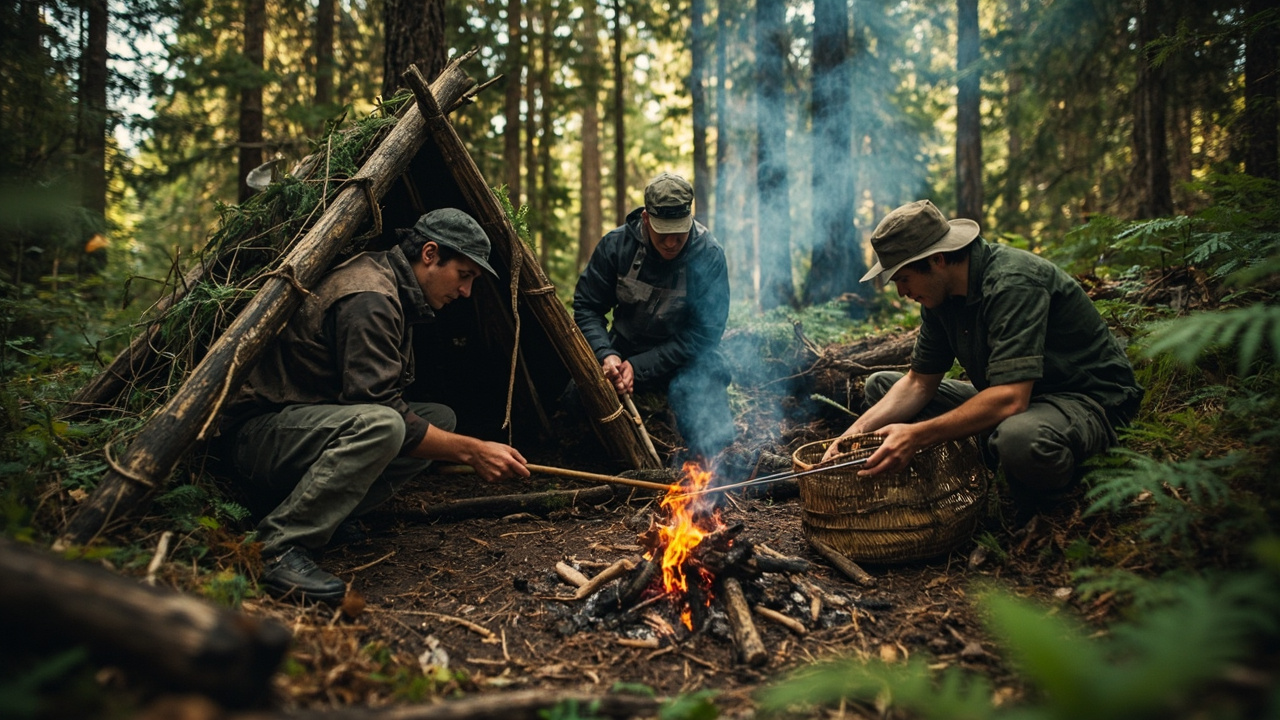
Every one of those categories maps directly onto prepper skill domains: food sourcing, improvised tool construction, and threat assessment.
The Zoo as a Living Classroom
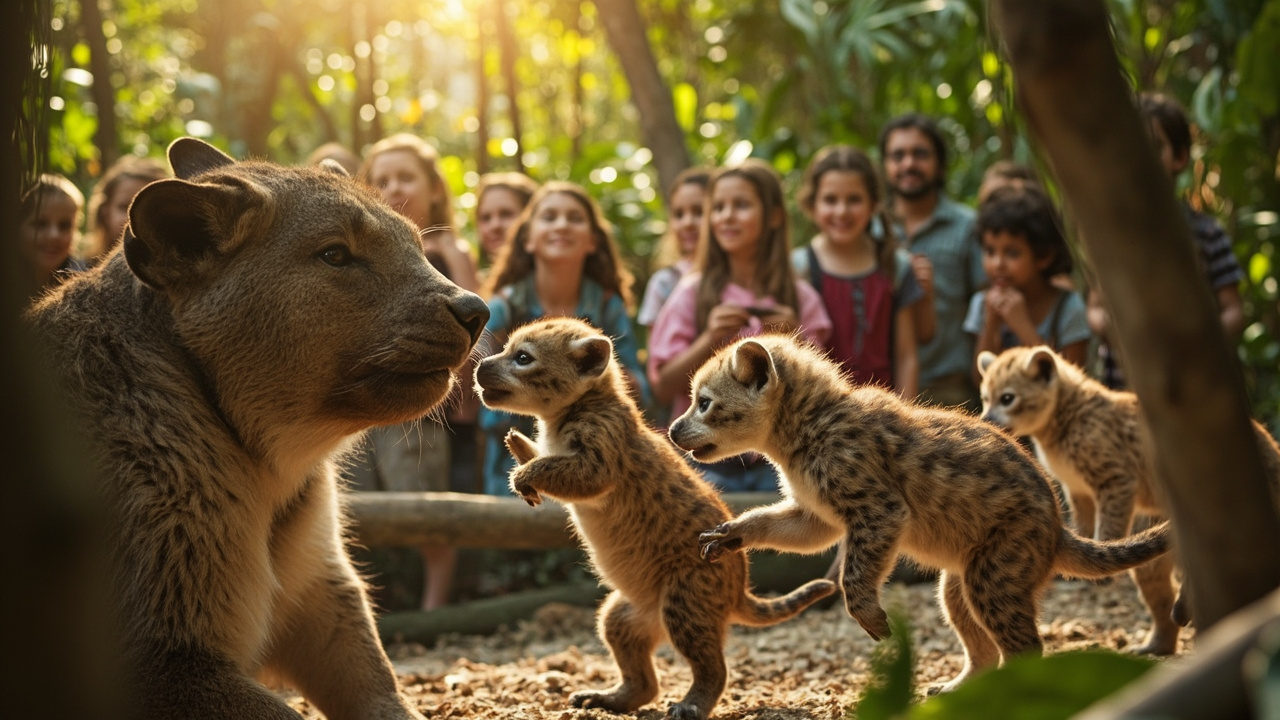
Zoos accelerate this learning because they compress the social density that wild environments spread across kilometers. At facilities like the San Diego Zoo Wildlife Alliance, curators deliberately structure animal habitats so that juveniles have constant visual access to adults performing natural behaviors. The Alliance's conservation education program, documented at sandiegozoowildlifealliance.org/story-hub/class-session, explicitly frames animal observation as a model for human learning — arguing that witnessing intergenerational skill transfer in animals reshapes how visitors think about teaching and learning in their own communities.
For zoo visitors who are also emergency preparedness practitioners, the observation deck becomes a research site. Watch how a young mandrill orients toward an experienced elder the moment an unfamiliar stimulus appears in the enclosure. That orientation reflex — toward demonstrated competence, away from the unknown — is the same instinct a well-trained Community Emergency Response Team (CERT) member activates when a new hazard presents during a drill.
Early-Life Stress Changes the Learning Strategy
Not every juvenile learns the same way, and the reason matters for preppers designing training programs. A 2015 study published in PLOS ONE (PMC4540255) found that juvenile zebra finches exposed to early-life stress shifted their social learning strategy — relying more heavily on unrelated adult models rather than parental ones when under resource pressure.
Translated to human preparedness contexts: people who experienced prior disasters or chronic instability often learn more efficiently from peer mentors or neighborhood team leaders than from formal institutional instructors. FEMA's Community Emergency Response Team curriculum, updated in 2024, acknowledges this by building in peer-demonstration exercises alongside traditional classroom modules. Designing drills that allow experienced neighbors to lead skill stations — fire suppression, triage sorting, radio communication — mimics the adaptive social learning flexibility documented in juvenile finches and orangutans.
Cross-Species Imitation: Why Novelty Is Not a Barrier
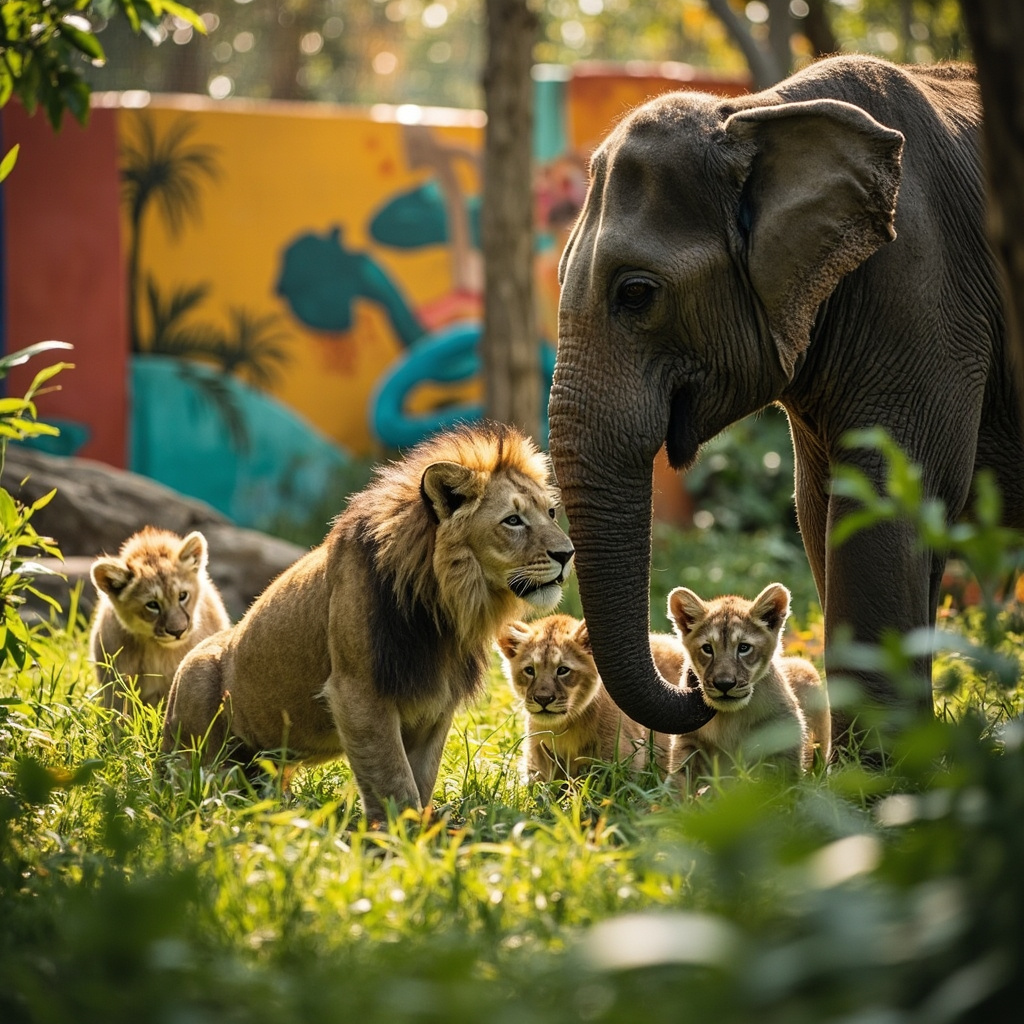
One of the more striking findings in captive animal research is that social learning does not stop at species boundaries. A 2017 paper in Primates (Springer) documented chimpanzees spontaneously imitating behaviors observed from zoo visitors, a phenomenon researchers labeled spontaneous cross-species imitation. The implication is that learning-ready animals — and people — will absorb demonstrated skills from any competent model, regardless of "membership" in the same group.
For neighborhood preparedness networks, this is liberating. You do not need a retired firefighter to teach fire suppression; a neighbor who completed the CERT course in 2023 and has practiced the techniques is a fully adequate demonstrator. The research on cross-species imitation in captive chimpanzees, documented in Primates (Springer), supports the intuition that what matters is observable competence, not credentials.
Applying Animal Social Learning to Your Preparedness Plan
Here is a concrete four-step framework drawn directly from the animal behavior literature:
Step 1 — Identify Your "Experienced Adults"
In your household or neighborhood, who has demonstrated competence in first aid, food preservation, water purification, or shelter construction? These people are your orangutan elders. List them by skill domain before any emergency occurs.
Step 2 — Schedule Observed Practice, Not Just Instruction
Passive listening to a lecture transfers roughly 10% of a skill. The 2025 Communications Biology study on orangutans found that juveniles required an average of three to five direct observation sessions before attempting a new foraging technique independently. Schedule at minimum three joint practice sessions per skill before you consider yourself prepared to execute it solo under stress.
Step 3 — Replicate Zoo-Style Density
Zoo environments work because multiple skill demonstrations happen in close physical and temporal proximity. Neighborhood preparedness fairs, block-level CERT drills, and family tabletop exercises replicate this density. The San Diego Zoo Wildlife Alliance notes in its education programming that visitors retain far more behavioral knowledge when they observe multiple animals performing similar tasks in succession — the same repetition principle applies to humans learning tourniquet application or generator start-up procedures.
Step 4 — Account for Stress-Modified Learning
Remember the zebra finch data: stressed individuals learn differently. Run at least one drill under mild time pressure or simulated resource scarcity. If a family member or neighbor shuts down cognitively under that pressure, flag that now — not during an actual earthquake. Adjust their role to one that leverages their existing automatic behaviors rather than demanding complex novel task execution.
Why Continuity Is the Core Lesson
The deepest takeaway from watching a young snow leopard cub track its mother's paw placement, or a juvenile elephant follow an elder matriarch to a hidden water source, is not about technique — it is about continuity. Skills that are never demonstrated die with the generation that holds them.
The same is true in human communities. FEMA data from the 2023 National Household Survey on Disaster Preparedness found that households with at least one member who received in-person skills training from another prepared individual were 2.3 times more likely to take effective protective action in the 72 hours following a declared disaster than households that relied solely on written guides. Watching someone do it, then doing it yourself, is not a nice-to-have — it is the mechanism by which preparedness survives from one generation to the next.
Zoos, whether or not visitors realize it, are running a continuous demonstration of that principle every day the gates are open. The juvenile orangutan watching its mother strip bark from a fig tree is doing the same thing the new CERT trainee does when they shadow an experienced team leader through a simulated structure collapse: absorbing demonstrated competence before the stakes become real.
Action Items Before You Close This Tab
- This week: Name one person in your household or immediate neighborhood who holds a survival skill you lack. Ask them to demonstrate it, not explain it.
- This month: Attend or organize one hands-on drill. Written plans do not transfer skills; observed practice does.
- This year: Document your own demonstrated skills and commit to showing at least one younger or less-experienced community member how to execute them.
The orangutans at Tuanan already know this. The question is whether your neighborhood does.