The Bottom Line Up Front
Survival skills are not genetic — they are learned, practiced, and passed down through communities, and research consistently shows that access to emergency preparedness training, not innate ability, determines who survives a crisis. A 2023 FEMA National Household Survey found that only 54% of American adults have taken any steps to prepare for a disaster, a gap that cuts across every demographic group in the country.
The conversation around who "naturally" has survival skills is a distraction from the real issue: systemic inequities in access to emergency preparedness resources have left millions of Americans — of every background — underprepared for floods, wildfires, power outages, and other emergencies. The solution isn't gatekeeping survival knowledge; it's making it universally available.
What the Data Actually Says About Preparedness Gaps
The Federal Emergency Management Agency's 2023 National Household Survey on Disaster Preparedness is the most comprehensive recent look at who is ready for emergencies in the United States. Its findings are sobering:
- Only 54% of surveyed households had assembled an emergency supply kit.
- Just 47% had developed a household emergency plan.
- Households with lower incomes and less formal education — groups that span every racial and ethnic category — reported significantly lower preparedness rates.
- Language barriers and lack of trusted community messengers were cited as top obstacles to preparedness in minority communities.
The American Red Cross echoed these findings in its 2022 Preparedness Report, noting that communities of color, rural white communities, and elderly populations in all demographics face overlapping barriers: cost of supplies, lack of local training programs, and distrust of government emergency systems.
Neither report found any evidence that survival aptitude is linked to race or ethnicity. What they found instead is that proximity to information and resources is the single biggest predictor of preparedness.
The Myth of "Natural" Survival Skills
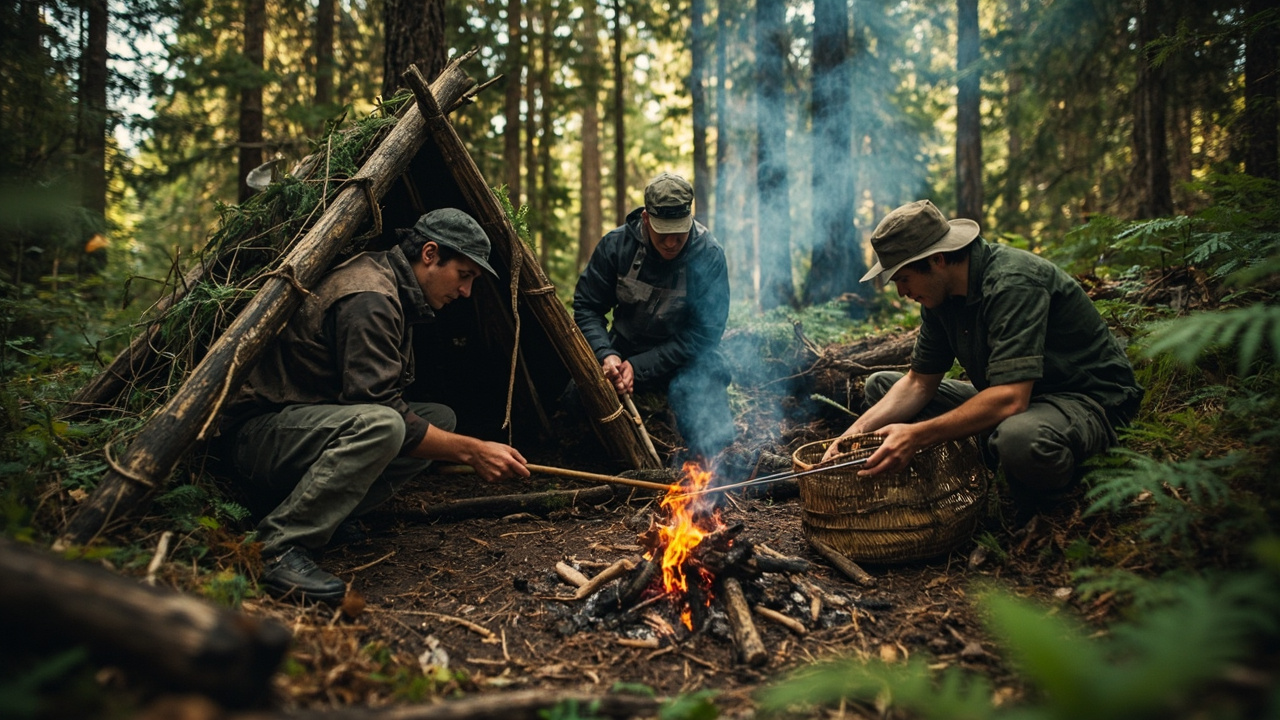
The idea that any racial group is genetically predisposed toward — or against — survival competence has no support in evolutionary biology, emergency management science, or public health research. Human beings across every continent developed sophisticated survival strategies over millennia: fire-making, food preservation, navigation, shelter construction, water purification, and community mutual aid.
Many of these traditions were systematically suppressed or lost for specific communities. Indigenous communities across North America, for example, saw traditional ecological knowledge disrupted by forced relocation and boarding school policies. Rural Appalachian communities lost generational hunting and foraging knowledge as economic displacement hollowed out their towns. Urban communities of every background often lack access to wilderness survival training simply because it isn't offered in their neighborhoods.
The gap is educational and economic — not genetic.
Dr. Samantha Montano, an emergency management professor at Massachusetts Maritime Academy and author of Disasterology (2021), has written extensively about how the United States emergency management system was built in ways that systematically underserve low-income and minority communities. Her work, cited by outlets including NPR and The New York Times, argues that the solution is community-centered preparedness programs — not assumptions about who "naturally" knows how to survive.
Core Survival Skills No One Is Born Knowing
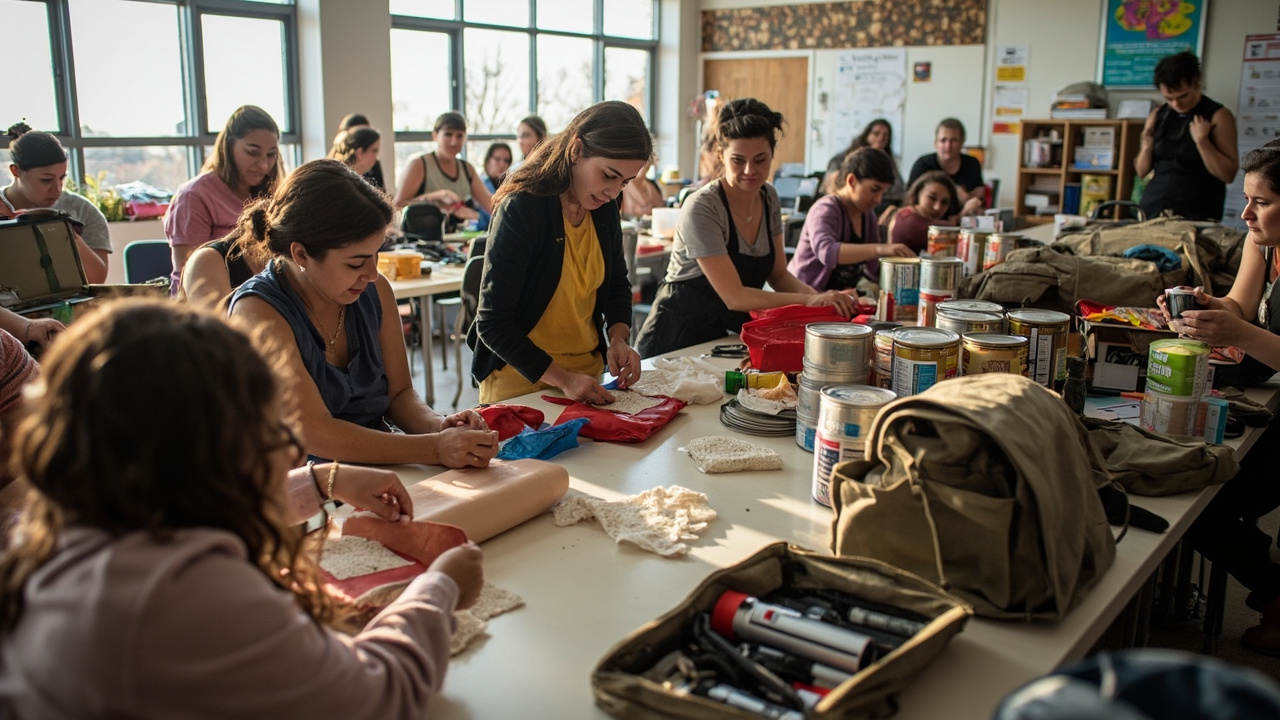
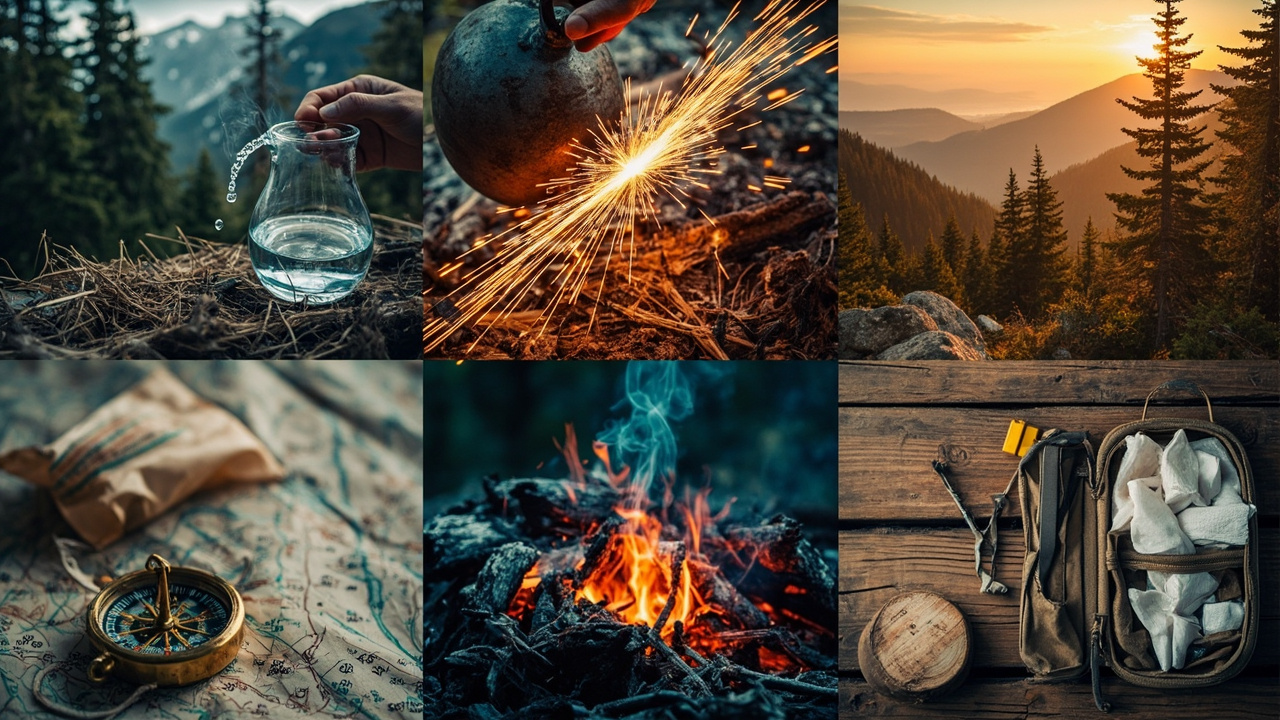
Here are the fundamental emergency preparedness skills that every adult — regardless of background — should learn. None of them are instinctive. All of them can be taught.
1. Build and Maintain a 72-Hour Emergency Kit
FEMA recommends every household maintain at minimum a 72-hour emergency supply kit containing:
- Water: one gallon per person per day
- Non-perishable food for at least three days
- First aid kit with a manual
- Flashlight, battery-powered or hand-crank radio
- Copies of critical documents (ID, insurance, medications list)
- Whistle to signal for help
According to FEMA's Ready.gov resource, updated in 2024, a basic kit can be assembled for approximately $50–$75, and costs can be reduced significantly by building it gradually over several grocery trips.
2. Know Your Local Hazards and Evacuation Routes
Every region has specific threats: hurricanes in the Gulf Coast, wildfires in the West, tornadoes in the Midwest, winter storms in the Northeast. The first step in any preparedness plan is identifying which hazards apply to your zip code.
FEMA's Hazard Mitigation Planning database, last updated in early 2024, allows any resident to look up their community's documented risk profile. Knowing your two nearest evacuation routes — and having a pre-designated meeting point for your household — can be the difference between life and death when seconds matter.
3. Basic First Aid and CPR
The American Red Cross reports that 70% of Americans feel helpless during a medical emergency because they don't know CPR or basic first aid. Their First Aid Fast app (updated January 2024) provides free, step-by-step guidance for over 20 emergency scenarios and is available in English and Spanish.
In-person CPR certification courses are offered through the Red Cross and American Heart Association in every major U.S. city, typically costing $25–$60. Many community centers and libraries offer them free of charge.
4. Water Purification and Food Safety
During prolonged power outages or after flooding, municipal water systems can become contaminated. Knowing how to purify water — boiling for at least one minute at elevations below 6,500 feet, or using EPA-approved purification tablets — is a baseline survival skill.
The Centers for Disease Control and Prevention (CDC) updated its Emergency Water Storage and Purification guidelines in 2023, providing free, plain-language instructions for households without access to commercial filtration systems. You can access those guidelines directly at cdc.gov/healthywater/emergency.
5. Communication Plans When Cell Networks Fail
After major disasters — Hurricane Katrina in 2005, Hurricane Maria in 2017, the 2021 Texas winter storm — cell networks routinely fail for days or weeks. The FCC recommends every household designate an out-of-state contact person as a communication hub, since long-distance calls often connect more reliably than local ones after a disaster.
Battery-powered or hand-crank NOAA weather radios, available for under $30, provide emergency alerts when all digital infrastructure is down.
Community-Based Preparedness: Where Real Resilience Is Built
Individual kits and skills matter — but community networks are what actually save lives at scale. The Community Emergency Response Team (CERT) program, administered by FEMA and active in communities across all 50 states, trains ordinary residents in disaster response, light search and rescue, fire safety, and medical triage.
CERT programs are free, available in multiple languages, and specifically designed to reach communities that have historically been underserved by top-down emergency management. As of 2024, FEMA reports over 600,000 active CERT members nationwide.
Neighborhood mutual aid networks — formalized during the COVID-19 pandemic and documented by researchers at the University of Southern California — have proven especially effective in communities where distrust of government agencies runs high. These networks, built on pre-existing social trust, distributed food, medications, and information faster than official channels in dozens of cities during the early months of the pandemic.
Equity in Preparedness: A Policy Priority
The 2022 American Red Cross Preparedness Report specifically called on local governments to fund multilingual outreach programs, mobile preparedness training units for rural and underserved urban areas, and subsidized emergency kit distribution for low-income households. Several cities, including Los Angeles and Chicago, have piloted free emergency kit giveaways tied to neighborhood CERT enrollment drives since 2023.
FEMA's 2022–2026 Strategic Plan lists equity as one of its three core goals, explicitly acknowledging that historical underinvestment in certain communities has created measurable preparedness gaps that individual effort alone cannot close. The plan commits to increasing the reach of CERT and Ready.gov resources in communities with limited English proficiency and low household incomes.
This policy shift reflects a growing consensus among emergency managers: preparedness is a public good, not a personal virtue. The communities that survive major disasters best are those where neighbors know each other's names, share resources, and have practiced emergency plans together — not those where individuals happen to possess some innate advantage.
How to Start Today
The American Red Cross and FEMA both offer free, downloadable preparedness guides at no cost. Here is a realistic 30-day on-ramp:
- Week 1: Visit Ready.gov and complete the household risk assessment for your zip code.
- Week 2: Start building your 72-hour kit, beginning with water and a first aid manual.
- Week 3: Identify your two evacuation routes and designate an out-of-state contact.
- Week 4: Sign up for a free CERT training or Red Cross first aid course in your area.
None of these steps require special genetic gifts. They require information, intention, and a modest investment of time.
The Takeaway
Survival competence is a skill set, not a birthright. The communities most prepared for emergencies are not those with some innate advantage — they are the ones with access to training, resources, and social networks that practice preparedness together. Every community in America, regardless of background, has both the capacity to build these skills and the right to demand that emergency preparedness resources be accessible and equitable.
The work of emergency preparedness organizations like FEMA, the American Red Cross, and local CERT programs is precisely to close those gaps — and that work is most effective when every community participates fully.
Sources referenced
- FEMA Ready.gov Emergency Supply Kit (https://www.ready.gov/kit) informed this article's reporting and source checks.