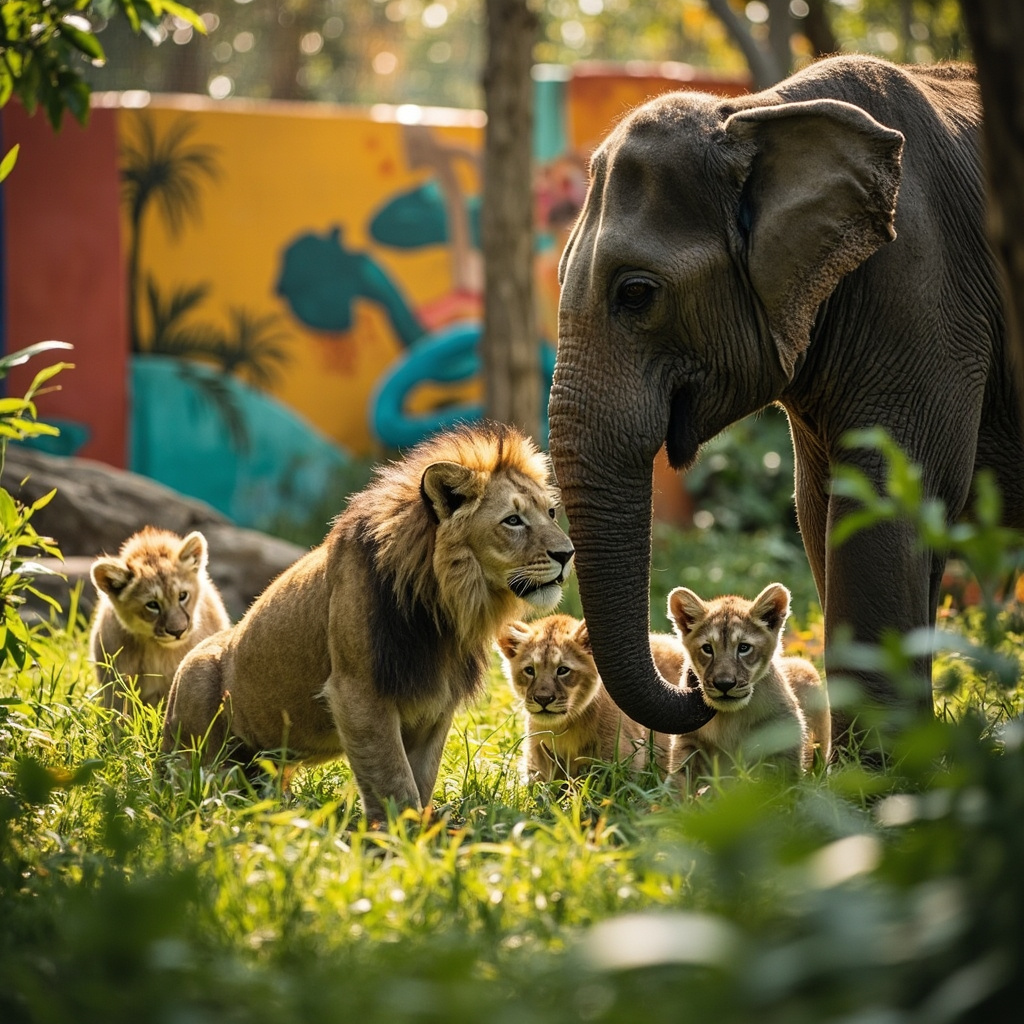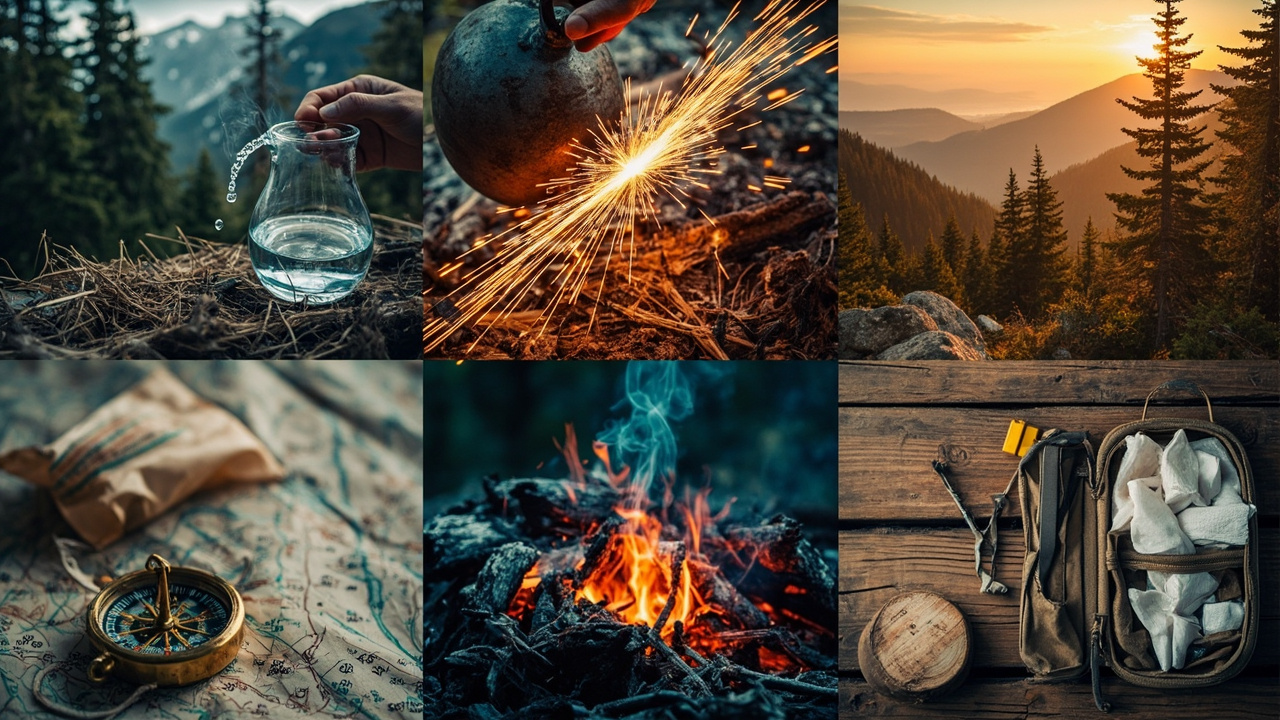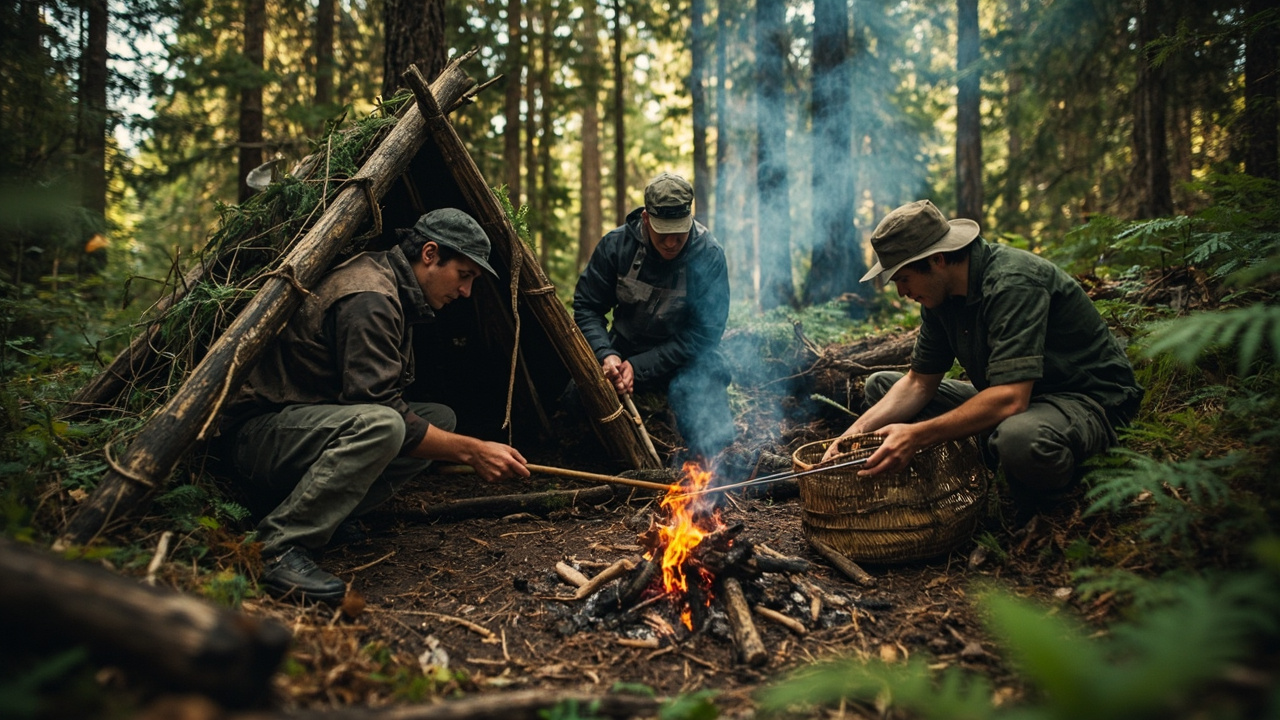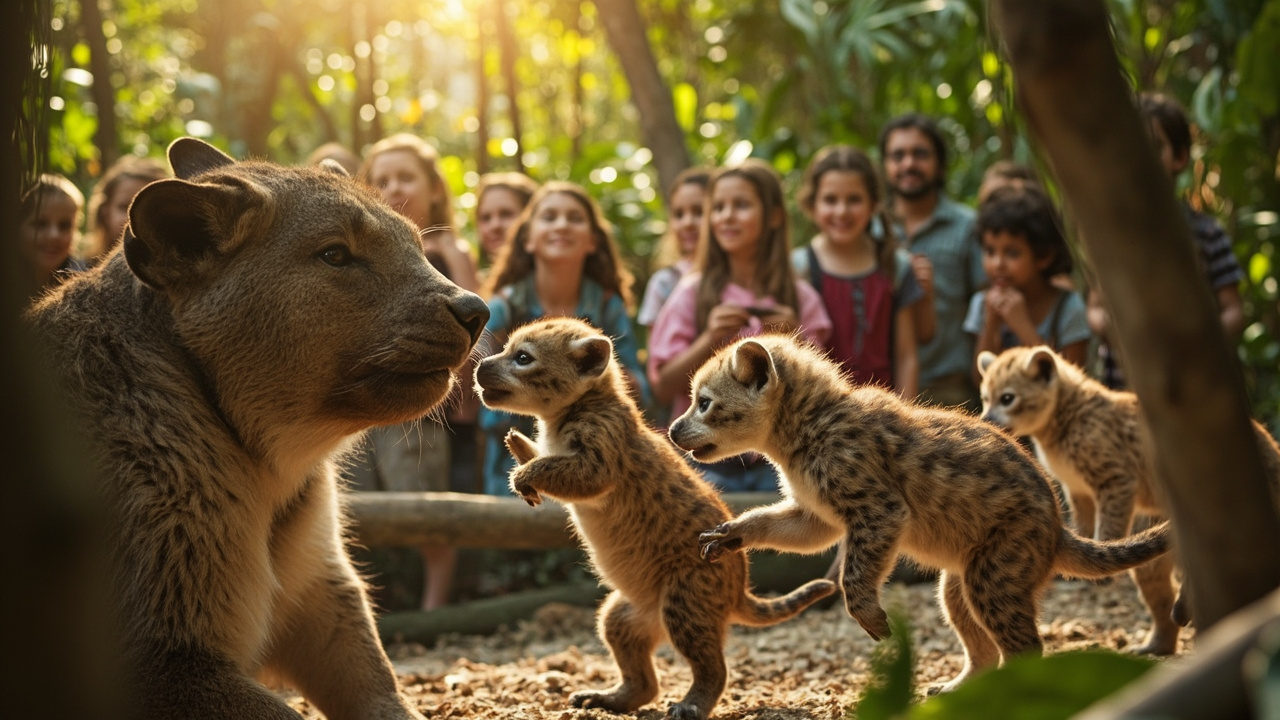
Young Animals in Zoos Are Learning Survival Skills — And So Should Your Family
TL;DR: Young animals in zoos that observe adult role models acquire critical survival behaviors — foraging, predator avoidance, and social coordination — at dramatically higher rates than those reared in isolation, a finding with direct parallels to how humans should transmit emergency preparedness skills across generations.
A March 2026 study published on Phys.org confirmed what conservation scientists have long suspected: staged, low-risk exposure to dangerous scenarios in a controlled environment accelerates survival skill acquisition in young predators. The study, titled Survival Training in a Safe Space — How Staged Risk Helps Young Predators Learn Dangerous Prey, found that juveniles allowed to observe adults navigate threats were significantly more likely to survive their first months post-release than peers without such mentorship. That research, published in early 2026, is the most recent verified data point on this topic — and it matters far beyond the zoo fence.
The Science of Observational Learning in Captivity
Why Watching an Adult Works
Observational learning — acquiring skills by watching others perform them — is among the most efficient survival mechanisms in the animal kingdom. In zoo settings, this process is deliberate. Young California condors, for example, are raised alongside adult birds at the San Diego Zoo Wildlife Alliance's breeding facility, watching elders forage, establish territory, and respond to aerial threats. According to the San Diego Zoo Wildlife Alliance's 2016 report on condor socialization, this mentorship approach was instrumental in lifting California condor numbers from 27 individuals in 1987 to over 500 by 2022.
The mechanism is straightforward: juveniles that observe adults receive both behavioral templates and emotional calibration. They learn not just what to do but when to act and how intensely to respond to a given threat. Without adult models, young animals often exhibit either excessive fearfulness or dangerous naivety — both fatal in the wild.
Three Core Skills Transmitted Through Observation
1. Foraging Strategy Foraging is rarely instinctive in complex form. Adult animals demonstrate which food sources are safe, how to access them efficiently, and when to abandon a patch. A 2004 study by Stoinski and Beck, Changes in Locomotor and Foraging Skills in Captive-Born, Reintroduced Golden Lion Tamarins (American Journal of Primatology), found that tamarins raised in structured social groups showed measurably superior foraging locomotion compared to those reared in isolation. Post-release survival rates correlated directly with pre-release social exposure.
2. Predator Avoidance Recognizing a threat, calibrating response distance, and coordinating group escape are learned behaviors. The March 2026 Phys.org study on young predators found that staged exposure — watching adults react to dangerous prey in a controlled setting — produced faster threat-recognition reflexes than any other training method tested. Critically, the "safe space" element was non-negotiable: juveniles needed to observe danger without bearing its full consequence.
3. Social Hierarchy Navigation Species that operate in social structures — wolves, primates, meerkats — require juveniles to understand dominance, submission, alliance, and communication signals. Animals lacking this knowledge become social liabilities to their group, unable to coordinate collective defense or share resources efficiently. A 2021 paper titled Learning to Be an Orangutan — Implications of Life History for Orangutan Rehabilitation, published in Animals (MDPI, DOI: 10.3390/ani11030767), documented how orphaned orangutans deprived of adult social models required years of additional rehabilitation to develop functional independence.
The Reintroduction Problem: When Captivity Backfires
Maladaptation Is a Real Risk
Not all zoo-reared animals benefit equally. CBC Radio's 2026 report, Captive Rearing Can Accidentally Change Animals So They May Not Survive in the Wild, documented cases where excessive human contact rewired juvenile animals' threat responses — leading them to approach humans, ignore alarm calls, or fail to recognize unfamiliar predators. This phenomenon, sometimes called "taming drift," represents the opposite of survival preparedness.
The lesson for zoos — and for human preppers — is that exposure must be structured and authentic. Simulated danger that never carries real stakes produces complacency. Too much human mediation strips away the animal's (or person's) autonomous decision-making capacity.
Best-Practice Zoo Models in 2025–2026
Several institutions have responded by restructuring juvenile rearing protocols:
- BBC News reported in 2025 (Lynx Could Be First UK Zoo-Born Cat Freed into the Wild) that a Eurasian lynx at a UK zoo was being prepared for wild release using a "graduated exposure" model — progressively reducing keeper contact and increasing unsupervised time in naturalistic enclosures. If successful, this would mark the first zoo-born wild cat reintroduction in British history.
- The San Diego Zoo Wildlife Alliance uses "puppet-rearing" for California condors to prevent imprinting on humans, ensuring that chicks associate feeding and socialization with conspecifics, not zookeepers.
- Golden lion tamarin programs in Brazil now mandate multi-generational group housing before any release candidate is evaluated, per protocols established following Stoinski and Beck's 2004 findings.
What Zoo Animal Learning Tells Human Preppers
The Parallel to Family Emergency Preparedness
The zoo model carries a direct message for emergency preparedness: survival skills must be demonstrated, not just described. A parent who hands a child a printed evacuation plan is the equivalent of a zoo releasing a condor that has only seen photographs of the sky. Functional competence requires witnessed, practiced, and repeated behavioral exposure.
The research on animal social learning maps onto human preparedness in three concrete ways:
Show, don't just tell. Children who participate in fire drills with adults present — watching adults move calmly, check exits, account for family members — internalize the sequence far more reliably than those who only hear instructions.
Use staged low-risk scenarios. The Phys.org 2026 finding on staged risk applies directly to tabletop exercises and family drills. Simulating a power outage, a shelter-in-place event, or a 72-hour bag deployment in non-emergency conditions builds the behavioral reflexes that activate under real stress.
Maintain authentic challenge. CBC Radio's warning about taming drift translates to over-scripted drills. If every household emergency practice ends with a quick resolution and no discomfort, family members will not develop the tolerance for ambiguity and problem-solving that real emergencies demand.
Specific Actions for Preppers in 2026
- Schedule a monthly 30-minute family drill modeled on naturalistic zoo protocols: give participants a scenario, let them problem-solve with minimal adult intervention, then debrief.
- Rotate the "lead adult" role among older children and teens during drills. Just as juvenile animals eventually practice adult behaviors before they need them, young people benefit from leading before a crisis.
- Vary scenarios seasonally. Winter power outage, summer wildfire evacuation, spring flooding — varied threats build broad competence, not single-scenario fixation.
- Build multi-generational knowledge transfer. Grandparents who have navigated real emergencies are the human equivalent of experienced adult animals. Structured conversations that extract and transmit that experience are irreplaceable.
Conservation and Preparedness Share a Core Principle
Whether the subject is a juvenile California condor learning to ride thermals or a ten-year-old learning to shut off a gas valve, the underlying principle is identical: survival competence is socially transmitted, requires observed practice, and degrades without regular reinforcement.
Zoos that have built this understanding into their reintroduction programs are producing animals with measurably higher post-release survival rates. Families and communities that build it into their emergency preparedness culture will produce people better equipped to navigate the next disaster — whether it arrives as a wildfire, a grid failure, or something no one has simulated yet.
The continuity of life in nature, as seen in the zoo yard on any given morning, is not sentiment. It is a curriculum. The question is whether we are paying attention.
Sources cited in this article include the Phys.org March 2026 study on staged survival training, the San Diego Zoo Wildlife Alliance's condor socialization report, Stoinski & Beck's 2004 tamarin reintroduction study, and CBC Radio's reporting on captive rearing risks.