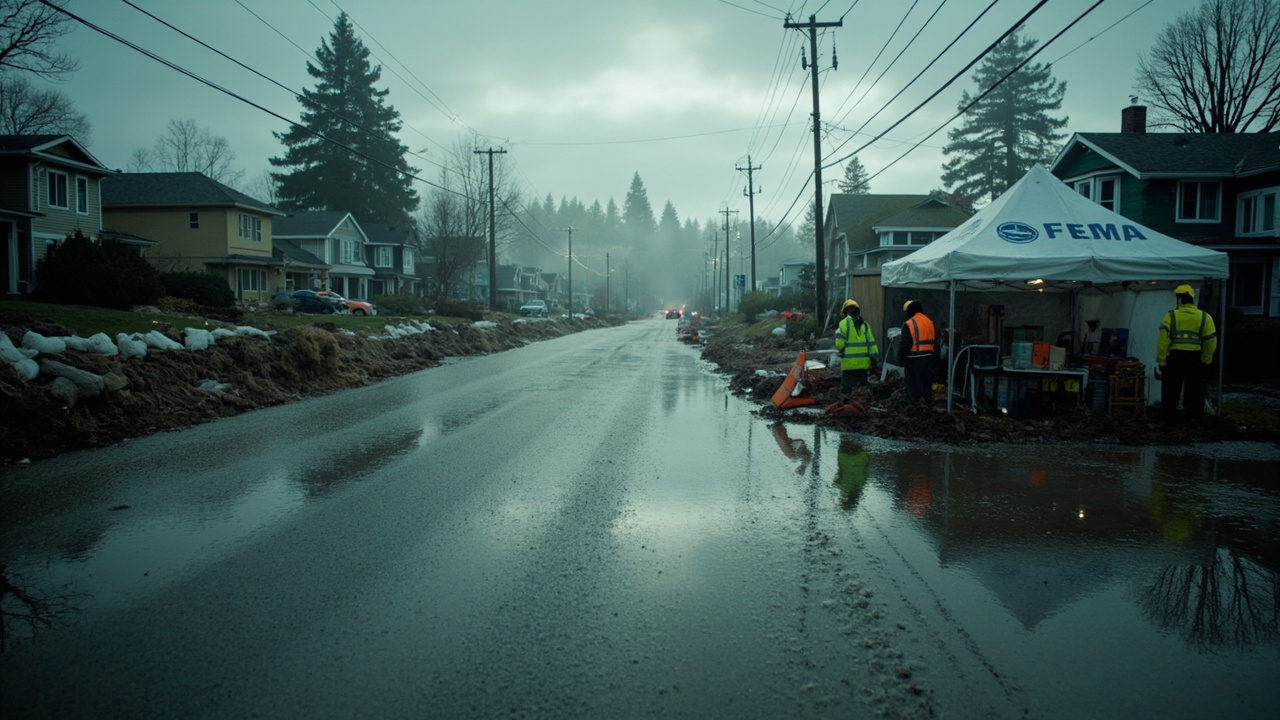
TL;DR: Washington's June 10 FEMA individual-assistance window closed with $11.2 million paid to more than 1,200 households, and pending files can still lift that total.
Application window closes with money still moving
The deadline has passed to seek federal individual assistance for Washington's flooding last year, with over $11 million distributed so far, according to the Snoqualmie Valley Record.
More than 1,200 households have tapped funding from the Federal Emergency Management Agency. The cutoff to apply was last week, but some applications are still being processed, so the $11.2 million handed out is likely to rise.
Officials implored residents across 10 counties and many tribal nations to apply ahead of the June 10 deadline. There were more than 2,500 applications, and a FEMA spokesperson said it is unclear how many aid requests are still outstanding.
In some cases, the federal agency could extend the deadline. That possibility matters for household planning because a late filing rule can change whether a pending request remains eligible.
"It’s still going to be a full-court press to process those applications that are still in the works," Robert Ezelle, director of the Military Department's Emergency Management Division, said in a meeting last week.
"Huge shout-out and thank you to FEMA for the essential services they provide," Ezelle added.
Washington Gov. Bob Ferguson addressed the result in a statement quoted in the same report:
"I appreciate the hard work of so many to get the word out to Washingtonians that this funding was available to them," Washington Gov. Bob Ferguson said in a statement. "I’m glad that so many Washingtonians got assistance to help them recover following December’s historic flooding."
Still, the payout is just over half of the sum Ferguson requested based on initial estimates of the need and that President Donald Trump OK'ed earlier this year. For families, that gap is a direct lesson about federal aid design: approval of a request level does not guarantee that every applicant receives the maximum amount.
How the $11.2 million is being used
The money can help flood victims repair their homes or find stable housing, but it won't make them whole, according to the Snoqualmie Valley Record.
About half has gone toward housing assistance. The other half has been earmarked for other needs, like child care, replacing or repairing personal property or vehicles and hotel stays.
That split shows two separate recovery tracks inside one program. One track addresses the structure where a household lives. The other addresses the costs that continue while the structure cannot be used normally.
Housing assistance covers repairs and the search for stable housing. Other-needs assistance covers daily continuity costs, including child care, personal property, vehicles and hotel stays.
Households preparing for future floods should therefore document both categories from the start. Photograph rooms, systems, furnishings, vehicles and receipts for temporary lodging and care, and keep those records where water cannot destroy them.
Scale of the December flooding that triggered aid
In the historic flooding late last year, nearly 3,900 homes were damaged. Over 100,000 Washingtonians were ordered to evacuate, and hundreds had to be rescued, according to the Snoqualmie Valley Record.
Those three figures explain why individual assistance covered 10 counties and many tribal nations. Damage was not confined to one river or city, and evacuation orders affected a population far larger than the number of damaged homes.
The same scale explains why 19 assistance centers were needed across western Washington. Those centers garnered over 1,000 visits from residents seeking help with applications.
FEMA assistance centers in Snohomish and Sumas will remain open for a while longer to help applicants. Residents with pending cases can use that extra time to check status, supply missing paperwork and ask about deadline extensions.
Infrastructure aid is a separate, longer process
FEMA is also working with over 150 state, local and tribal governments, as well as nonprofits eligible for other assistance to deal with infrastructure damage.
Trump approved potentially tens of millions more dollars for this purpose, with the state estimating the flood damage at $182 million.
It could take years before it is clear how much FEMA reimburses in total based on the time it will take to complete all repairs. That timeline is normal for public-facility recovery, where design, permits, construction and inspections must finish before final costs are known.
For homeowners, the lesson is that neighborhood infrastructure may remain under repair long after individual grants are paid. Roads, utilities, levees and public buildings can affect access, safety and flood exposure during later storms.
As of June 12, the state was also still waiting for a response from the Trump administration after denying Ferguson's request for $36 million in federal funding for projects meant to protect from future flooding, according to the Chinook Observer.
State officials appealed the decision, but haven't received a response, said Karina Shagren, spokesperson for the Washington Military Department. The appeal concerns mitigation projects, not the individual-assistance payments already being processed.
SBA disaster loans add more than $14 million
The U.S. Small Business Administration, meanwhile, has signed off on over $14 million in low-interest loans to businesses, nonprofits, homeowners and renters affected by the flooding, according to the Snoqualmie Valley Record.
The Northern Light reports additional detail for Skagit and Whatcom counties, where the Small Business Administration is providing disaster relief loans for renters, homeowners, businesses and nonprofits affected by the December storms and flooding.
Three types of loans are available: business physical disaster loans, economic injury disaster loans and home disaster loans. The loans are low-interest, fixed-rate and long term with no payments due and no interest accrued for the first year.
Funds may be used to repair damage to property or to assist businesses with other financial responsibilities that would otherwise be unable to be paid due to the disaster.
In order to be approved, borrowers must be in a declared disaster area and have good credit and repayment history, among other criteria. Those interested can visit lending.sba.gov/search-disaster/ to find out if they qualify to apply.
Deadlines to submit applications for physical damage passed on June 10, however, SBA offers a 60-day grace period during which time applications will continue to be accepted. Economic injury applications will be accepted through Jan. 7, 2027.
Applications may be submitted at no cost at sba.gov/disaster, according to The Northern Light. That no-cost filing route is important because disaster survivors are often targeted by fee-based application schemes.
State programs show why federal paperwork matters
The state had offered its own similar assistance, but restrictions on who can access it left most of the money unused, according to the Snoqualmie Valley Record.
Of $2.5 million in cash assistance, only $175,000 had been distributed as of last month. Ferguson has said he'd like to pursue changes to the guidelines to open up the state's funding to more people in future disasters.
Some of the aid was also closed off to avoid duplication with FEMA dollars. That anti-duplication rule means households cannot receive two public payments for the same documented loss.
Another pot with $1 million from the state was quickly doled out to over 2,600 households. The contrast between the two state pots shows how eligibility rules control speed: broader rules moved $1 million rapidly, while narrower rules left most of the $2.5 million unused.
For preparedness, the practical point is to apply through every eligible program and keep award letters together. A denial or smaller award from one source can affect eligibility for another when duplication rules apply.
What flood households should do now
First, households with pending FEMA files should stay in contact until a final determination is issued. With more than 2,500 applications filed and an unclear number still outstanding, missing documents can delay payment.
Second, Snohomish and Sumas applicants should use the assistance centers that remain open. The statewide network already handled over 1,000 visits, showing that in-person help resolved issues that phone or online filing did not.
Third, Skagit and Whatcom renters, owners, businesses and nonprofits with physical damage should examine the 60-day SBA grace period described by The Northern Light. Economic-injury applicants have a longer path, with acceptance through Jan. 7, 2027.
Fourth, keep housing and other-needs receipts separate. Because about half of FEMA individual money went to housing and half to needs such as child care, property, vehicles and hotels, clear categories can support faster review.
Federal aid after Washington's December flooding helped more than 1,200 households, but it did not cover every loss. Nearly 3,900 damaged homes, more than 100,000 evacuation orders and $182 million in estimated damage leave a recovery gap that savings, insurance, loans and mitigation must help close.
Sources referenced
- $11M in federal aid for WA flood victims handed out | Snoqualmie Valley Record (https://www.valleyrecord.com/2026/06/18/11m-in-federal-aid-for-wa-flood-victims-handed-out/)
- $11M in federal aid for WA flood victims handed out as deadline passes | Chinook Observer (https://chinookobserver.com/2026/06/18/11m-in-federal-aid-for-wa-flood-victims-handed-out-as-deadline-passes/)