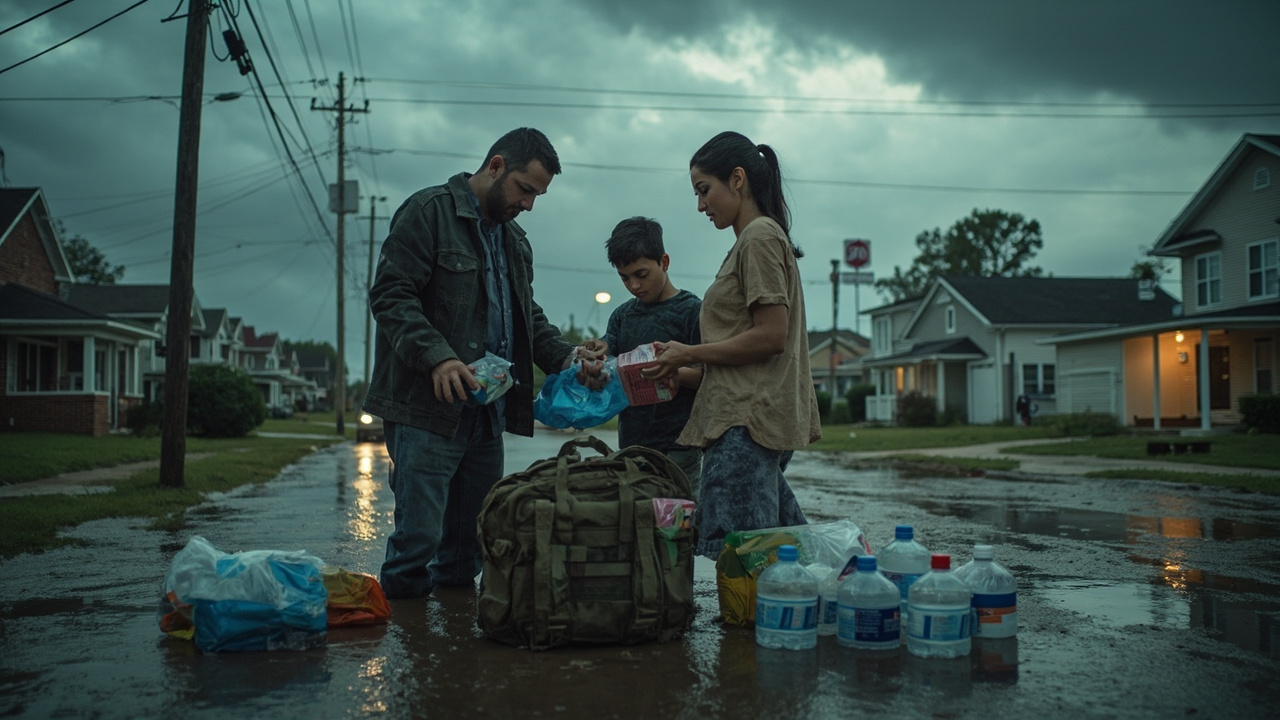
TL;DR: Cash aid matters most for low-income households, and speed matters as much as amount.
Cash relief after a hurricane keeps low-income households able to buy food and cover evacuation costs, while higher-income households treat the same $500 payment largely as reimbursement — a pattern that could let policymakers focus aid and cut costs by 30% without adding hardship, according to the JPMorgan Chase Institute report published May 20, 2026.
Why targeting is the May 20 question
Natural disasters disrupt the finances of millions of Americans every year, and many people do not have enough savings to weather disaster-related expenses, according to the JPMorgan Chase Institute.
In 2024, natural disasters affected the finances of 8 percent of adults in the United States in a moderate or substantial way, according to the JPMorgan Chase Institute.
Most relief is funded by the federal government, which spent more than $50 billion on disaster recovery between 2021 and 2025, according to the JPMorgan Chase Institute.
Policymakers have debated moving more responsibilities to the states to incentivize preventative action to mitigate disaster costs and thus reduce total spending in the long run, according to the JPMorgan Chase Institute.
Many states would struggle to take on even part of the fiscal responsibility of these programs without somehow reducing the short-term costs, according to the JPMorgan Chase Institute.
Projected shortfalls in federal disaster funding, caused in part by inflation and increased disaster expenses, have added urgency to that debate, according to the JPMorgan Chase Institute.
The new analysis tackles that short-term cost question by tracking savings, spending and income in the weeks before and after Hurricane Ida struck Louisiana in 2021, according to the JPMorgan Chase Institute.
Researchers used de-identified, administrative banking data from Chase to measure the financial lives of 250,000 households in Louisiana in the aftermath of Hurricane Ida, according to the JPMorgan Chase Institute.
Annual surveys of county- or state-level statistics cannot capture what happens in the days immediately after a disaster, according to the JPMorgan Chase Institute.
What $500 of Critical Needs Assistance did after Ida
Critical Needs Assistance is a fixed cash benefit within the Individual Assistance program and is meant for immediate recovery needs, such as evacuation costs and essential goods like food and medicine, according to the JPMorgan Chase Institute.
Researchers could identify which households lived in more severely affected neighborhoods and whether households received a Critical Needs Assistance payment of $500, according to the JPMorgan Chase Institute.
Those payments were the primary grant payments made directly to approximately 500,000 households immediately after the hurricane and incurred an estimated cost of $250 million, according to the JPMorgan Chase Institute.
Only 59 percent of low-income households had enough emergency savings to cover $500 in unexpected expenses at the time of the storm, according to the JPMorgan Chase Institute.
Low-income households faced significant income disruptions for almost two months after the hurricane, making recovery even more difficult, according to the JPMorgan Chase Institute.
Low-income households depend on relief payments to buy essentials like groceries, while high-income households use it as a reimbursement mechanism, according to the JPMorgan Chase Institute.
The findings suggest that relief payments significantly help low-income households after a disaster, but payments are less impactful for high-income households, according to the JPMorgan Chase Institute.
An income cap for such payments could greatly reduce total government expenditures without significantly increasing households' financial hardship, according to the JPMorgan Chase Institute.
Focusing relief to low- and middle-income households could reduce Critical Needs Assistance costs by 30 percent, according to the JPMorgan Chase Institute.
Speed decides whether aid works for essentials
Because the speed of relief is also important, new eligibility requirements will be most effective if they do not delay the delivery of relief to the households who need them most, according to the JPMorgan Chase Institute.
Many low-income households appear to be liquidity constrained and depend on relief payments to afford essentials, according to the JPMorgan Chase Institute.
Direct relief payments do not appear to be critically important for high-income households, according to the JPMorgan Chase Institute.
For household planning, that means low savings plus a storm-driven pay interruption can leave about two months of constrained cash flow after a major hurricane, according to the JPMorgan Chase Institute.
The same research frames the $500 payment as coverage for evacuation costs and essential goods like food and medicine in the immediate recovery period, according to the JPMorgan Chase Institute.
Households that can document displacement, temporary housing needs and out-of-pocket food and medicine costs will be better positioned to show immediate need when Individual Assistance opens, according to the Office of Governor Bob Ferguson.
Washington flooding: who qualifies right now
On May 20, 2026, Governor Bob Ferguson encouraged Washingtonians affected by December's historic flooding to apply for federal assistance before the June 10 deadline, according to the Office of Governor Bob Ferguson.
Ferguson joined John Harrison, FEMA's federal coordinating officer, and King County Executive Girmay Zahilay at the FEMA Mobile Disaster Recovery Center in Renton to share application information, according to the Office of Governor Bob Ferguson.
There are three types of federal assistance available to individuals: FEMA Individual Assistance, Disaster Unemployment Assistance, and low-interest loans for individuals and businesses from the Small Business Administration, according to the Office of Governor Bob Ferguson.
The assistance was unlocked following a request for a Major Disaster Declaration by President Trump, which the president approved on April 11, according to the Office of Governor Bob Ferguson.
So far, FEMA has distributed $6.5 million in Individual Assistance to 715 households, according to the Office of Governor Bob Ferguson.
Individual Assistance funding can help with expenses that insurance does not cover, such as temporary housing or displacement assistance, home repair costs, personal property loss, and other disaster-caused expenses, according to the Office of Governor Bob Ferguson.
These are not loans and Washingtonians do not have to pay that money back, according to the Office of Governor Bob Ferguson.
To apply, Washingtonians can visit disasterassistance.gov, call 800-621-3362, or visit a Disaster Assistance Center with locations and schedules on DisasterAssistance.gov, according to the Office of Governor Bob Ferguson.
The counties that may be eligible for FEMA Individual Assistance are Chelan, Grays Harbor, King, Lewis, Pacific, Pierce, Skagit, Snohomish, Thurston, and Whatcom, according to the Office of Governor Bob Ferguson.
Workers in those same ten counties may be eligible for Disaster Unemployment Assistance if they lost their job temporarily or permanently because of the disaster but did not qualify for regular unemployment, according to the Office of Governor Bob Ferguson.
That unemployment category includes small business owners, people without enough hours in their base year, and people in work not covered by unemployment law such as real estate agents, according to the Office of Governor Bob Ferguson.
How to claim without losing money to scams
Disasters such as floods, hurricanes, and wildfires afflict hundreds of American communities and millions of people each year, according to the U.S. Government Accountability Office.
The resulting federal disaster response — billions of dollars distributed quickly — also attracts scammers, according to the U.S. Government Accountability Office in its report published May 19, 2026, titled Disaster Assistance Scams: Education and Awareness Are Key to Consumer Protection.
The prevalence of disaster assistance scams is unknown, due in part to underreporting, but recent surveys including one by the U.S. Census Bureau suggest that many individuals encounter scams during disaster recovery, according to the U.S. Government Accountability Office.
Federal agencies use consumer education to raise awareness and help prevent individuals from becoming victims, according to the U.S. Government Accountability Office.
Information booths at disaster recovery centers display signs with tips about identifying, reporting, and avoiding scams, according to the U.S. Government Accountability Office.
Online information including press releases and emergency app push notifications also helps raise awareness, according to the U.S. Government Accountability Office.
Disaster assistance scams can go unreported for reasons including shame, embarrassment, the belief that reporting will not help, and a lack of awareness about how to report the crime, according to the U.S. Government Accountability Office.
Agencies that receive and process complaints include the Federal Emergency Management Agency, Small Business Administration, Department of Housing and Urban Development, and the National Center for Disaster Fraud, according to the U.S. Government Accountability Office.
For households, the practical step is to apply only through the official channels named in the Washington announcement — disasterassistance.gov, 800-621-3362, or a listed Disaster Assistance Center — and to check recovery-center signage and official push alerts before responding to an offer of help, according to the Office of Governor Bob Ferguson and the U.S. Government Accountability Office.
What Life Prepper readers should do before June 10
Keep evacuation receipts and grocery, food and medicine receipts from the first weeks after displacement, because Critical Needs Assistance is described as support for those immediate recovery needs, according to the JPMorgan Chase Institute.
If you are in one of the ten Washington counties listed for Individual Assistance, submit at disasterassistance.gov or call 800-621-3362 before the June 10 deadline, according to the Office of Governor Bob Ferguson.
Workers who lost income but do not qualify for regular unemployment should review Disaster Unemployment Assistance information at ESD.wa.gov or call 855-952-9988, according to the Office of Governor Bob Ferguson.
Small Business Administration low-interest Disaster Assistance Loans can be used for losses not covered by insurance or FEMA funding for individuals and businesses, with details at SBA.gov, according to the Office of Governor Bob Ferguson.
Sources referenced
- Targeting disaster relief: Who needs aid to weather the storm? - JPMorgan Chase Institute (https://www.jpmorganchase.com/institute/all-topics/household-financial-health/targeting-disaster-relief-who-needs-aid-to-weather-the-storm)
- Disaster Assistance Scams: Education and Awareness Are Key to Consumer Protection | U.S. GAO (https://www.gao.gov/products/gao-26-108280)