The Bottom Line: Gear and Planning Beat Talent at Fuji Rock
First-timers at the Fuji Rock Festival consistently report that poor preparation — not missed performances — is the single biggest threat to their experience. The 2025 festival runs July 25–27 at Naeba Ski Resort in Niigata Prefecture, Japan, a mountainous venue sitting at roughly 900 meters elevation where weather shifts from 32°C midday sun to 14°C downpours within hours. According to The Japan Times' July 19, 2025 packing guide, the festival's alpine location means mud, sudden rain, and steep terrain are guaranteed obstacles — and every year, unprepared newcomers cut their weekend short because of them, not because the lineup disappointed.
This is not a normal outdoor concert. It is an endurance event wrapped in world-class music. Treat it like one, and your weekend is extraordinary. Ignore the environment, and you'll be in a taxi back to Yuzawa Station before Friday night ends.
Why Fuji Rock Is a Survival Event First
The Venue Is a Mountain, Not a Park
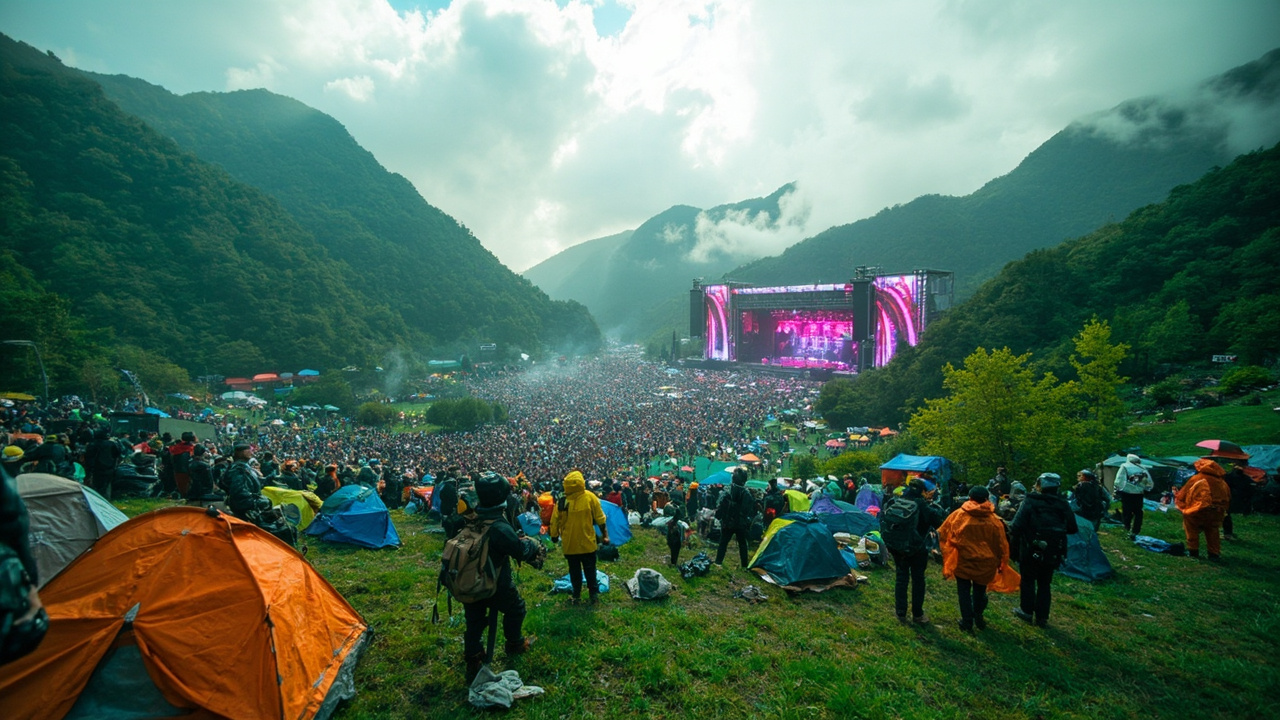
Naeba Ski Resort becomes the Fuji Rock site every late July, but it retains all the characteristics of a working ski mountain: steep access paths, wooden boardwalks over marshy ground, dense tree cover, and unpredictable microclimates. The main Green Stage and the more remote Field of Heaven stage are separated by a 20-minute walk along uneven, often waterlogged paths.
Late July sits squarely inside Japan's tsuyu (rainy season) tail and early typhoon window. The Japan Meteorological Agency records an average of 150–200 mm of rainfall for Niigata Prefecture in July, and the mountains amplify that figure. Even a dry-looking morning can turn into ankle-deep mud by afternoon. Organizers do not cancel performances for rain; attendees are simply expected to manage.
First-Timers vs. Veterans: The Preparation Gap
Veteran Fuji Rock attendees and the festival's own community guides are unambiguous: the difference between a miserable weekend and a transcendent one comes down almost entirely to what you packed and how you paced yourself. Japan Web Magazine's 2025 survival guide — published ahead of the July 25 opening — notes that the most common rookie mistakes include arriving without waterproof footwear, skipping rain gear because the forecast looked mild, and forgetting that ATMs on-site have queues and limited cash capacity. The guide explicitly states that insufficient preparation causes more early departures than poor scheduling.
The Essential Fuji Rock Survival Kit
Footwear and Rain Protection (Non-Negotiable)
Waterproof hiking boots are the single most important item on every experienced attendee's list. Sneakers become unwearable within one muddy path. Rubber rain boots work but cause blisters on long walks between stages. Mid-cut waterproof trail shoes — brands like Salomon, Merrell, or KEEN — handle both scenarios.
Ponchos over umbrellas. The Japan Times' packing guide specifically warns that umbrellas are impractical and frequently banned or discouraged in crowd areas. A lightweight, packable poncho that covers both you and a day bag is the standard recommendation. Bring two — one for your bag.
Layering System for Temperature Swings
Daytime highs in Niigata in late July hover around 28–32°C. By 10 p.m. near the stages, temperatures drop to 15–18°C, and at 2 a.m. near the camping zones, it can reach 12°C. Pack:
- Moisture-wicking base layer for daytime heat
- Mid-layer fleece or light down jacket for evening performances
- Waterproof shell that doubles as wind protection
This three-layer system is standard wilderness travel advice and applies directly to multi-day festival camping. According to the Japan Web Magazine 2025 guide, attendees who neglect the evening temperature drop are among the most frequent first-day medical tent visitors.
Safety and Health Essentials
The festival's on-site medical stations handle serious incidents, but day-to-day discomfort is the attendee's responsibility. Build a compact kit:
- Blister pads and athletic tape: The boardwalk paths accumulate kilometers of walking across three days.
- Electrolyte tablets or packets: Heat and dancing cause rapid dehydration; plain water is not always enough.
- Sunscreen SPF 50+: Midday sun at elevation is intense even on overcast days.
- Insect repellent: Mosquitoes and other insects are active in Naeba's forested zones, especially near the camping areas at dusk.
- Ibuprofen and antihistamines: Standard travel advice, particularly valuable for multi-day outdoor events.
- Portable power bank (20,000 mAh minimum): Phone battery is your map, schedule, and emergency contact. Charging points exist on-site but lines are long.
Cash and Logistics
While digital payment is expanding at Fuji Rock, many food vendors, merchandise stalls, and smaller operations remain cash-only. On-site ATMs exist but face long queues on peak days. The Japan Times guide recommends arriving with at least ¥20,000–¥30,000 in cash per day for food and vendor purchases.
A collapsible lightweight camp chair or a foam sit-pad is worth the pack space — especially for the long afternoon sets at stages like Rookie A Go-Go and the acoustic-focused White Stage.
Using Technology to Navigate the Festival
The Official Fuji Rock App
The official Fuji Rock Festival app (available on iOS and Android before the event) provides:
- Personalized timetable builder to avoid scheduling conflicts across six stages
- Real-time push notifications about set changes, weather alerts, and crowd density
- Interactive site map covering all stage locations, first-aid tents, ATMs, and water refill stations
Downloading and configuring the app before arriving in Japan — ideally before leaving home — eliminates most navigation stress. Japan Web Magazine's 2025 guide lists app setup as one of the top five pre-departure tasks.
Weather Monitoring
Beyond the festival app, install the Japan Meteorological Agency app or check jma.go.jp for hourly Niigata Prefecture forecasts. The JMA's precipitation radar updates every 10 minutes and is significantly more accurate for localized mountain weather than international weather apps.
Camping Strategy: Reserve Early, Set Up Smart
Camping at Naeba is available in designated zones ranging from basic tent sites to glamping options. Reservations sell out months in advance — the 2025 camping allocation was reportedly exhausted by mid-April. For those who secured spots, setup best practices include:
- Stake your tent on higher ground within your assigned zone to avoid water pooling during overnight rain.
- Use a footprint or groundsheet under your tent floor regardless of forecast.
- Lock valuables in provided locker facilities on-site rather than leaving them in your tent.
- Know the path from your tent to the nearest first-aid station before darkness falls on the first night.
Physical Preparation Starts Before You Arrive
Fuji Rock's three-day attendance commonly involves 15–22 km of walking per day across uneven terrain, according to community guides and GPS tracking shared by repeat attendees. First-timers who do not regularly walk long distances report significant leg fatigue by day two.
The practical preparation advice mirrors standard emergency preparedness guidance: build your stamina with two to three weeks of daily 5–8 km walks before the festival. This is not hyperbole — it is the same conditioning logic applied to any multi-day wilderness activity.
What Goes Wrong Without Preparation
The pattern reported year after year is consistent: newcomers who skip waterproof boots develop blisters and wet feet within hours. Those who ignore layering advice spend cold evenings in queues at the merchandise tent buying overpriced hoodies. Attendees who forget portable chargers miss their most-anticipated sets because their phone died navigating to the stage. And those who arrive without cash face frustration at the most popular food stalls.
As The Japan Times packing guide summarizes, none of these failures are musical — they are logistical. The festival's physical environment does not forgive improvisation.
Quick-Reference Packing Checklist
- ✅ Waterproof mid-cut hiking boots
- ✅ Two packable ponchos
- ✅ Three-layer clothing system
- ✅ Portable power bank (20,000 mAh+)
- ✅ Blister pads, electrolytes, sunscreen, insect repellent
- ✅ ¥20,000–¥30,000 cash per day
- ✅ Lightweight foldable chair or sit-pad
- ✅ Official Fuji Rock app (configured before departure)
- ✅ JMA weather app installed
- ✅ Tent footprint and high-ground campsite strategy
The music at Fuji Rock 2025 — headliners and deep-cut acts alike — will reward preparation. Every item on this list exists to keep you in the crowd, not in the medical tent or the shuttle back to the train station.
Sources referenced
- What to pack if you are heading to the Fuji Rock Festival - The Japan Times (https://www.japantimes.co.jp/culture/2025/07/19/music/fuji-rock-festival-prep-list/) informed this article's reporting and source checks.