The Bottom Line Up Front
Learning five core survival skills—shelter building, fire starting, water purification, first aid, and land navigation—can be the single most important investment a prepper makes, because gear runs out, batteries die, and communications fail. According to the American Red Cross, individuals trained in basic survival techniques are measurably better prepared to handle natural disasters, accidents, and extended wilderness emergencies than those who rely solely on equipment. That finding is not theoretical: the 2023 wildfire season in Canada displaced more than 230,000 people within days, many of whom found themselves cut off from roads, cell service, and supply chains for extended periods.
If you walk away with one sentence: practicing primitive survival skills before an emergency—not during one—is what separates people who endure from people who do not.
Why Survival Skills Matter More Than Gear
Modern preppers invest heavily in go-bags, freeze-dried food, and solar chargers. None of that equipment matters if you do not know how to use it—or if you lose it. The Nature Reliance School, founded by wilderness survival educator Craig Caudill, teaches what it calls the "Seven Core Survival Skills" and consistently emphasizes one lesson above all: knowledge weighs nothing and cannot be confiscated, broken, or forgotten in the car.
According to The 7 Core Survival Skills That Could Save Your Life published by Nature Reliance, the foundational skills are:
- Shelter building — your first priority in almost every scenario
- Fire crafting — warmth, signaling, water sterilization, morale
- Water sourcing and purification — critical within 24–72 hours
- Food procurement — foraging, trapping, and fishing for long-term situations
- Navigation — map, compass, and natural landmark reading
- First aid — treating wounds, shock, and environmental injuries
- Signaling for rescue — mirrors, whistles, ground-to-air patterns
Each skill addresses a specific, time-sensitive threat. The sequence matters.
The Rule of Threes: Your Prioritization Framework
Every certified survival instructor teaches the Rule of Threes, a mnemonic that tells you where to spend your energy first:
- 3 minutes without air (or in icy water)
- 3 hours without shelter in extreme weather
- 3 days without water
- 3 weeks without food
This framework is referenced in the Primitive Survival Skills: Zero-Gear Techniques That Work guide published by Prepare Blog, which documents field-tested, zero-gear techniques drawn from traditional wilderness practices. The rule prevents the most common survival mistake: spending energy on food when your core temperature is already dropping.
Shelter Building: The Skill That Buys You Time
Hypothermia can set in within two to three hours of exposure to cold, wet, or windy conditions—even at temperatures as mild as 50°F (10°C). A debris hut, lean-to, or snow shelter is not a camping novelty; it is a life-preserving structure.
Key techniques to practice:
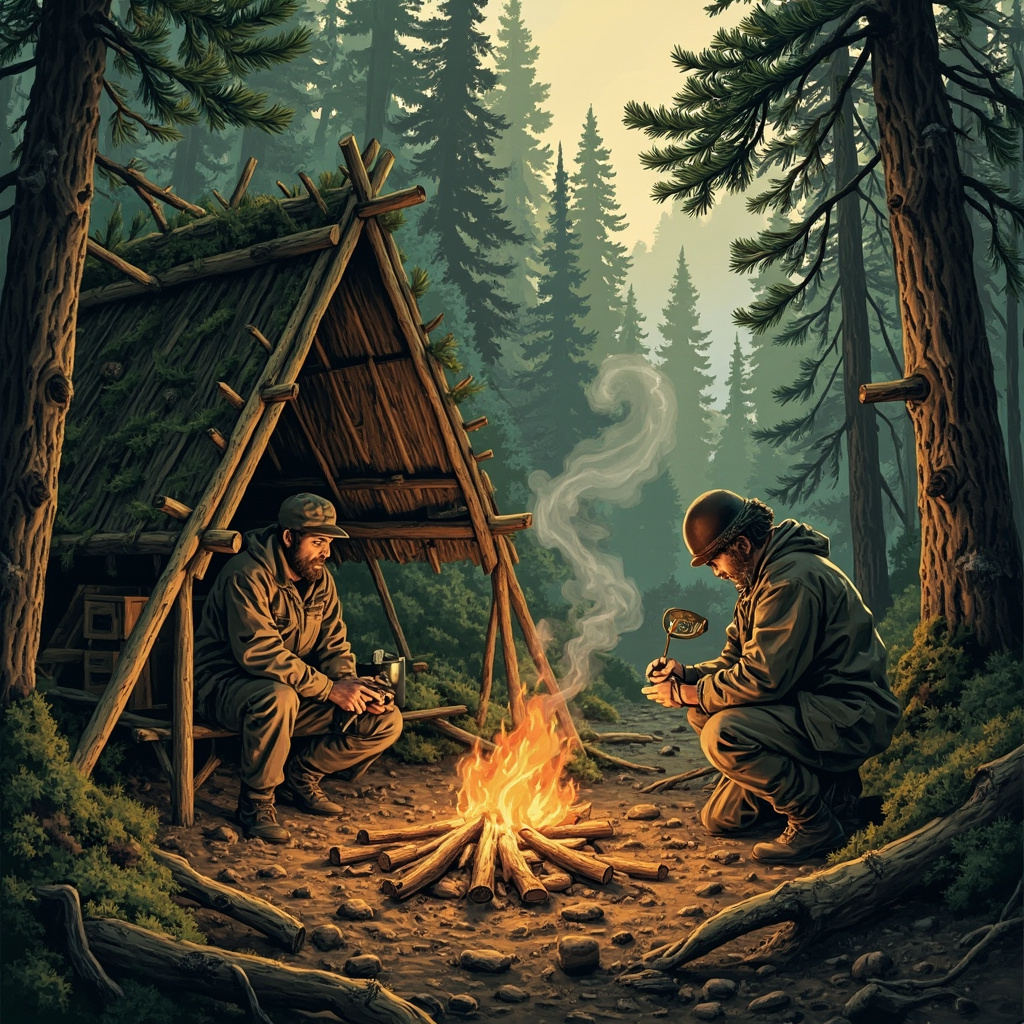
- Debris hut construction: Pile dry leaves, pine needles, and bracken to create an insulating cocoon. A well-built debris hut can retain enough body heat to keep you alive in sub-freezing temperatures without a sleeping bag.
- Lean-to frame: Lash a horizontal ridgepole between two trees and angle branches to form a sloped roof, then layer with natural material. Takes under 30 minutes with practice.
- Snow quinzhee: In winter, pack snow into a mound, let it sinter for two hours, then hollow it out. Interior temperature stabilizes around 32°F (0°C)—cold, but survivable.
The Nature Reliance School recommends building each shelter type at least five times in controlled conditions before you ever need it in an emergency.
Fire Starting Without Matches or a Lighter
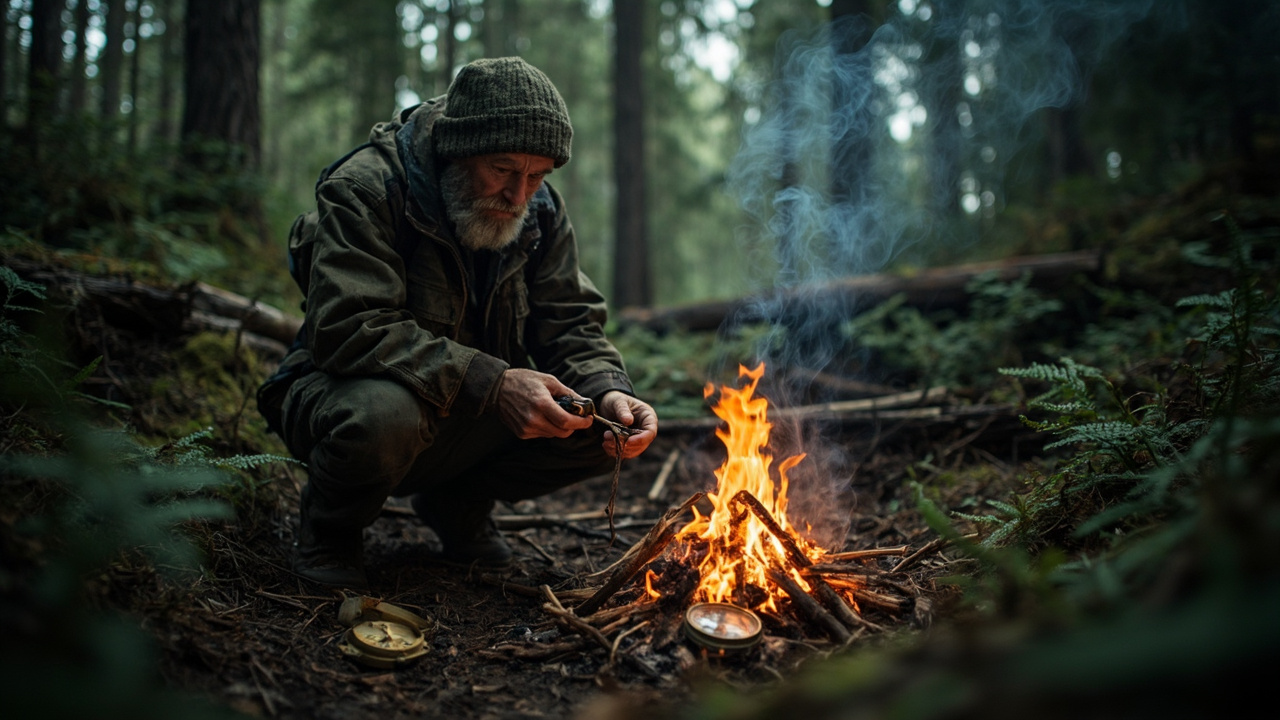
Fire serves four survival functions: warmth, water sterilization, food preparation, and signaling. Most people can start a fire with a lighter. Fewer can do it in rain, wind, or darkness with only natural materials.
Three friction-fire methods ranked by difficulty:
- Bow drill — Most reliable friction method; requires a fireboard, spindle, handhold, and bow. Achievable by most adults after a few hours of practice.
- Hand drill — Faster in dry conditions; harder in humidity. Requires straight, dry cordage and consistent pressure.
- Fire plow — Lowest gear requirement; works well in arid climates.
According to Prepare Blog's primitive survival skills guide, the bow drill is the method most consistently taught in certified wilderness survival courses because it works across climate zones and wood species.
Tinder selection is equally important. Dried cattail fluff, birch bark shavings, and punkwood from rotted stumps catch a coal faster than green or wet material. Gather tinder before you need it.
Water Purification: Speed and Reliability
The human body can survive roughly 72 hours without water under moderate conditions, less in heat or physical exertion. Natural water sources—streams, ponds, rainwater—carry bacteria, protozoa, and viruses that cause rapid incapacitation.
Methods ranked from simplest to most thorough:
- Boiling: Bringing water to a rolling boil for one minute (three minutes above 6,500 feet elevation) kills pathogens reliably. Requires fire.
- Chemical treatment: Iodine tablets or sodium hypochlorite (unscented household bleach, 8 drops per gallon) work within 30 minutes for clear water. Cheaper and lighter than filters.
- Mechanical filtration: Portable filters like the Sawyer Squeeze or LifeStraw remove protozoa and bacteria but not all viruses. Ideal for North American backcountry; add chemical treatment in regions with viral contamination.
- Solar disinfection (SODIS): Fill a clear PET plastic bottle, leave in direct sunlight for 6 hours (48 hours if cloudy). Effective for viruses; time-consuming.
The American Red Cross details water safety protocols in its 11 Survival Skills That Could Save Your Life resource, which is updated regularly and freely accessible online.
First Aid Without a Hospital
In a grid-down or wilderness emergency, the nearest emergency room may be hours away. Basic first aid knowledge closes that gap.
Priority skills identified by the Red Cross:
- Bleeding control: Direct pressure for a minimum of five minutes without lifting the dressing; tourniquet application for arterial bleeding in limbs.
- Shock recognition: Pale, clammy skin; rapid shallow breathing; confusion. Lay the person flat, elevate legs if no spinal injury suspected, keep warm.
- Wound cleaning: Irrigation with clean water under pressure removes debris more effectively than antiseptic wipes alone.
- Splinting: Improvised splints from sticks and strips of clothing immobilize fractures and reduce pain during evacuation.
- Hypothermia management: Remove wet clothing, insulate from ground, apply warm (not hot) water bottles to the neck, armpits, and groin.
The Red Cross offers in-person and online first aid and CPR certification courses; the next session near you can be found at redcross.org.
Navigation: Finding Your Way When GPS Fails
Smartphone GPS depends on battery power and satellite connectivity—both unreliable in prolonged emergencies. Map-and-compass navigation is a perishable skill that requires annual practice.
Three navigation fundamentals:
- Orienting a topographic map: Align north on the map with magnetic north using a baseplate compass. Identify at least two landmarks to confirm your position.
- Taking a bearing: Point the direction-of-travel arrow at your destination, rotate the bezel until north aligns with the compass needle, and follow the arrow.
- Natural navigation: The sun rises in the east and sets in the west. In the Northern Hemisphere, moss grows thicker on the north side of trees; Polaris (the North Star) sits within 1° of true north.
Practice navigating without GPS on familiar terrain before applying these skills in unfamiliar emergencies.
Building Your Training Plan
Survival skills degrade without practice. The Nature Reliance School and Prepare Blog both recommend a structured, progressive approach:
- Month 1: Shelter building. Build three different types in your backyard or local woods.
- Month 2: Fire starting. Achieve a bow-drill coal ten times before moving on.
- Month 3: Water purification. Practice every method listed above at least once.
- Month 4: First aid. Complete a Red Cross Wilderness First Aid course or equivalent.
- Month 5: Navigation. Complete a day hike using only map and compass.
- Month 6: Integrate all skills in a 48-hour simulated emergency scenario.
Repeat the cycle annually. Each repetition reinforces muscle memory and reveals gaps.
The Mindset Edge
Every survival instructor agrees: panic kills faster than most physical threats. A controlled, systematic response—shelter first, water second, signal third—preserves energy and improves decision quality. Familiarity with these skills, built through repetitive practice, is the most reliable way to reduce panic response.
As Craig Caudill of Nature Reliance School notes, confidence comes from competence, not from gear. You cannot buy your way out of a survival situation; you train your way through it.
Where to Start Today
- Free resource: Red Cross survival skills guide — updated reference with step-by-step instructions.
- Course: Nature Reliance School offers in-person and online wilderness survival courses at naturereliance.org.
- Deep dive: Prepare Blog's primitive survival skills article covers zero-gear techniques for long-term scenarios.
- Certification: Red Cross Wilderness and Remote First Aid (WRFA) — 20-hour course, nationally recognized.
The best time to learn these skills was before the last disaster. The second best time is today.