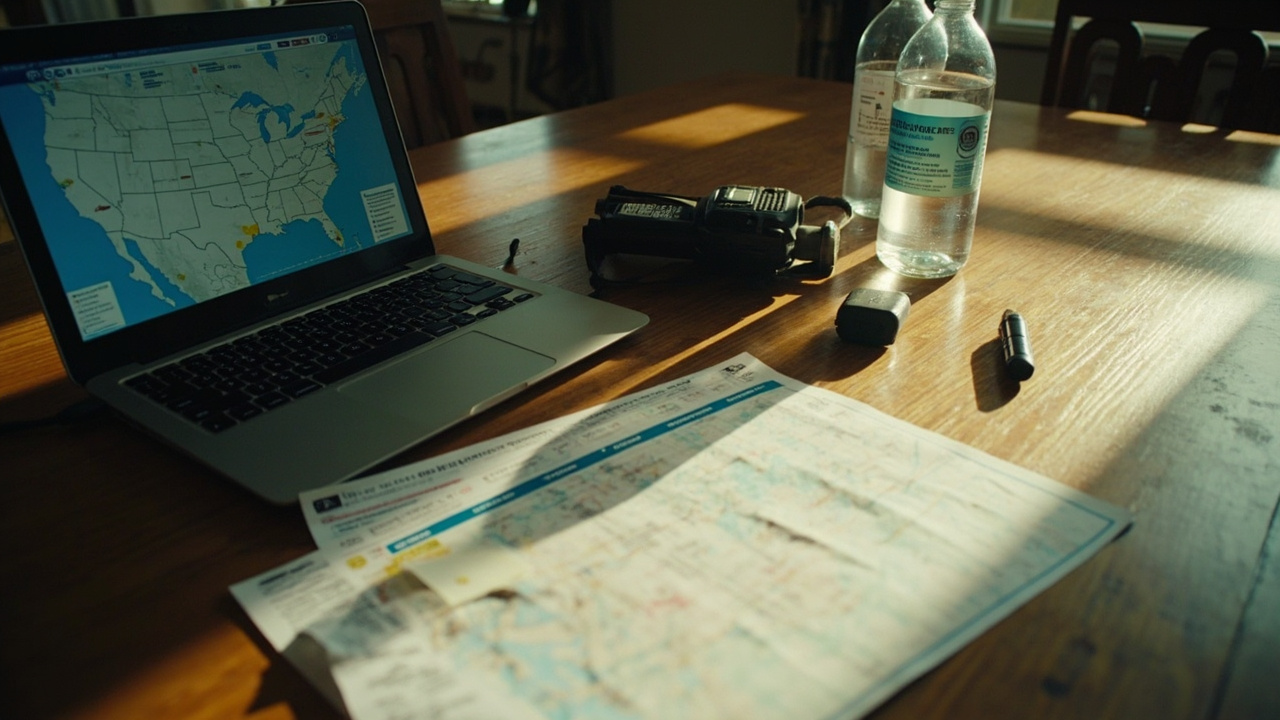
TL;DR: FEMA's Search Your Location page at fema.gov/locations is a state-and-territory lookup that shows active and past disaster declarations, how to reach local emergency management offices, and FEMA's newest releases for that area.
FEMA's guidance for households starts with an address, not a national headline. The agency's Search Your Location page returns the declaration record for a state or territory, contact routes to local emergency management and FEMA's recent communications about disasters there. FEMA's June 1, 2026 hurricane-season release tells families to use the page's search function to find local emergency management departments so they can sign up for alerts. FEMA's homepage counted 152 disaster declarations for states and counties in 2026 and listed individual assistance as available for areas affected by Hurricane Isaias in Florida from October 6 to October 12, 2026, and continuing.
What the page returns
The page carries a "last updated" line of December 20, 2023, and lists three result categories for a searched location: active and past disaster declarations; state or territory resources, including how to reach local emergency management offices; and recent news releases, fact sheets and other communications about disasters and emergencies in that place. A separate link leads to tribal resources.
FEMA frames the page around local authority. The page states that local officials and community leaders hold the most important information about disasters and emergency management, and that local governments plan, prepare and respond with state and federal support.
The federal lookup works as an index into those local systems: it shows which disasters are declared in a state and which office to contact. It does not issue an evacuation order.
Why FEMA points households here
The June 1, 2026 release, "As Hurricane Season Begins, FEMA Stands Ready to Support States, Territories Facing Potential Storms," lists the search function among the alert steps it recommends. The same document sends households to state and local government websites for alert sign-ups, to the free FEMA App for weather alerts covering up to five U.S. locations, and to local television, radio and emergency management, fire and police channels for warnings.
That release also sketches the federal side of the arrangement. FEMA reported training more than a million state, local, tribal and territorial first responders, emergency managers and local leaders over the past year, and it described supplies staged for quick deployment at the request of states, Tribal Nations and territories: more than 300,000 generators, more than 7 million meals and 3 million liters of water.
FEMA's September 1, 2026 National Preparedness Month release, which launched the "Americans Stand Ready" theme, gives a matching instruction in its "Be in the know" step: join your community's warning system and keep several ways to receive alerts, including the Emergency Alert System and NOAA Weather Radio.
Three checks to run on your state page
Confirm what has been declared. The list shows active and past declarations for the state or territory you search. FEMA's declaration pages carry the incident periods, such as July 12 to August 4, 2026, for Texas DR-4935-TX, and October 6 to October 12, 2026, for Florida's Hurricane Isaias declaration, DR-4955-FL.
Find the office and join its alert list. FEMA's June 2026 release describes the search function as a route to local emergency management departments for exactly that purpose.
Separate a declaration from an application. Individual assistance is a distinct step. FEMA's FAQ on area eligibility sends applicants to DisasterAssistance.gov, where a city or ZIP code lookup leads to a county or parish under "declared counties."
What the page does not do
It does not accept an application for aid. FEMA's eligibility FAQ routes survivors to DisasterAssistance.gov and notes that applications are typically accepted for 60 days from the date of a disaster declaration, with deadlines sometimes extended.
It is also not a warning system. The June 2026 release directs people to local broadcasters and local emergency management, fire and police departments for warnings, and to the FEMA App for weather alerts.
FEMA's Current Disasters page covers the surrounding material: the formal declaration process, assistance for individuals and public infrastructure, and ways to volunteer or donate.
Where the 2026 record stands
FEMA's homepage reported 152 disaster declarations for states and counties in 2026 and highlighted four with individual assistance available:
- Texas DR-4935-TX — severe storms, straight-line winds, tornadoes and flooding from July 12 to August 4, 2026, and continuing.
- Florida DR-4955-FL — Hurricane Isaias from October 6 to October 12, 2026, and continuing.
- West Virginia DR-4953-WV — severe storms and flooding from August 14 to August 18, 2026, and continuing.
- Wisconsin DR-4949-WI — severe storms and tornadoes from July 27, 2026, and continuing.
FEMA's Current Disasters page lists deployed staff working on Guam's Super Typhoon Bavi, the Hawaii earthquake, Indiana and Ohio severe storms, Oglala Sioux Tribe and Pueblo of Zuni severe storms, West Virginia's July and August storms, Wisconsin severe storms and wildfire actions. The agency says it keeps more than 4,000 reservists available to deploy, alongside surge capacity from other federal agencies.
The household work behind the lookup
FEMA's September 2026 release sets out three steps: make a household plan that includes pets and evacuation routes, keep several alert channels, and assemble a kit gradually from items already at home, such as canned food and first aid supplies, with the full list at Ready.gov/kit.
FEMA's National Preparedness Month blog adds household detail: a needs checklist for each person covering medications, mobility devices, communication tools, glasses and hearing aid batteries, and, for pets, a pet-friendly shelter identified in advance, vaccination records kept available, and food, water, leashes and medications packed.
The June 2026 release adds supply and insurance details for storm season: enough food, water and other supplies for at least a week, including medication, cleaning and pet supplies; and flood coverage through an insurer or the National Flood Insurance Program at floodsmart.gov, with a 30-day waiting period noted.
Put the lookup on a schedule
Search your state, save the local alert sign-up link and revisit the declaration list when storm or fire season approaches. The page's update line reads December 20, 2023, while FEMA's releases and local offices carry the current guidance for an active event.