Find Your State Emergency Management Agency Before You Need It
TL;DR: Use the USAGov state selector to find your state's emergency management agency, call 1-844-USAGOV1 for help navigating federal pages, and keep several days of food, water and basic supplies ready at home, work and in your car.
What State Emergency Management Agencies Do
State emergency management agencies coordinate disaster preparedness, response and recovery inside each state, territory and the District of Columbia, according to the sourced answer summarizing the federal directory pages including State emergency management agencies | USAGov. The directory describes those offices as the state-level point of contact for managing emergencies. Federal grant information summarized in the same research answer notes that those agencies are eligible to apply for specific federal programs such as the Emergency Management Performance Grant. Households use the agencies for state-specific alerts, plans, shelter information and recovery referrals. The U.S. Department of Homeland Security maintains a companion directory titled State Homeland Security and Emergency Services | Homeland Security that links to homeland security and public safety websites from the states, territories and the District of Columbia. That companion directory shows a Last Updated date of 09/04/2026. Together, the two federal listings give families a starting place for official state instructions rather than general advice.
How To Find Your Agency on USAGov
The page titled State emergency management agencies | USAGov instructs visitors to find their state's emergency management agency. The page provides a prompt that reads Select or type your state or territory. The selector includes entries for all 50 states plus the District of Columbia, Guam, Puerto Rico, the U.S. Virgin Islands and the Republic of Palau. Listed examples include Alabama (AL), Alaska (AK), Arizona (AZ), Arkansas (AR), California (CA), Colorado (CO), Connecticut (CT) and Delaware (DE). Additional listed examples include District of Columbia (DC), Florida (FL), Georgia (GA), Guam (GU), Hawaii (HI), Idaho (ID), Illinois (IL) and Indiana (IN). Further listed examples include Iowa (IA), Kansas (KS), Kentucky (KY), Louisiana (LA), Maine (ME), Maryland (MD), Massachusetts (MA) and Michigan (MI). The list continues with Minnesota (MN), Mississippi (MS), Missouri (MO), Montana (MT), Nebraska (NE), Nevada (NV), New Hampshire (NH) and New Jersey (NJ). Remaining listed examples include New Mexico (NM), New York (NY), North Carolina (NC), North Dakota (ND), Ohio (OH), Oklahoma (OK), Oregon (OR) and Pennsylvania (PA). The selector also lists Puerto Rico (PR), Republic of Palau (PW), Rhode Island (RI), South Carolina (SC), South Dakota (SD), Tennessee (TN), Texas (TX) and U.S. Virgin Islands (VI). The final listed entries are Utah (UT), Vermont (VT), Virginia (VA), Washington (WA), West Virginia (WV), Wisconsin (WI) and Wyoming (WY). Selecting an entry routes the household to that state or territory emergency management office.
Phone and Central Federal Navigation
The page titled Disasters and emergencies | USAGov lists the phone number 1-844-USAGOV1 (1-844-872-4681). The research summary for State emergency management agencies | USAGov states that contact information for a specific state or territory agency can be found through the official USAGov portal or by calling 1-844-872-4681. The Disasters and emergencies | USAGov page groups related federal help under the heading Most popular. That Most popular group includes Get emergency financial help like disaster assistance and D-SNAP. The same Most popular group includes Find your state's emergency management agency. The same Most popular group includes Visit Ready.gov to learn what to do before or after a natural disaster. The broader page also lists Financial assistance after a disaster with instructions to learn how to get emergency government aid after a natural disaster. It lists How to find housing after a disaster with instructions to find a shelter and see if you qualify for help paying for housing after a disaster. It lists How to help survivors after a disaster with instructions to learn how to donate money or items to disaster survivors and the best way to volunteer in person.
What the DHS State Directory Adds
The directory titled State Homeland Security and Emergency Services | Homeland Security provides links to homeland security and public safety websites from the states, territories and the District of Columbia. For Alabama, it lists Alabama - state website, Alabama Emergency Management and Public Safety. For Alaska, it lists Alaska - state website and Homeland Security and Emergency Management. For Arizona, it lists Arizona - state website, Homeland Security, Arizona Emergency Management and Public Safety. For Arkansas, it lists Arkansas - state website and Arkansas Emergency Management. For California, it lists California - state website and Homeland Security and Emergency Management. For Colorado, it lists Colorado - state website, Colorado Division of Homeland Security and Emergency Management and Colorado Public Safety. For Connecticut, it lists Connecticut - state website and Connecticut Emergency Management and Homeland Security. For Delaware, it lists Delaware - state website, Delaware Emergency Management and Preparing for the Threat of Terrorism - Delaware. For District of Columbia, it lists District of Columbia - district website and District of Columbia Homeland Security and Emergency Management. For Florida, it lists Florida - state website, Florida Department of Law Enforcement and Florida Emergency Management. For Texas, it lists Texas - state website and Texas Homeland Security and Emergency Management. For Washington, it lists Washington - state website and Washington Emergency Management.
What Ready.gov Says To Do Before and After
The page titled Disasters and emergencies | USAGov includes a section titled What to do before and after a natural disaster or emergency with instructions to learn how to prepare for a natural disaster or emergency. That page points households to Visit Ready.gov to learn what to do before or after a natural disaster. The site titled Plan Ahead for Disasters | Ready.gov presents preparedness around storms, hurricanes, power outages, flooding, severe weather and emergency alerts. That Ready.gov overview includes the instruction to prepare for hurricanes now. It includes the instruction to know where to go if asked to evacuate quickly and how you and your family will get there. It includes the instruction to have alternative charging methods for a phone in case of power outages. It includes the flooding instruction that if you approach a flooded road or walkway, follow this rule: turn around, don't drown. It notes that severe weather can happen anytime and advises users to know risks and plan ahead. It notes that wireless emergency alerts allow officials to provide the public with life-saving information quickly. It also includes prompts to Build a Kit and to make sure an emergency kit is stocked with the right items.
Basic Kit Items Listed by Ready.gov
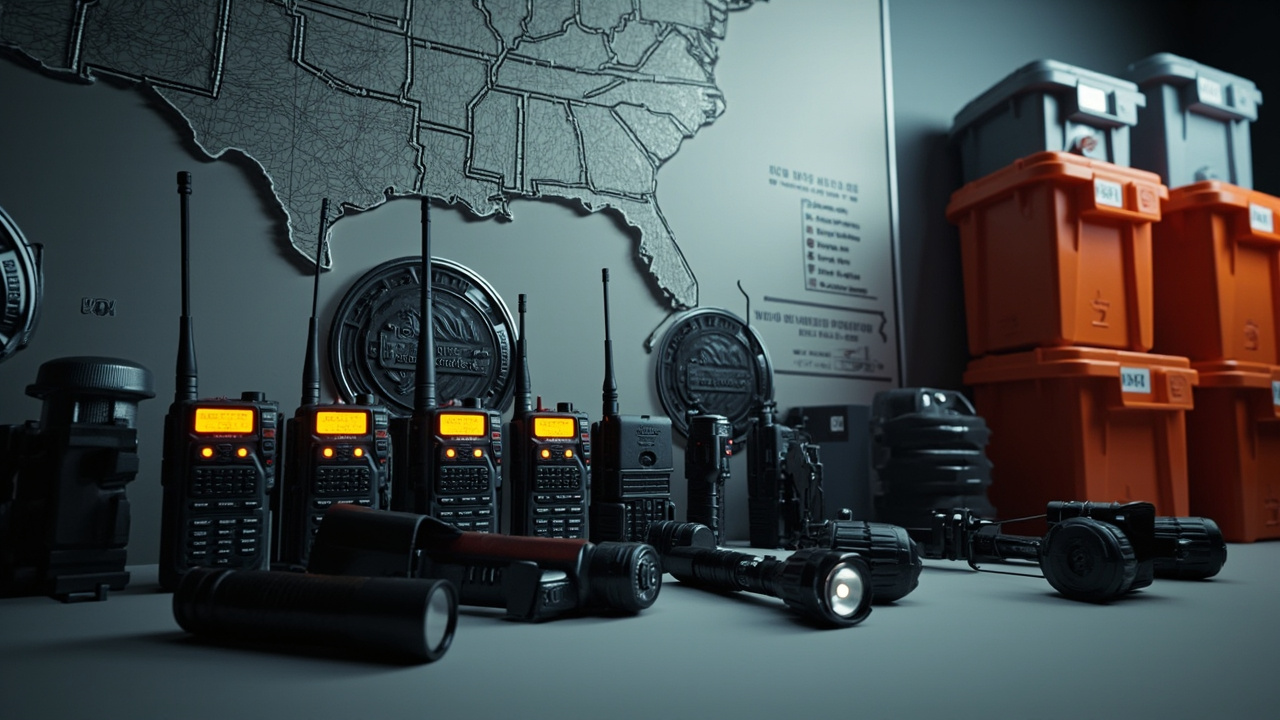
The page titled Build A Kit | Ready.gov states that after an emergency, you may need to survive on your own for several days. That page states that being prepared means having your own food, water and other supplies to last for several days. That page defines a disaster supplies kit as a collection of basic items a household may need in the event of an emergency. That page advises storing items in airtight plastic bags and putting the entire disaster supplies kit in one or two easy-to-carry containers such as plastic bins or a duffel bag. The basic list includes Water (one gallon per person per day for several days, for drinking and sanitation). The basic list includes Food (at least a several-day supply of non-perishable food). The basic list includes Battery-powered or hand crank radio and a NOAA Weather Radio with tone alert. The basic list includes Flashlight, First aid kit, Extra batteries and Whistle (to signal for help). The basic list includes Dust mask (to help filter contaminated air). The basic list includes Plastic sheeting, scissors and duct tape (to shelter in place). The basic list includes Moist towelettes, garbage bags and plastic ties (for personal sanitation). The basic list includes Wrench or pliers (to turn off utilities), Manual can opener (for food), Local maps and Cell phone with chargers and a backup battery. The page shows a Last Updated date of 07/01/2026.
Added Supplies for Health, Documents and Children
The page titled Build A Kit | Ready.gov advises considering what unique needs a family might have, such as supplies for pets or seniors. The additional-items section includes Soap, hand sanitizer and disinfecting wipes to disinfect surfaces. It includes prescription medications and notes that an emergency can make it difficult to refill a prescription or find an open pharmacy. It advises organizing and protecting prescriptions, over-the-counter drugs and vitamins to prepare for an emergency. It includes non-prescription medications such as pain relievers, anti-diarrhea medication, antacids or laxatives. It includes prescription eyeglasses and contact lens solution. It includes infant formula, bottles, diapers, wipes and diaper rash cream. It includes pet food and extra water for a pet. It includes cash or traveler's checks. It includes important family documents such as copies of insurance policies, identification and bank account records saved electronically or in a waterproof, portable container. It includes sleeping bag or warm blanket for each person and complete change of clothing appropriate for climate and sturdy shoes. It includes fire extinguisher, matches in a waterproof container, feminine supplies and personal hygiene items, mess kits, paper cups, plates, paper towels and plastic utensils, paper and pencil and books, games, puzzles or other activities for children.
Where To Store Kits and How To Maintain Them
The page titled Build A Kit | Ready.gov states that since you do not know where you will be when an emergency occurs, prepare supplies for home, work and cars. For home, it says keep the kit in a designated place and have it ready in case you have to leave home quickly. For home, it says make sure all family members know where the kit is kept. For work, it says be prepared to shelter at work for at least 24 hours. For work, it says the work kit should include food, water and other necessities like medicines, as well as comfortable walking shoes, stored in a grab and go case. For car, it says in case you are stranded, keep a kit of emergency supplies in the car. For maintenance, it says keep canned food in a cool, dry place. For maintenance, it says store boxed food in tightly closed plastic or metal containers. For maintenance, it says replace expired items as needed. For maintenance, it says re-think needs every year and update the kit as family needs change.