TL;DR: FEMA's disaster FAQ answers household questions about evacuation kits, eligibility, inspections and appeals, and the newest verified figures — two Federal Register notices published Nov. 6, 2026 — set a $46,400 maximum for housing assistance and $46,400 for other needs, plus $820 in Serious Needs Assistance, for disasters declared on or after Oct. 1, 2026.
FEMA's Frequently Asked Questions About Disasters page collects the agency's answers to survivor questions about Individual Assistance: what to carry when you leave, how to reach family, who qualifies and why federal teams may not be on your street yet. On Nov. 6, 2026, FEMA set the ceiling for its main household program at $46,400 for housing assistance and $46,400 for other needs for any single emergency or major disaster declared on or after Oct. 1, 2026, according to the Federal Register notice.
The newest numbers: $46,400 caps and $820 for serious needs
The notice describes $46,400 as the maximum available to an individual or household in a single emergency or major disaster, covering housing assistance and other needs assistance. FEMA tied the adjustment to a 3.4 percent rise in the Consumer Price Index for All Urban Consumers over the 12 months ending in August 2026, figures the Bureau of Labor Statistics released Sept. 11, 2026.
A companion notice the same day set Serious Needs Assistance at $820 per individual or household for a single emergency or major disaster, again for declarations on or after Oct. 1, 2026. FEMA called it the annual adjustment required by its rules at 44 CFR 206.119(b)(1).
Two Dec. 7 deadlines, one month out
Wisconsin Emergency Management said on Nov. 6, 2026 that households in Forest, Outagamie, Vilas and Winnebago counties have until Dec. 7, 2026 to seek FEMA assistance or a Small Business Administration physical disaster loan tied to the July 27, 2026 storms and tornadoes. The agency advised filing before the cutoff even with an insurance claim still open, because FEMA needs a copy of the settlement or denial before an application can be considered, and federal law prevents FEMA from covering losses an insurer already pays for. Applications go through DisasterAssistance.gov, 1-800-621-3362 or a Disaster Recovery Center listed at fema.gov/drc.
West Virginia faces the same Dec. 7 cutoff. WDTV reported Nov. 4, 2026 that the Disaster Recovery Center for Harrison County's mid-August flooding had moved to the Harrison County Courthouse, that FEMA had approved more than $750,000 for the county, and that Federal Coordinating Officer Mark O'Hanlon advised visitors to bring proof of residence, receipts for repairs already made and photographs of the damage.
What FEMA says to pack before you leave
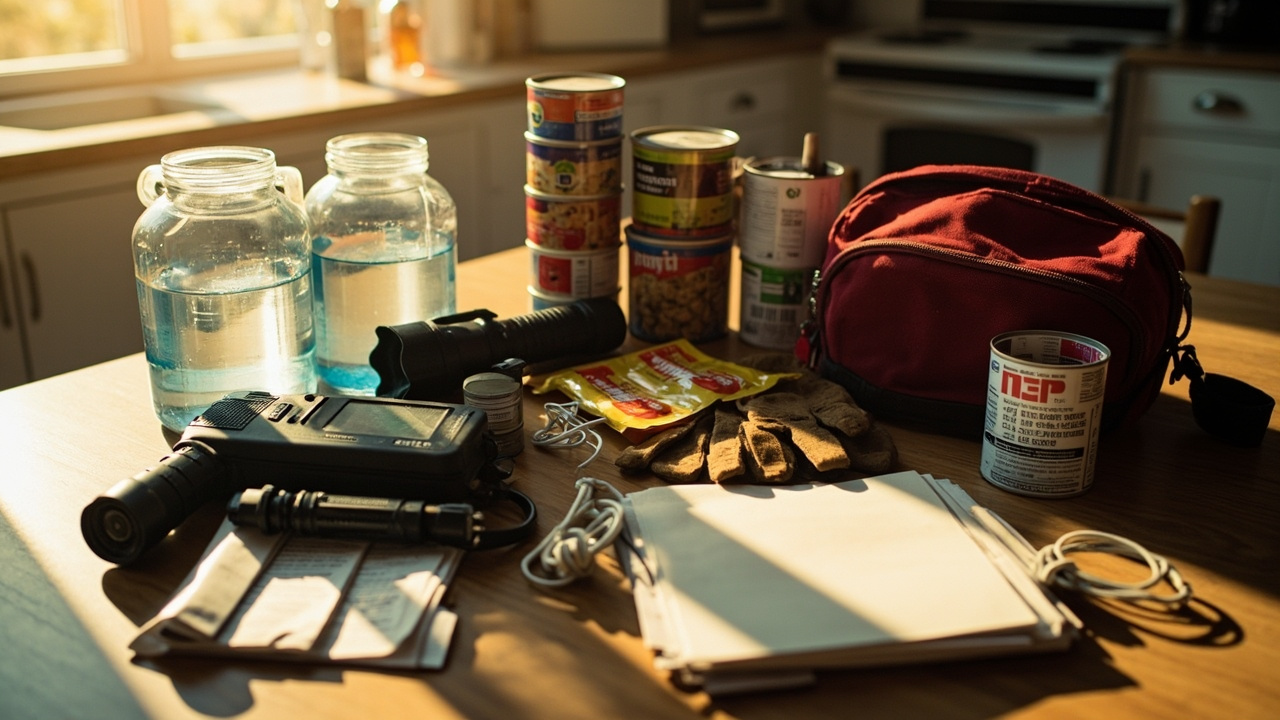
FEMA's answer starts with a warning that a household may have to manage alone for several days after an emergency. The basic kit centers on water — a gallon per person per day, enough for several days — and non-perishable food for a similar stretch. FEMA also lists a battery-powered or hand-crank radio, flashlight and spare batteries, a whistle, a first aid kit, a dust mask for contaminated air, plastic sheeting with scissors and duct tape, a wrench or pliers, a manual can opener, and a phone with a charger and backup battery.
The page adds that a kit should reflect a household's own needs.
Why FEMA has not arrived yet
FEMA's answer is procedural: the agency moves only after an official request, because a state, tribal or territorial government has to ask for federal help before FEMA sends recovery resources. FEMA says it does not respond on its own to every disaster and acts at the invitation of the affected governing body.
A governor's emergency declaration does not open Individual Assistance by itself. FEMA's guidance on when households can apply says a separate presidential major disaster declaration designated for Individual Assistance is required, and that a county left off an initial declaration may be added later.
Who qualifies for Individual Assistance
FEMA's eligibility list has four parts: the home was the applicant's main residence when the disaster happened; the applicant owns or rents it; the damage is not covered by insurance; and the applicant is a U.S. citizen, non-citizen national or qualified alien. The page notes that requirements can vary by disaster type and federal regulation, and points applicants to DisasterAssistance.gov, the helpline at 1-800-621-3362 (7 a.m. to 10 p.m. in the caller's time zone, seven days a week) or a Disaster Recovery Center, which FEMA says usually brings shorter waits and one-on-one help.
After you apply: letters, inspections and appeals
FEMA's September 2026 guidance on what follows an application describes the sequence. Applicants get a nine-digit FEMA application number to keep. If home damage was reported, an inspector may call from an unfamiliar or restricted number and will show official FEMA photo identification; there is no charge for the visit, and inspectors do not request payment or bank details.
A decision letter then explains what was approved, or why a household was found ineligible and what to do next. FEMA says an ineligible finding is not necessarily the end of an application, citing missing proof of occupancy, ownership or identity, a pending insurance claim, or a missed call or inspection appointment. An applicant who disagrees can appeal in writing within 60 days of the letter's date, attaching documents such as contractor estimates, insurance settlement letters or proof of occupancy and ownership. Appeals go through DisasterAssistance.gov, by fax to 800-827-8112 or by mail, and FEMA warns that a shirt or jacket marked FEMA is not identification.
When the registration deadline has passed
Late applications can still be considered after a registration deadline passes. FEMA said on Nov. 5, 2026 that registration for the May 22, 2026 Kona earthquake closed Nov. 1, but that households kept from filing by extenuating circumstances may seek late consideration by calling 1-800-621-3362 or using DisasterAssistance.gov, explaining the delay and supplying any supporting information FEMA requests. FEMA reviews those requests case by case and does not guarantee approval, Big Island Now reported. The same announcement said the Small Business Administration accepts applications within 60 days of the filing deadline and that its disaster loans carry an automatic 12-month payment deferment at 0 percent interest.
Texts, not calls, when networks are strained
FEMA's FAQ recommends texts over voice calls after a disaster, because networks are frequently jammed or knocked out and texts stand a better chance of getting through. Social media can let relatives know a household is safe, and FEMA's advice for a missing loved one includes posting online, contacting local law enforcement, checking the Red Cross Safe and Well site and calling shelters and hospitals.