TL;DR: Universities Are Now Accredited Survival Schools
Universities across the United States, Nigeria, and the Arctic are embedding verified survival and emergency-preparedness skills — fire-starting, shelter construction, water purification, and crisis navigation — directly into accredited coursework, producing graduates equipped to handle real-world disasters far beyond the campus walls.
As of November 2022, The College of New Jersey (TCNJ) launched a first-year seminar titled "The Last of Us: A Study of Human Nature and Threats to Humankind", led by professor Steven Singer, which teaches students hands-on survival techniques alongside academic lessons about climate change and civilizational collapse. That program — cited in TCNJ's own news coverage — is part of a wider global movement reshaping what a university education looks like in an era of escalating emergencies.
Why Survival Skills Have Entered the Lecture Hall
The push to formalize survival training in higher education is not accidental. Between climate-driven disasters, extended institutional disruptions (Nigeria's Academic Staff Union of Universities, or ASUU, has staged strikes totaling over a year of lost academic time since 2020), and rising mental-health crises on campuses, university administrators are recognizing that resilience is a core competency — not an extracurricular hobby.
According to the United Nations Office for Disaster Risk Reduction, economic losses from natural disasters averaged $170 billion per year between 2000 and 2019. Students entering the workforce today will manage organizations, communities, and families through climate shocks, pandemics, and infrastructure failures that their parents never faced at scale. Embedding survival skills in degree programs is, in that context, not eccentric — it is overdue.
What Universities Are Actually Teaching
The College of New Jersey: Apocalypse as a Curriculum
Professor Steven Singer's seminar at TCNJ is the most widely cited example of formal survival education in a U.S. liberal arts setting. As reported by TCNJ News in November 2022, students in the course learn:
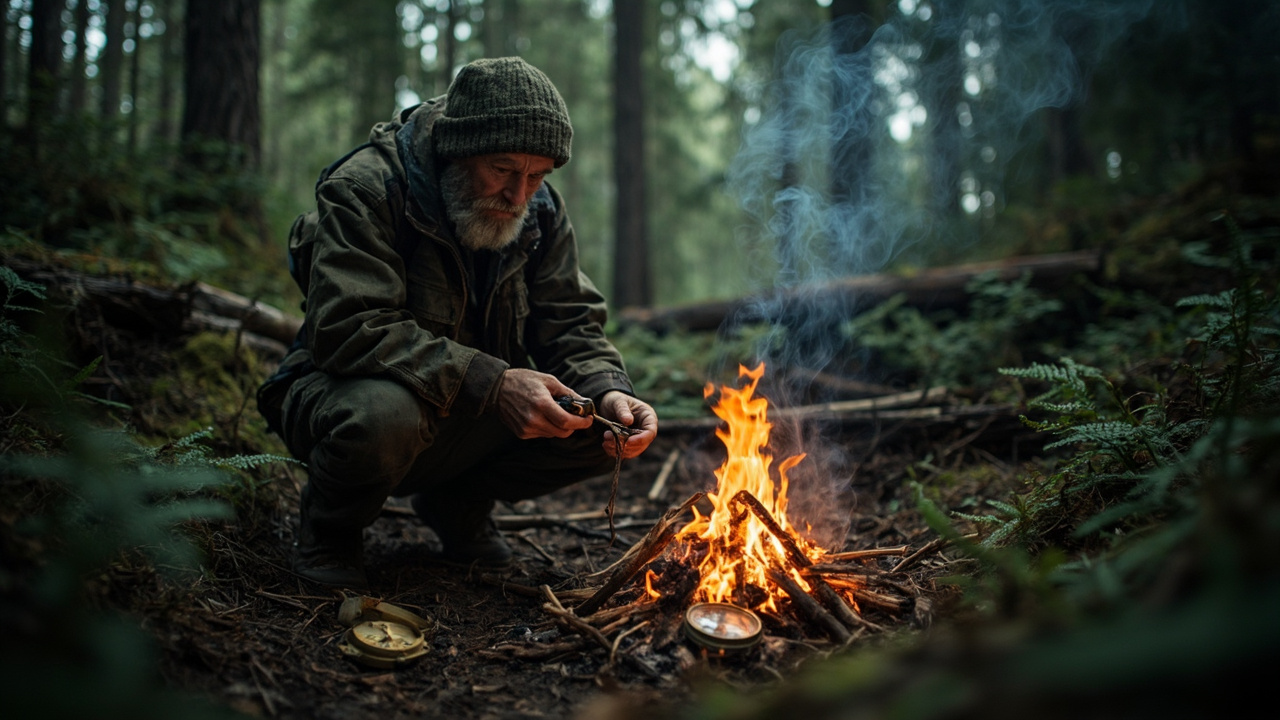
- Fire building using friction methods and flint-and-steel
- Knot tying for shelter construction and rescue situations
- Water purification — identifying and treating contaminated sources
- Orienteering — navigating using maps and compasses without GPS
- Foraging basics — identifying edible versus toxic plants
The course pairs these physical skills with lectures on sustainability, human psychology under stress, and the ethics of survival (who gets resources, who makes decisions). Singer requires students to keep reflective journals, connecting their hands-on experiences to systemic questions about climate change and societal collapse. The result, per TCNJ's reporting, is students who leave the seminar with both a fire-starting skill set and a fundamentally changed relationship to consumption and risk.
University at Buffalo: Wilderness First Aid in the Teaching Forest
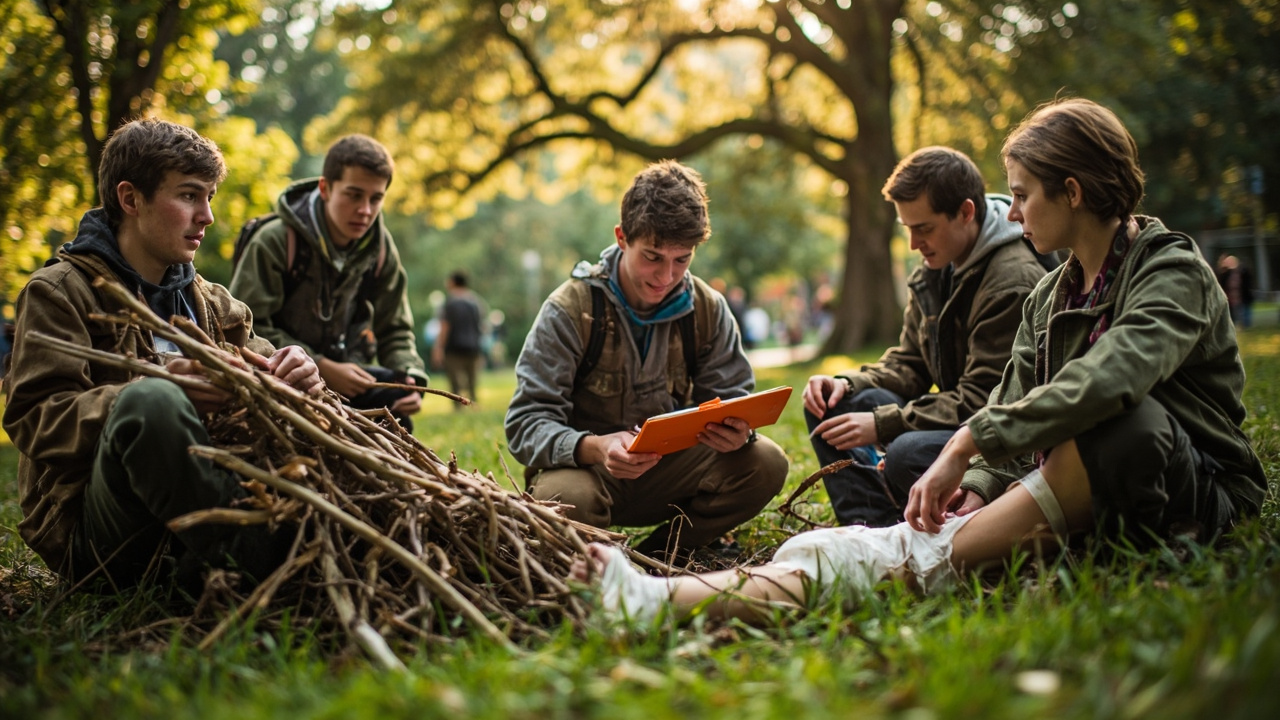
The University at Buffalo's College of Arts and Sciences offers a wilderness first-aid course conducted in Letchworth Teaching Forest, a real forest environment rather than a simulation lab. According to UB's College of Arts and Sciences feature published in November 2022, students in the program learn:
- Patient assessment in austere environments without hospital infrastructure
- Improvised splinting and wound care using only materials available in the field
- Evacuation planning — how to move an injured person miles from medical help
- Hypothermia and heat-stroke recognition and management
- Search and rescue protocols
The course is particularly aimed at students in health-related fields, but enrollment is open across disciplines. Instructors emphasize that wilderness medicine is not exotic — the same improvisation skills that keep someone alive three days into a backcountry hiking accident are the same skills needed when a Category 4 hurricane has made roads impassable and ambulances unavailable for 72 hours.
UNIS Svalbard: Survival in the Arctic
The University Centre in Svalbard (UNIS), Norway, offers AS-101: Arctic Survival and Safety — a 3-ECTS credited course that may be the most demanding survival curriculum at any accredited university in the world. Located above the 78th parallel north, UNIS trains students to survive in conditions where temperatures fall below −30°C and polar bears are a documented threat requiring firearms safety certification.
Per the UNIS course catalog, AS-101 covers:
- Cold-weather shelter construction including snow caves and wind-break bivouacs
- Navigation in whiteout conditions using dead reckoning and altimetry
- Frostbite and hypothermia field management
- Sea-ice safety and self-rescue from ice submersion
- Firearm handling for polar bear safety
AS-101 is a mandatory prerequisite for any fieldwork at UNIS. No student collects Arctic geological, ecological, or atmospheric data without first completing it. That institutional policy signals something important: in environments with real consequences, survival is not optional enrichment — it is a professional baseline.
The Four Core Survival Competencies — Applied to Everyday Emergencies
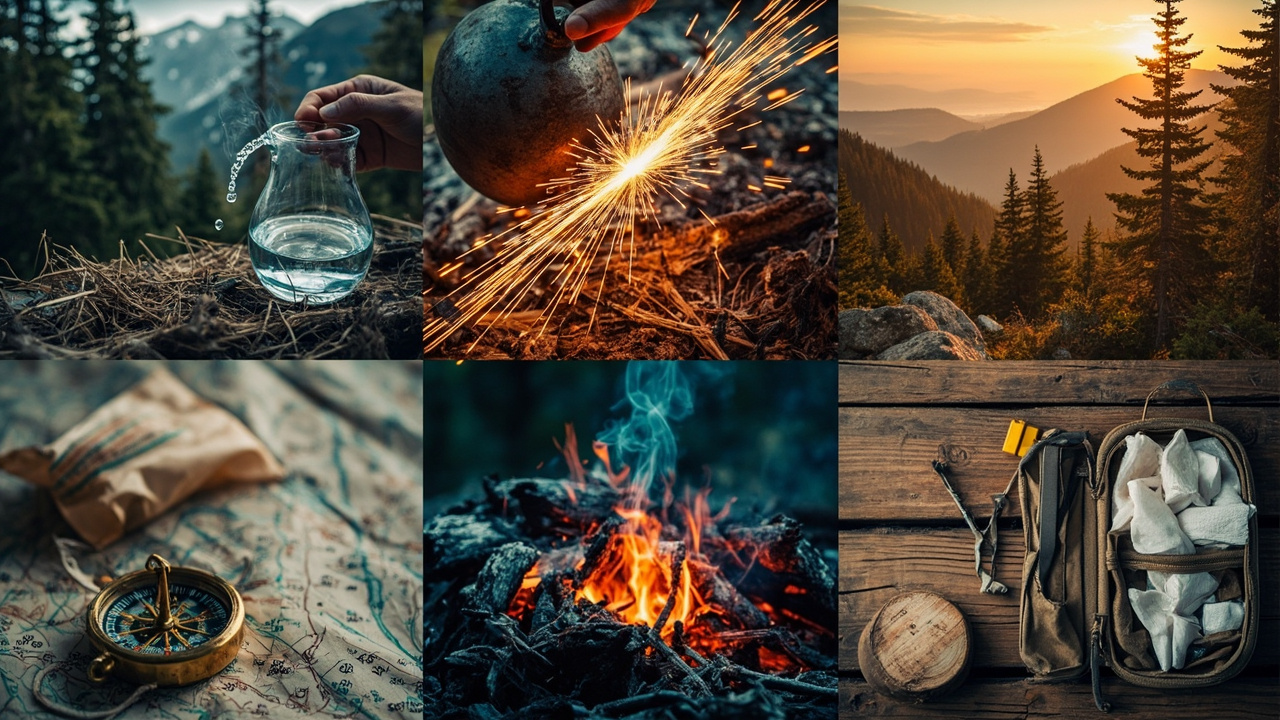
Across all three programs above, four competencies appear consistently. Each maps directly onto the emergency-preparedness scenarios Life Prepper readers are most likely to face:
1. Fire and Heat Management
In a prolonged power outage — common after ice storms, hurricanes, or grid attacks — the ability to safely create and maintain a heat source can be life-saving. TCNJ's Singer teaches students to start fires in wet conditions, a skill most adults have never practiced.
2. Water Treatment
FEMA's official guidance states that water becomes unsafe within 24 hours of a municipal boil-water advisory in a disaster. Knowing how to use iodine tablets, improvised ceramic filters, and solar disinfection (SODIS) means the difference between dehydration illness and hydration in a 72-hour shelter-in-place scenario.
3. Navigation Without Technology
GPS devices fail when batteries die or signals are jammed. The UB wilderness program and UNIS both require students to navigate with paper maps and compasses. In a wildfire evacuation where cell towers are down and roads are blocked, orienteering is the skill that gets you out.
4. Medical Improvisation
The UB program's wilderness first-aid focus teaches a principle emergency managers call "treat what you find": stabilize a patient using only what is physically present in the environment. In a mass-casualty event or an isolated rural disaster, waiting for EMS is not always an option.
The Nigerian University Parallel: When Institutional Disruption Is the Emergency
It would be misleading to write about universities and survival skills without acknowledging that for millions of Nigerian students, the survival challenge has been the university itself.
ASUU — the Academic Staff Union of Universities — staged its longest-ever strike from February to October 2022, shutting down all federal universities for eight consecutive months. Students lost their academic year, accommodation contracts, and income streams simultaneously. The federal government and ASUU were negotiating the Memorandum of Action under the mediation of the Nigerian government's Integrated Payroll and Personnel Information System (IPPIS) dispute.
For those students, adaptive skills — budgeting under income shock, community support networks, mental-health self-management, and improvising learning continuity — were the real survival curriculum. The ASUU crisis underlines that emergency preparedness is not only about wilderness or disaster scenarios. Institutional collapse, bureaucratic failure, and prolonged disruptions to essential services are emergencies requiring the same resilience mindset.
How to Apply These Skills Before the Next Emergency
You do not need to enroll at UNIS or TCNJ to build these competencies. Concrete steps any reader can take this month:
- Take a wilderness first-aid course. NOLS (National Outdoor Leadership School) and the Wilderness Medical Society offer 2-day WFA certifications nationwide for under $200.
- Practice fire-starting with three methods — lighter, ferro rod, and bow drill — before you need to.
- Build a 72-hour water supply and learn one field-purification method (boiling, iodine tablets, or a portable filter like the Sawyer Squeeze).
- Download and print your county's emergency evacuation map. Know two exit routes from your neighborhood that do not require GPS.
- Complete FEMA's free IS-100 Introduction to Incident Command System online course at training.fema.gov — it provides the decision-making framework that all U.S. emergency responders use.
The Bottom Line
Universities teaching survival skills are not offering novelty electives — they are responding to a measurable increase in the frequency and severity of disasters, institutional failures, and systemic disruptions that graduates will face as working adults. Whether it is Professor Singer's apocalypse seminar in New Jersey, the wilderness medicine training in Letchworth Forest, or the mandatory Arctic survival certification in Svalbard, the message is the same: the skills that keep you alive and functional in a crisis are learnable, and learning them before the crisis is the only rational strategy.
For Life Prepper readers, the takeaway is actionable: the curriculum these universities are standardizing — fire, water, navigation, medical improvisation, and crisis psychology — is the same curriculum every prepared household should standardize for itself.