Most Americans Have Zero Survival Skills — And That's a Crisis
TL;DR: The majority of American adults cannot perform basic survival tasks — including water purification, shelter building, or signaling for rescue — and emergency preparedness experts say this skills gap is the single greatest threat to civilian survival in a prolonged crisis.
The numbers are stark. According to the American Red Cross, fewer than 18% of Americans say they feel "very prepared" for a major disaster, and most households cannot perform the seven core survival skills that emergency instructors consider baseline competency. As natural disasters grow more frequent and severe — FEMA logged 28 separate billion-dollar weather events in the United States in 2023 alone — the cost of that ignorance is rising fast.
This article outlines exactly which skills matter most, what the authoritative sources say about each one, and how to start building real competency starting today.
The "Rule of Threes": Why These Skills Are Non-Negotiable
Survival instructors anchor every training program to the Rule of Threes: a human being can survive approximately 3 minutes without breathable air, 3 hours without shelter in extreme weather, 3 days without drinkable water, and 3 weeks without food. That hierarchy dictates which skills you learn first.
The rule is not a metaphor — it is a triage framework. A person who sprains an ankle in a February blizzard will die of hypothermia in hours if they cannot build a basic shelter, long before hunger or thirst becomes relevant. Understanding this sequence changes how preppers should prioritize their training time.
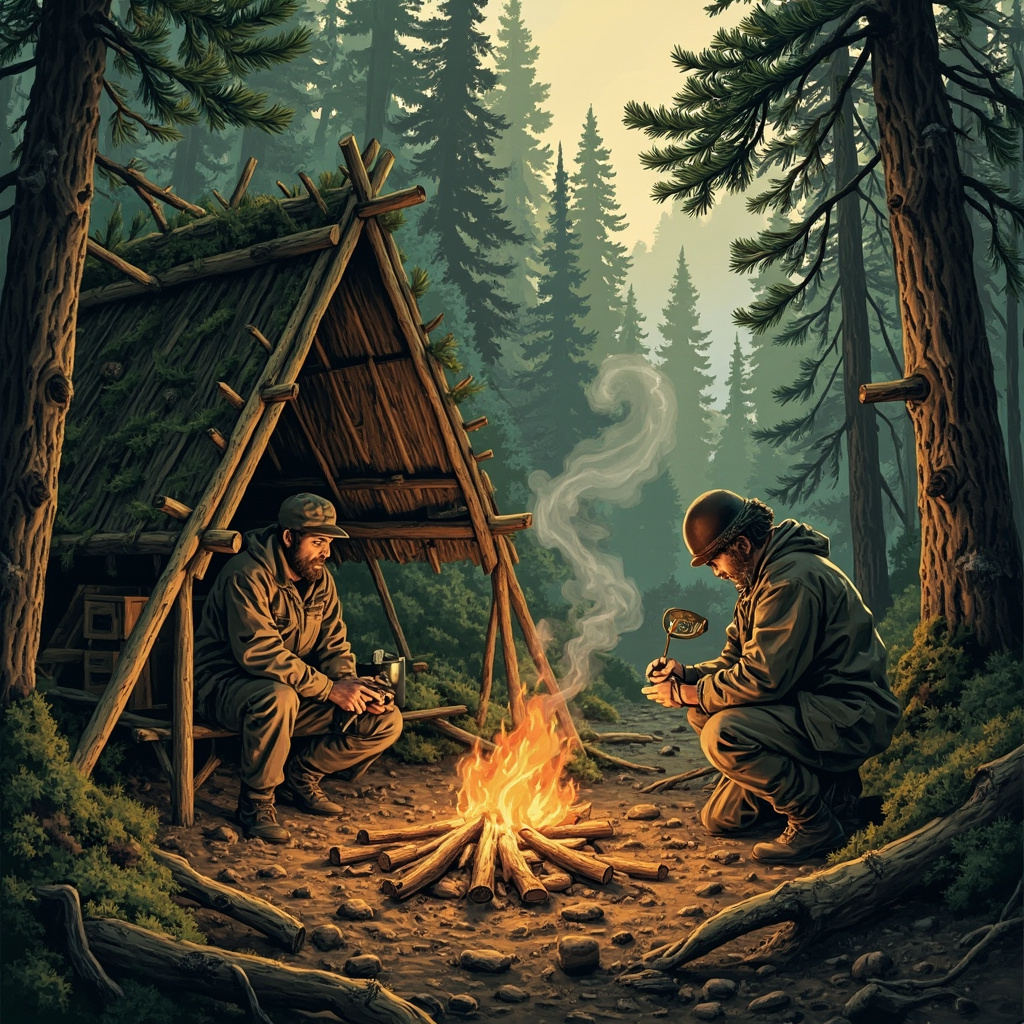
Skill #1 — Fire Building
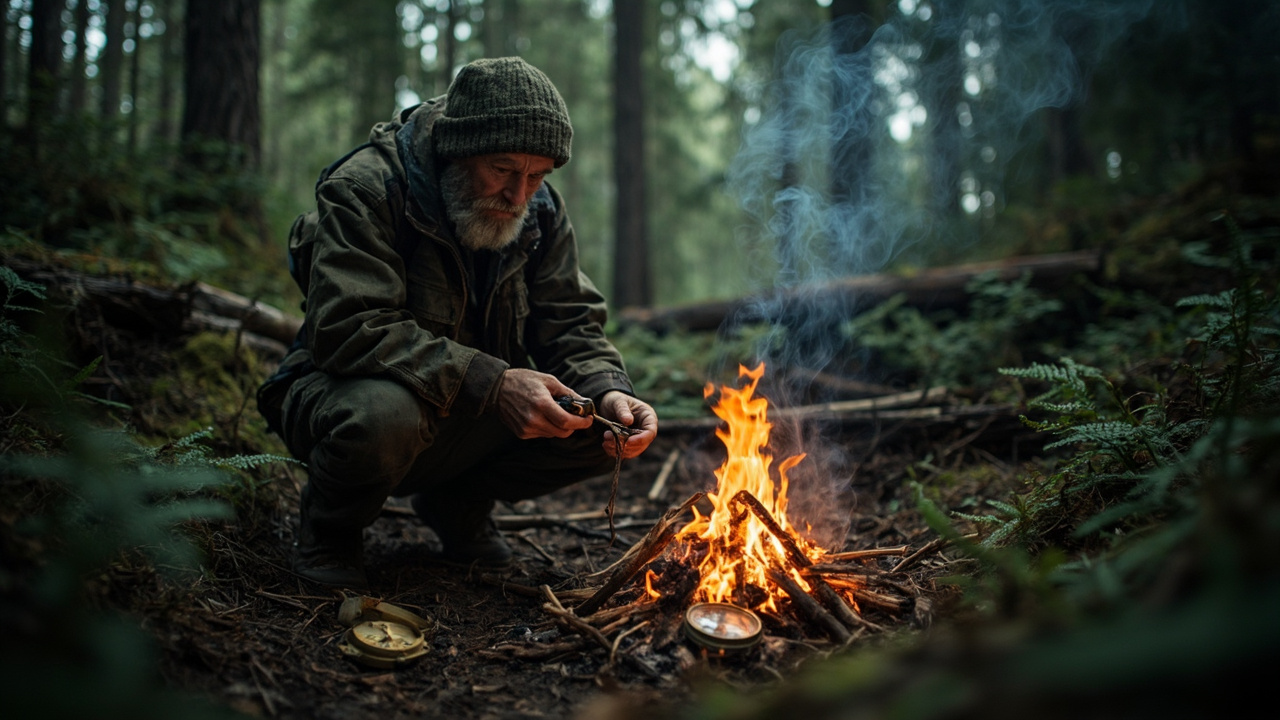
Fire addresses three of the most urgent survival needs simultaneously: warmth (preventing hypothermia), water purification (boiling), and signaling (smoke visible from aircraft). According to 11 Survival Skills That Could Save Your Life published by the American Red Cross, fire-starting is consistently listed among the top competencies civilians should master before any emergency occurs.
Practical training should cover at minimum four ignition methods:
- Waterproof matches — the minimum acceptable kit item
- Ferrocerium rod (ferro rod) — sparks in wet conditions where matches fail
- Magnification lens — reliable in direct sunlight without consumables
- Friction fire (bow drill) — zero-equipment backup; requires significant practice
Survival experts recommend practicing each method in realistic conditions — not just in your backyard on a dry afternoon — at least four times per year to maintain muscle memory.
Skill #2 — Emergency Shelter Construction
Exposure kills faster than almost any other wilderness hazard. Wind chill, rain, and snow can drop core body temperature into the danger zone within 90 minutes when a person is wet and inactive.
The Red Cross recommends learning both improvised natural shelters (debris huts, lean-tos) and the correct use of emergency bivy sacks and portable tents. Natural shelters require no equipment but demand practice — a poorly built debris hut provides almost no insulation. A properly constructed one can retain body heat even at 20°F (-7°C).
Key construction principles:
- Site selection: Avoid low ground (cold air and floodwater pool there), dead trees ("widow makers"), and exposed ridgelines.
- Insulation depth: The debris layer around your body should be at least 2 feet (60 cm) thick to provide meaningful thermal protection.
- Wind orientation: Position the shelter entrance away from prevailing wind direction.
Skill #3 — Water Procurement and Purification
Dehydration degrades cognitive function before physical collapse — meaning you will start making poor decisions long before you feel truly desperate. The 3-day survival window without water assumes mild temperatures and minimal exertion; in summer heat or after strenuous activity, that window compresses to 24 hours or less.
As detailed in Survival Guidelines: Essential Skills for New Preppers (WeLovePrepping, 2023), the foundational water skills are:
- Source identification — moving water is generally safer than stagnant pools; morning dew on vegetation is another low-contamination option.
- Boiling — bringing water to a rolling boil for at least one minute (three minutes above 6,500 ft / 2,000 m elevation) kills pathogens reliably.
- Chemical treatment — unscented household bleach (8 drops per gallon) or iodine tablets work when boiling is not possible.
- Filtration — a quality backpacking filter like the Sawyer Squeeze removes bacteria and protozoa but does not eliminate viruses without a supplementary chemical step.
Every preparedness kit should contain at minimum two independent purification methods.
Skill #4 — Food Procurement: Foraging, Trapping, and Fishing
Food ranks last in the Rule of Threes hierarchy, but three weeks is a worst-case ceiling, not a guarantee of comfort. Caloric deprivation degrades decision-making within days.
Foraging offers the lowest barrier to entry but the highest risk of error. According to Survivalmarks, the seven essential survival skills include a working knowledge of local edible plants — but the guidance is clear: never consume a plant you cannot positively identify. Misidentification of hemlock, water hemlock, or deadly nightshade has killed experienced hikers.
Safer options for most beginners:
- Fishing with a basic kit (hook, line, and sinker weigh under an ounce)
- Small-game snares using paracord or wire
- Known universal edibles — dandelion (all parts edible), cattail (young shoots and pollen), pine inner bark (cambium layer)
Skill #5 — Wilderness First Aid
The American Red Cross reports that less than half of Americans know how to properly perform hands-only CPR, and even fewer can manage wound care, fracture immobilization, or anaphylaxis response without professional equipment.
In a survival scenario, EMS response times are irrelevant — there is no EMS. The five highest-priority first aid skills for preppers are:
- Hemorrhage control — tourniquet application and wound packing
- Airway management — recovery position, chin-lift maneuver
- Hypothermia treatment — rewarming protocols, preventing afterdrop
- Fracture stabilization — improvised splinting with sticks and cloth
- Anaphylaxis response — epinephrine auto-injector use (carry one if allergic)
The Red Cross recommends recertification every two years to maintain skill accuracy and stay current with protocol updates.
Skill #6 — Navigation Without Technology
GPS devices fail when batteries die, satellite signals are blocked, or devices are damaged in the field. A 2023 AAA Foundation for Traffic Safety study found that 77% of drivers under 35 reported difficulty reading a paper map — a direct reflection of over-reliance on digital navigation.
Navigation training should cover:
- Topographic map reading — contour lines, map scale, and terrain association
- Compass use — taking bearings, triangulation, and declination adjustment
- Natural navigation — sun arc (rises east, sets west in the Northern Hemisphere), North Star location, moss growth patterns
Practice by hiking a known trail with map and compass only, without activating your phone's GPS. The discomfort is the point.
Skill #7 — Signaling for Rescue
The fastest way to end a survival situation is to be found. Signaling is often overlooked in training because it feels passive, but active signaling can compress a multi-day search into hours.
Effective signaling methods ranked by visibility:
- Signal mirror — reflects sunlight visible up to 10 miles (16 km) on a clear day
- Smoke signal — black smoke (burning rubber) visible against light sky; white smoke (green vegetation) visible against dark sky or at night
- Whistle — three blasts is the universal distress signal; audible further than shouting with far less energy expenditure
- Ground-to-air symbols — large "X" (need medical help), "V" (need assistance), arrow (traveling in this direction) stamped into snow or arranged with rocks
As noted by WeLovePrepping, knowing the international Morse code distress signal — SOS (··· — — — ···) — remains a relevant and teachable skill for signaling via flashlight or mirror in low-visibility conditions.
How to Build Competency: A 90-Day Plan
Knowledge without practice is trivia. Survival instructors consistently emphasize that reading about fire-starting and actually producing a fire in rain are entirely different skill sets. Here is a structured 90-day framework:
Month 1 — Life Safety Priorities
- Week 1–2: Enroll in and complete a Red Cross First Aid/CPR certification course
- Week 3–4: Practice three fire-starting methods outdoors in varied weather
Month 2 — Shelter and Water
- Week 5–6: Build a debris hut or lean-to during a one-night campout; sleep in it
- Week 7–8: Practice water sourcing and purification using boiling, tablets, and a filter
Month 3 — Navigation and Signaling
- Week 9–10: Complete a map-and-compass orienteering exercise on a trail
- Week 11–12: Practice signal mirror use and review ground-to-air symbol patterns
Revisit and reassess each skill block every six months to prevent decay.
The Bottom Line
The survival skills gap documented by the American Red Cross and survival training organizations is real, measurable, and fixable. The seven skills outlined here — fire building, shelter construction, water procurement, food procurement, first aid, navigation, and signaling — form an evidence-based foundation that any adult can acquire with focused practice over three months. The next major emergency will not announce itself. Start training before it arrives.