The Bottom Line Up Front
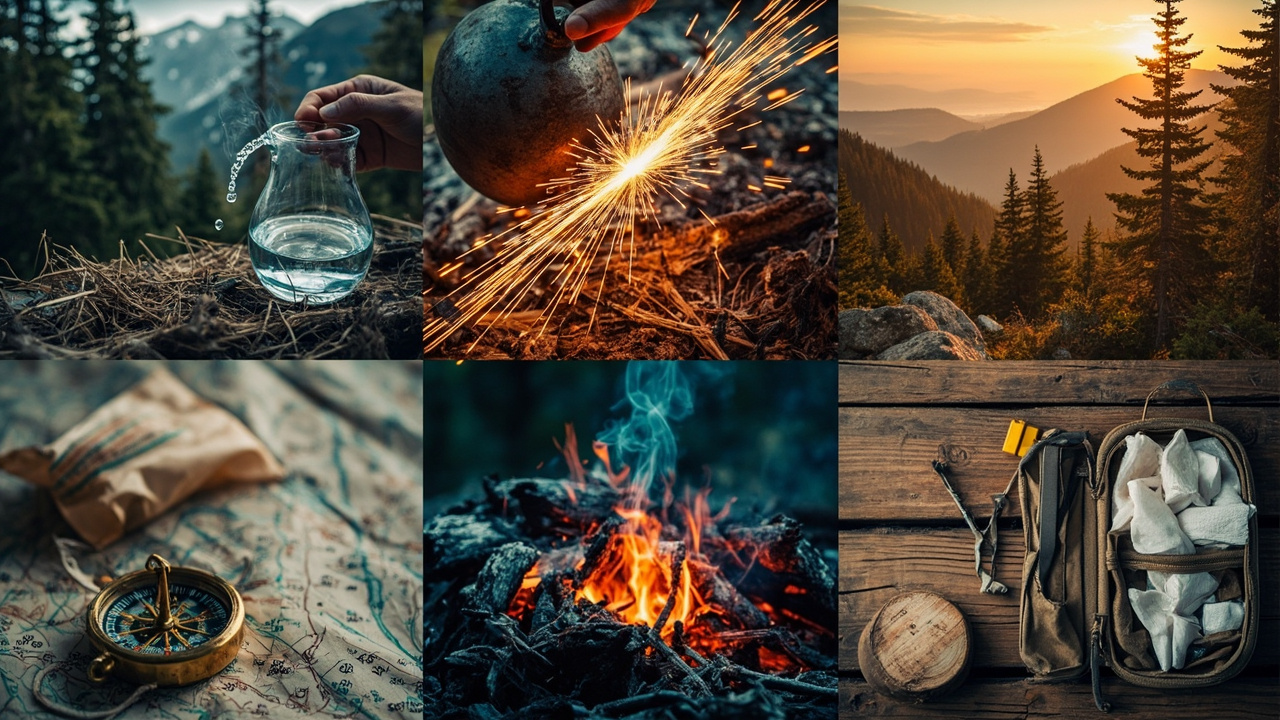
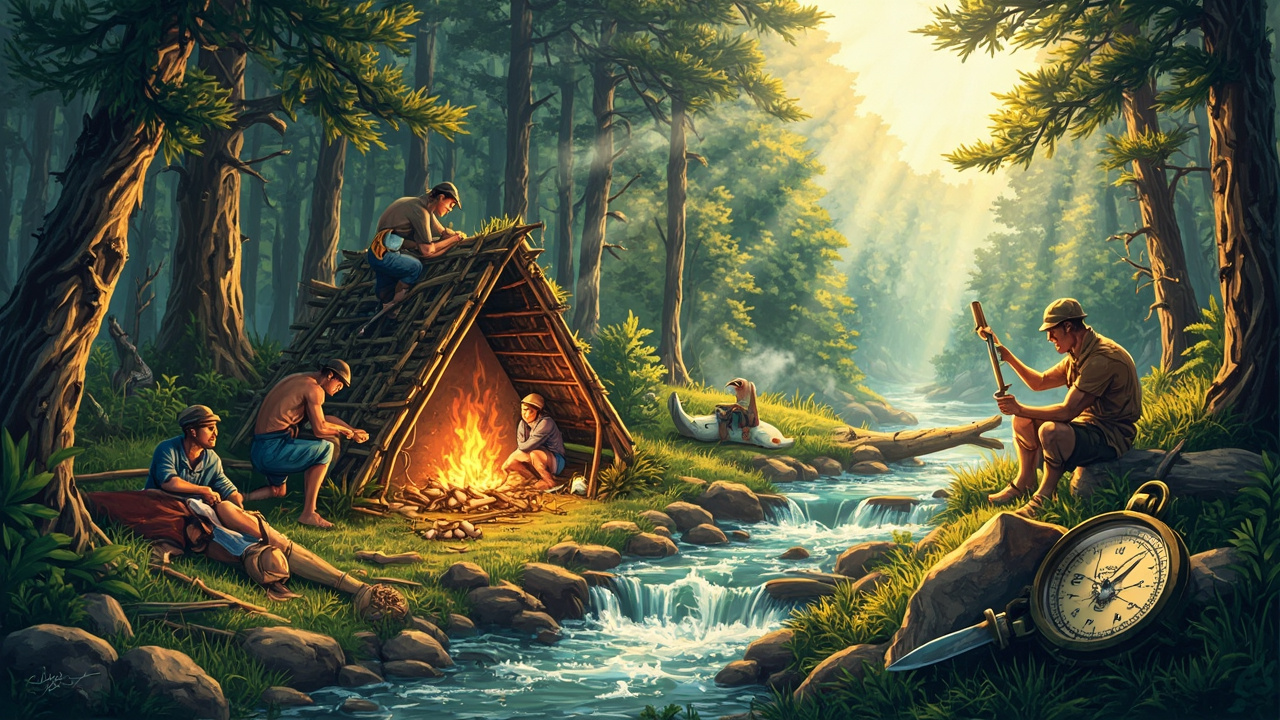
TL;DR: Mastering ten core survival skills — shelter, fire, water, navigation, first aid, signaling, food foraging, knot-tying, mental resilience, and communication — dramatically increases your odds of surviving any emergency, from a hurricane to a backcountry accident.
Seventy percent of Americans surveyed by the American Red Cross in 2024 reported feeling unprepared for natural disasters. That number is alarming in a year when the U.S. saw a record 28 billion-dollar weather and climate disaster events, according to NOAA's National Centers for Environmental Information. The gap between knowing you should prepare and actually acquiring skills is exactly where lives are lost.
This is not a gear list. Gear fails, gets lost, or runs out. Skills cannot be taken from you. Every emergency management professional from FEMA to the American Red Cross agrees: knowledge is your primary survival asset.
Skill 1 — Build a Shelter
Hypothermia can kill in temperatures as mild as 50°F (10°C) if a person is wet and windblown. In a survival situation, shelter is your first priority — before water, before fire, before food.
- Debris hut: Pile dry leaves, pine needles, and branches into a mound over a low frame. A well-built debris hut retains body heat even without a fire.
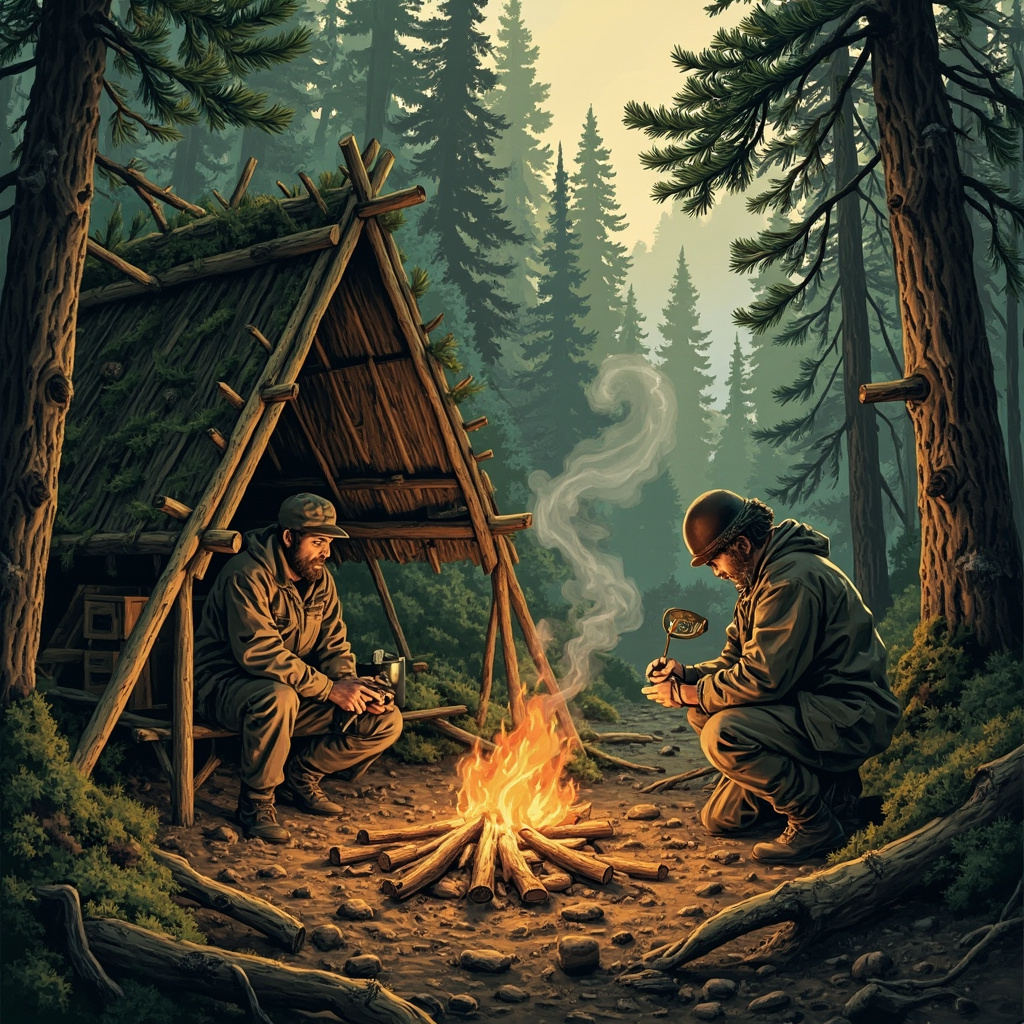
- A-frame lean-to: Prop a ridgepole between two trees, lay branches at 45-degree angles, then layer foliage shingle-style from bottom to top.
- Natural shelters: Caves, rock overhangs, and dense evergreen thickets can serve as immediate cover.
FEMA's official survival appendix (FEMA Appendix B – Survival) details field-expedient shelter construction for disaster responders and civilians alike. Study it before you need it.
Skill 2 — Make Fire
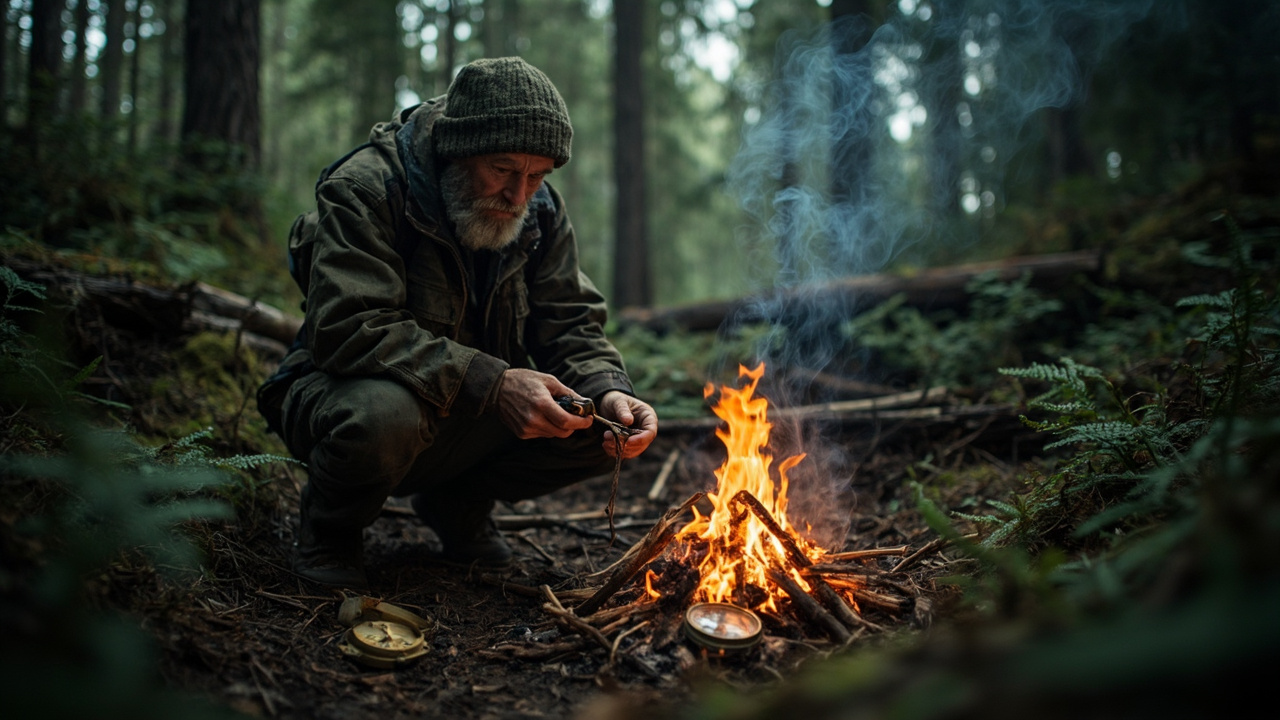
Fire provides warmth, purifies water, cooks food, wards off insects and predators, and signals rescuers. The American Red Cross lists fire-starting as one of its eleven critical survival skills that every person should know.
Three methods every prepper should master:
- Waterproof matches and a Bic lighter — carry both as backups; neither alone is sufficient.
- Ferrocerium rod (ferro rod) — works when wet, produces sparks above 5,400°F, and lasts for thousands of strikes.
- Bow drill (friction fire) — the primitive fallback when all modern tools are gone. Requires a dry softwood fireboard (cedar, cottonwood, willow), a hardwood spindle, a handhold, and practice. Expect weeks of practice before achieving reliable results.
Always build fire on mineral soil or rock, clear a 10-foot circle of debris, and keep water nearby. Never leave a fire unattended.
Skill 3 — Find and Purify Water
The human body begins to deteriorate cognitively after just 24 hours without water; death typically follows in three to five days. In a disaster scenario, municipal water may be compromised or cut off.
Finding water in the field:
- Follow valleys and ravines downhill; water flows to low ground.
- Look for animal trails and bird flight paths converging — they often lead to water.
- Collect morning dew from leaves with an absorbent cloth.
- Collect rainwater in tarps, containers, or even plastic bags tied around leafy branches (transpiration bags).
Purification hierarchy:
- Boiling — bring water to a rolling boil for one full minute (three minutes above 6,500 feet elevation). Kills all pathogens. Free. Universally available.
- Chemical treatment — iodine tablets or sodium hypochlorite drops work in 30 minutes on clear water.
- UV purifiers (e.g., SteriPen) — effective but battery-dependent.
- Mechanical filtration (e.g., Sawyer Squeeze) — removes bacteria and protozoa; combine with chemical treatment for viruses.
Never drink untreated surface water. Giardia, Cryptosporidium, and cholera are all real risks in post-disaster environments.
Skill 4 — Navigate Without GPS
Cell towers fail. Batteries die. GPS satellites are a finite resource during infrastructure collapse. Knowing how to navigate with analog tools is non-negotiable.
- Compass and topographic map: The pairing is the gold standard. Learn how to take a bearing, follow it, and triangulate your position. The U.S. Army Survival Manual (FM 21-76) covers land navigation in exhaustive detail.
- Natural navigation: The sun rises in the east and sets in the west (roughly). In the Northern Hemisphere, moss grows heaviest on the north side of trees; stars rotate around Polaris (the North Star).
- Dead reckoning: Track direction and pace count to estimate position when landmarks are absent.
Before any backcountry trip, file a trip plan with a trusted contact, including your route, campsite coordinates, and expected return time.
Skill 5 — Administer First Aid
In a mass-casualty disaster, professional medical help may be delayed by hours or days. The American Red Cross (11 Survival Skills to Know) identifies first aid as a cornerstone survival competency for exactly this reason.
Priority skills:
- Hemorrhage control: Direct pressure, wound packing, and tourniquet application (two inches above the wound, tighten until bleeding stops, note the time).
- CPR/AED: Current American Heart Association guidelines call for 30 chest compressions to 2 rescue breaths; hands-only CPR is acceptable for untrained bystanders.
- Recognizing and treating shock: Lay the patient flat, elevate legs (unless spinal injury is suspected), maintain warmth, and keep them calm.
- Wound care: Irrigate with clean water, cover with a sterile dressing, monitor for infection signs (heat, swelling, pus, red streaking).
Take a certified First Aid/CPR/AED course through the American Red Cross or the American Heart Association. Certification is valid for two years and costs approximately $80–$120.
Skill 6 — Signal for Rescue
If rescue is possible, making yourself findable is faster than self-rescue. The universal distress signal is three of anything: three whistle blasts, three fires in a triangle, three gunshots.
- Signal mirror: Can be seen by aircraft 10 miles away on a clear day.
- Ground-to-air signals: Stamp large "X" or "SOS" letters in snow, sand, or with rocks. Make them at least 10 feet across.
- Personal Locator Beacon (PLB): When activated, sends your GPS coordinates to NOAA's SARSAT system, which relays them to the nearest rescue coordination center within minutes. No subscription required. Registered PLBs have a 99%+ detection rate.
Skill 7 — Forage Safely
The average person can survive three weeks without food — but caloric depletion degrades decision-making within 48–72 hours. Knowing ten local edible plants can extend your survival window significantly.
Start with these widely distributed species:
- Dandelion (Taraxacum officinale): Entirely edible — roots, leaves, flowers.
- Cattail (Typha spp.): Found near water; shoots, pollen, and roots are all edible.
- Wood sorrel (Oxalis spp.): Clover-like leaves with a tart, lemony flavor.
Never eat any plant unless you are 100% certain of identification. Poison hemlock, water hemlock, and death camas all resemble edible plants and are lethal in small doses. Invest in a regional foraging guide vetted by a botanist.
Skill 8 — Tie Essential Knots
Knots secure shelters, lash splints, hang food caches out of bear reach, and create improvised tools. Master five:
- Square knot — joins two ropes of equal diameter.
- Bowline — creates a fixed loop that won't slip under load; used in rescue operations worldwide.
- Clove hitch — attaches rope to a pole; the starting knot for most lashing systems.
- Taut-line hitch — adjustable knot for tent guylines.
- Prusik knot — friction knot for ascending a rope or as a safety backup while rappelling.
Practice each knot until you can tie it one-handed in the dark.
Skill 9 — Manage Stress and Decision-Making
The most dangerous survival factor is the six inches between your ears. The U.S. Army Research Institute of Environmental Medicine has documented that panic and poor decision-making are responsible for more survival deaths than any single physical threat.
The STOP method — Stop, Think, Observe, Plan — is taught in wilderness first responder courses and military SERE (Survival, Evasion, Resistance, Escape) training. It interrupts the panic response and forces logical assessment.
Regularly stress-inoculate yourself: cold-water immersion, sleep deprivation exercises, timed fire-starting in rain. Familiarity with discomfort reduces panic's grip.
Skill 10 — Maintain Off-Grid Communication
Disasters sever cell networks within hours. The FCC documented that Hurricane Helene in September 2024 knocked out more than 60% of cell towers across six Southeastern states. Alternatives:
- NOAA Weather Radio (NWR): Battery or hand-crank receivers broadcast continuous emergency alerts on seven frequencies. All-hazards alerts are broadcast 24/7.
- Two-way radios (FRS/GMRS): Family Radio Service walkie-talkies require no license for FRS channels; range of 1–5 miles line-of-sight.
- Amateur (Ham) radio: A Technician license (no-code exam) opens access to local repeater networks that often survive when commercial infrastructure fails. Study resources are free at ARRL.org.
How to Start Training Today
The American Red Cross (11 Survival Skills to Know) recommends starting with a community emergency response training (CERT) course — free in most U.S. counties — and building from there. FEMA's official Appendix B – Survival guide is a free downloadable field reference covering shelter, fire, water, navigation, and signaling in one document.
Prioritize skills over gear. Practice in controlled conditions before you need them under pressure. Teach your family. The 70% of Americans who feel unprepared don't have a gear problem — they have a skills problem. Fix that now.