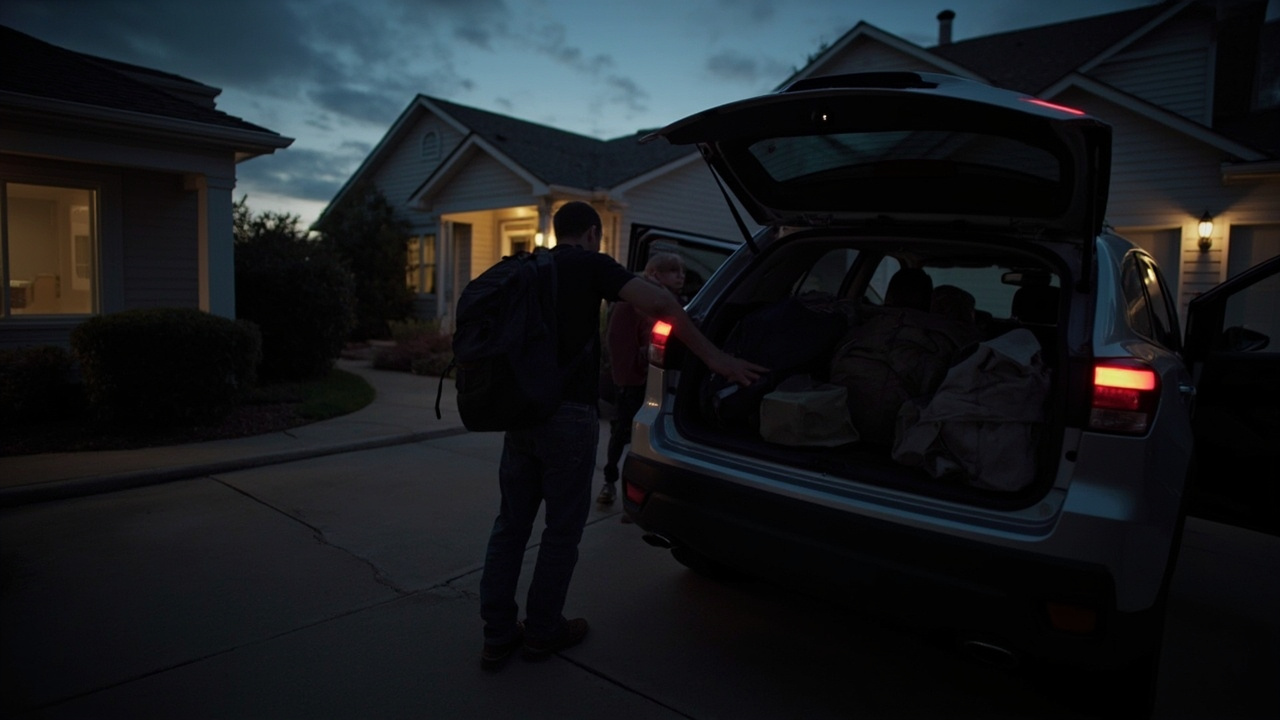
TL;DR: An evacuation order directs you to leave a designated area immediately because danger is imminent.
TL;DR: An evacuation order is a directive from state, local, tribal and/or territorial authorities to immediately leave a specific area because danger is imminent, and the required response is to leave at once, follow official instructions, and stay away until officials declare return safe.
According to FAQ: What is an evacuation order and what should I do? | FEMA.gov, an order is a protective measure for lives and property. The same FAQ directs residents to evacuate immediately without delay, leave as quickly and safely as possible, adhere to instructions from local authorities, secure the home, carry essential items, monitor updates, and avoid returning before clearance.
What an evacuation order means
Who issues the directive
An evacuation order is issued by state, local, tribal and/or territorial authorities, according to FAQ: What is an evacuation order and what should I do? | FEMA.gov. A companion federal explanation in FAQ: What is an evacuation order and where can I get updates on orders for my area? | FEMA.gov describes the order as coming from local authorities and directing people to leave a specific area because of immediate danger.
The distinction matters for households. Because authority rests with those government levels, a household should treat a neighborhood-level order as applying to the designated area named by officials. Following the order protects life and safety.
Why immediate departure is required
Federal guidance states that residents should evacuate immediately and not delay departure. According to FAQ: What is an evacuation order and where can I get updates on orders for my area? | FEMA.gov, leaving quickly and safely reduces exposure to the hazard that prompted the order.
Choosing to remain can bring severe outcomes. According to FAQ: What are the potential consequences of not evacuating? | FEMA.gov, possible consequences include injury or death, exposure to hazardous conditions, and delayed rescue. The same FAQ states that compliance significantly reduces risk of harm and increases chances of surviving a disaster.
Where to get official evacuation updates
Emergency management websites and alerts
City or county emergency management websites are described as the most reliable source for official evacuation orders and updates, according to FAQ: What is an evacuation order and where can I get updates on orders for my area? | FEMA.gov. Residents can also sign up to receive Wireless Emergency Alerts on a phone.
Evacuation | Ready.gov directs households to sign up for alerts from local emergency management agencies and the National Weather Service. Those alerts provide updates on threat conditions, shelter locations, and other important safety information. The same Ready.gov page directs households to download the FEMA App for real-time weather alerts, shelter locations, hazard preparation information, and a list of open shelters during an active disaster in the local area.
Broadcast, online and social channels
TV, radio and local news websites often provide real-time updates, according to FAQ: What is an evacuation order and where can I get updates on orders for my area? | FEMA.gov. Official social media accounts of local government agencies and emergency management organizations also carry updates.
Guidance on trustworthy disaster information in Frequently Asked Questions About Disasters | FEMA.gov lists FEMA, state and local emergency management agencies, and local governments as official sources. It also points to well-established news sources, including major news networks, newspapers, and online outlets, and directs readers to follow official government, emergency-responder and reputable news-organization accounts on social media. Readers are advised to cross-reference information, check multiple sources to confirm accuracy, verify that information comes from a credible source, and visit FEMA.gov for the latest information about a disaster in the area.
Know risks, destination and information sources before an order
Know your local risks and routes
Evacuation | Ready.gov encourages residents to “Be in the Know” to evacuate safely. It directs people to understand location-specific risks because no two communities face the same extreme weather conditions, and points to FEMA’s National Risk Index for local risk information.
Many states have designated evacuation zones and predetermined evacuation routes. Ready.gov directs households to learn state and local plans by visiting state and county emergency management websites. It also describes FEMA’s National Risk Index as an interactive tool for improving understanding of natural hazard risk where a person lives so protective action can be taken.
Decide where you will go
Whether the destination is the home of a friend or family member or a pre-designated shelter, Ready.gov states that knowing the evacuation destination in advance is important. Having plans in place can save valuable time and lives.
Before an evacuation, households should learn the disasters likely in the community and the local emergency, evacuation and shelter plans for each specific disaster. Plans should cover how household members will leave and where they will go if evacuation is advised. Ready.gov also directs households to check with local officials about what shelter spaces are available for this year.
For destination options, Ready.gov advises identifying several places that could be used in an emergency, such as a friend’s home in another town or a motel. It advises choosing destinations in different directions so options remain during an emergency. Because most public shelters allow only service animals, households that need accommodation for pets should identify a place to stay that will accept pets.
Keep household communication ready
Ready.gov advises creating a family or household plan to stay in touch in case members become separated. The plan should include a meeting place and should be updated depending on the circumstance.
If time allows during departure, Ready.gov advises calling or emailing the out-of-state contact named in the family communications plan and telling that contact where the household is going. After a disaster, Frequently Asked Questions About Disasters | FEMA.gov advises using text messages instead of phone calls because phone systems are often overloaded or damaged and texts are more likely to get through during network congestion. The same source advises using social media to tell loved ones about safety status and to get situation updates, and advises limiting calls to emergencies to keep cellular capacity available for first responders.
What to bring: go-bag and emergency supply kit
Pack essentials for immediate departure
Federal evacuation guidance directs departing residents to take essential items. According to FAQ: What is an evacuation order and what should I do? | FEMA.gov, that includes a go-bag with medications and important documents. The companion update FAQ adds medical equipment to the list of essential items.
Evacuation | Ready.gov directs households to build a go-bag with essentials so there is no scramble during an evacuation situation and to consult Build A Kit for supply lists. Everyone in the household should know where the bag is stored and who is responsible for it in an emergency. Ready.gov further advises assembling supplies ready for evacuation, including a go-bag that can be carried when evacuating on foot or public transportation and supplies for traveling longer distances when traveling by car.
Basic emergency supply kit contents
After an emergency, a household may need to survive on its own for several days. According to Frequently Asked Questions About Disasters | FEMA.gov, an emergency supply kit is a collection of basic items a household may need, and a basic kit contains water at one gallon per person per day for several days, non-perishable food of at least a several-day supply, battery-powered or hand crank radio, flashlight, first aid kit, extra batteries, whistle, dust mask to help filter contaminated air, plastic sheeting with scissors and duct tape, moist towelettes with garbage bags and plastic ties, wrench or pliers, manual can opener, local maps, and cell phone with chargers and backup battery.
The same disaster FAQ states that an effective kit is tailored to household needs and advises considering family members’ individual needs when adding to the kit. It points readers to Build A Kit at Ready.gov for more information about building a kit.
Vehicle and no-vehicle planning
For households with a car, Ready.gov advises keeping a full tank of gas if evacuation seems likely and keeping a half tank at all times for an unexpected need to evacuate. It notes that gas stations may be closed during emergencies and unable to pump gas during power outages. It advises planning to take one car per family to reduce congestion and delay and keeping a portable emergency kit in the car.
For households without a car, Ready.gov advises planning how to leave if needed and deciding with family, friends or the local emergency management office what resources may be available. It also advises becoming familiar with alternate routes and other means of transportation out of the area, remembering that an evacuation route may be on foot depending on the disaster type.
What to do during the evacuation
Leave early and follow official routes
Evacuation | Ready.gov directs residents to listen to a battery-powered radio, follow local evacuation instructions, take the emergency supply kit, and leave early enough to avoid being trapped by severe weather. Households should follow recommended evacuation routes and should not take shortcuts because shortcuts may be blocked.
Travel awareness is part of the same guidance. Residents should stay alert for washed-out roads or bridges and downed power lines and should not drive into flooded areas. They should always follow instructions from local officials.
Secure the home before leaving
When time and safety permit, federal guidance lists several home-securing actions. According to FAQ: What is an evacuation order and what should I do? | FEMA.gov, those actions include closing windows and doors, turning off utilities, and moving valuables to higher ground.
Evacuation | Ready.gov adds operational detail. It directs residents to secure the home by closing and locking doors and windows, unplug electrical equipment such as radios, televisions and small appliances, and leave freezers and refrigerators plugged in unless there is a risk of flooding. If the home is damaged and officials instruct residents to do so, they should shut off water, gas and electricity before leaving. Ready.gov also advises leaving a note telling others when the household left and where it is going.
Protect people and pets while traveling
Take pets along when evacuating, but understand that only service animals may be allowed in public shelters. That distinction comes from Evacuation | Ready.gov, which advises planning now how pets will be cared for in an emergency.
For personal protection, Ready.gov advises wearing sturdy shoes and clothing that provides some protection, such as long pants, long-sleeved shirts and a hat. It also advises checking with neighbors who may need a ride.
When and how to return
Wait for official clearance
Do not return until authorities declare it safe. That instruction appears in FAQ: What is an evacuation order and what should I do? | FEMA.gov, and the companion updates FAQ states that residents should not return home until authorities say it is safe.
Evacuation | Ready.gov directs people who evacuated for a storm to check with local officials both where they are staying and back home before traveling. If returning to disaster-affected areas, residents should prepare for disruptions to daily activities after significant events. Returning home before storm debris is cleared is dangerous.
Travel and safety checks on the way back
Before leaving for the return trip, Ready.gov advises letting friends and family know before departure and upon arrival. It advises charging devices and considering backup batteries in case power outages continue. It advises filling the gas tank, considering a fuel app to check for outages along the route, and bringing supplies such as water and non-perishable food for the car ride.
On arrival and in surrounding areas, Ready.gov advises avoiding downed power or utility lines because they may be live with deadly voltage, staying away from them, and reporting them immediately to the power or utility company. It also begins generator guidance with using generators only outside, underscoring that post-evacuation safety continues after the order is lifted.