Personal Hygiene Is a Frontline Emergency Survival Skill — Not a Comfort Habit
TL;DR: Maintaining basic personal hygiene — handwashing, safe water storage, and proper waste disposal — is one of the highest-impact actions any person can take to survive a disaster without contracting a life-threatening illness.
When a hurricane hits, a flood inundates a neighborhood, or a pandemic forces shelter-in-place orders, the first things people think of are food, water, and shelter. Hygiene rarely makes the top of the list. That is a dangerous oversight.
According to the CDC's Guidelines for Personal Hygiene During an Emergency, published and updated through the agency's Water, Sanitation, and Hygiene (WASH) program, disrupted sanitation infrastructure dramatically accelerates the spread of cholera, typhoid, hepatitis A, dysentery, and skin infections. These are not historical curiosities — they are active threats every time a major disaster occurs anywhere on the planet.
The skills required to prevent these outcomes are the same ones that many adults practice every single day without thinking: washing hands before meals, disposing of waste safely, keeping wounds clean. In an emergency, those habits become the difference between staying healthy and ending up in an overwhelmed field hospital.
Why Disease Spreads Faster After Disasters
Disasters break the invisible systems that normally protect public health. Municipal water treatment plants lose power. Sewage lines rupture. Flooding mixes drinking water supplies with fecal matter. Refugee camps and emergency shelters concentrate large numbers of people in tight quarters with inadequate latrines.
The World Health Organization's technical note Hygiene Promotion in Emergencies documents this cycle clearly: when WASH (water, sanitation, and hygiene) infrastructure collapses, diarrheal diseases — which kill approximately 1.6 million people annually under normal conditions — surge sharply. In disaster-affected populations with no safe water and no latrines, cholera outbreaks can ignite within days.
The 2010 Haiti earthquake followed by the cholera outbreak that killed more than 9,000 people between 2010 and 2019 is the defining modern example. The earthquake destroyed sewage and water infrastructure. Without functional sanitation, the bacteria Vibrio cholerae spread through contaminated water supplies with devastating speed. Epidemiologists traced the outbreak's origin directly to failed waste disposal practices near a water source.
This is why the WHO's technical guidance is unambiguous: hygiene promotion is not a secondary emergency response priority — it is a primary one.
The Five Core Hygiene Practices That Save Lives in Emergencies
1. Handwashing With Soap
This is the single most evidence-supported low-cost intervention in public health. The CDC's emergency hygiene guidelines state that handwashing with soap and clean water after using toilet facilities and before handling food can reduce diarrheal illness by up to 47 percent and respiratory infections by up to 23 percent.
In an emergency where soap is unavailable, alcohol-based hand sanitizer with at least 60 percent ethanol is an acceptable substitute. Every emergency preparedness kit should contain both.
2. Safe Water Storage and Treatment
After a disaster, municipal water supplies may be contaminated or cut off entirely. The CDC recommends storing at least one gallon of water per person per day, with a minimum three-day supply for evacuation and a two-week supply for home shelter-in-place scenarios.
Water collected from uncertain sources — streams, rainwater catchments, or municipal supplies of unknown status — should be treated. Boiling for at least one minute (three minutes above 6,500 feet elevation) is the most reliable method. Unscented liquid chlorine bleach (8.25 percent concentration) added at 8 drops per gallon is a practical field alternative. Commercial water purification tablets are compact and effective for emergency kits.
As the WHO's Water, Sanitation and Health in Humanitarian Emergencies guidance details, ensuring safe water access is inseparable from controlling infectious disease in any emergency setting.
3. Safe Human Waste Disposal
Open defecation after a disaster is one of the fastest pathways to epidemic disease. When latrines or sewage systems are unavailable, emergency managers recommend digging cat holes at least 200 feet from any water source, trails, or camp areas, and at least 6–8 inches deep. Human waste should be buried and the site marked.
For urban settings, portable chemical toilets or commode bags with waste-solidifying gel packets can bridge the gap when sewage service is lost. The CDC's Potential Sanitation Solutions During an Emergency provides a detailed decision matrix for choosing the right solution based on setting.
4. Wound Care and Skin Hygiene
Cuts and abrasions sustained during an emergency — from debris, broken glass, rough terrain — can become severely infected when proper medical care is unavailable. Keeping wounds clean with potable water, applying antibiotic ointment, and covering with clean bandaging reduces the risk of cellulitis and sepsis.
A sealed, waterproof first aid kit with nitrile gloves, sterile gauze, adhesive bandages, antiseptic wipes, and antibiotic ointment is a non-negotiable emergency kit component.
5. Feminine Hygiene and Specialized Personal Care
Feminine hygiene products are consistently undersupplied in emergency responses yet are essential for the health and dignity of half the population. Menstrual hygiene mismanagement in emergencies leads to urinary tract infections, skin infections, and psychological distress. Emergency kits for women and adolescent girls should include a two-week supply of preferred products or a reusable menstrual cup as a compact, long-term alternative.
What to Stock in an Emergency Hygiene Kit
The International Federation of Red Cross and Red Crescent Societies (IFRC) WASH Guidelines for Hygiene Promotion in Emergency Operations recommend that each household kit include:
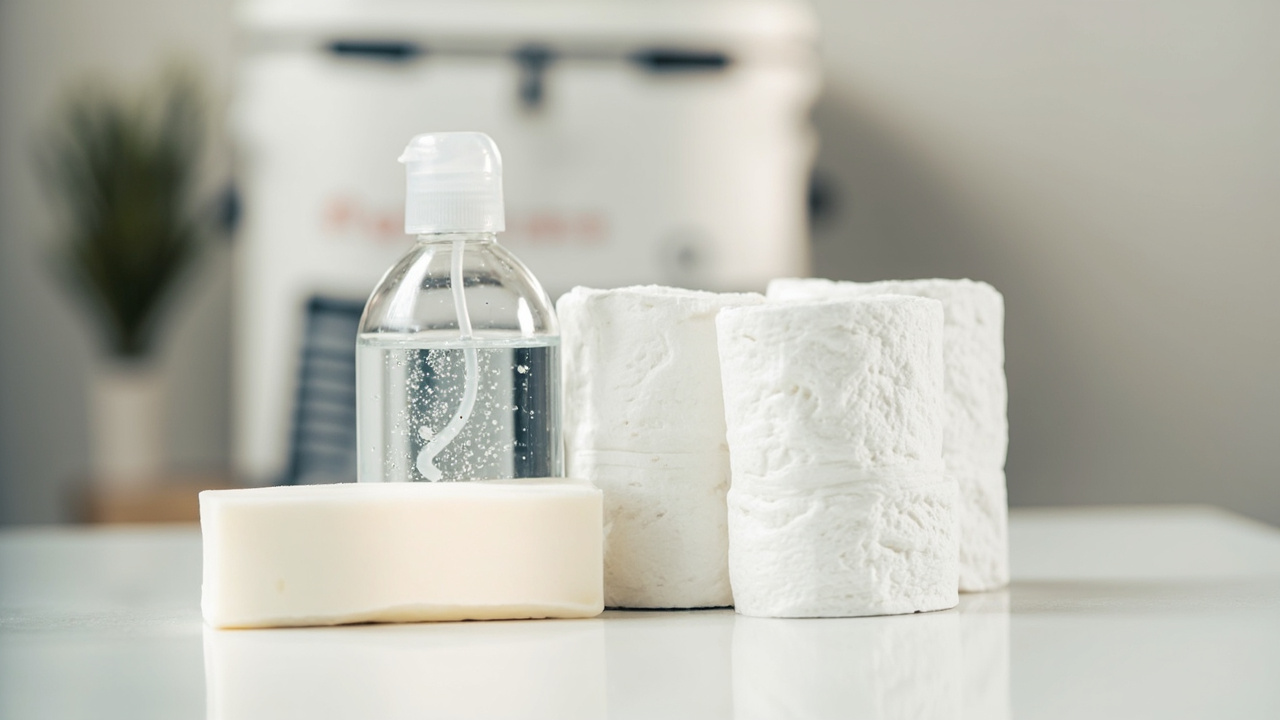
- Bar soap or liquid soap (minimum 250g/250ml per person per month)
- Alcohol-based hand sanitizer (60%+ ethanol, 4 oz minimum per person)
- Water purification tablets or unscented bleach
- Toothbrush and toothpaste
- Feminine hygiene products or menstrual cup
- Disposable or reusable gloves
- Garbage bags (for waste containment)
- Wet wipes or no-rinse body wash (when bathing is impossible)
- Toilet paper (minimum two-week supply)
- Commode bags or portable toilet (for sanitation failure scenarios)
Store these items in a waterproof container alongside your food, water, and first aid supplies. Rotate perishable items annually.
Hygiene Preparedness as Community Resilience
Individual hygiene skills matter. But community-level preparedness multiplies their impact. Neighborhoods, workplaces, and schools that train members in emergency hygiene protocols before a disaster strikes recover faster and report lower disease rates.
The IFRC's WASH guidelines stress that hygiene promotion must be culturally sensitive, linguistically accessible, and specifically designed to reach the most vulnerable populations — elderly individuals, children under five, people with disabilities, and those experiencing homelessness. These groups face disproportionate health risks in emergencies and require tailored communication and supplies.
Local emergency management agencies, community health workers, and organizations like the American Red Cross offer free emergency preparedness training that includes hygiene components. Check your county's Office of Emergency Services website for scheduled workshops.
The Bottom Line
Maintaining personal hygiene during an emergency is not a comfort luxury — it is a core survival competency with a direct, documented impact on mortality rates. The CDC and WHO have built extensive evidence bases confirming that handwashing, safe water handling, and proper waste disposal are among the most cost-effective life-saving interventions available in any disaster scenario.
Building and maintaining an emergency hygiene kit, training household members on these practices, and advocating for hygiene resources in community emergency plans are concrete actions every prepared person can take today. The skills are already part of your daily routine. The emergency kit just ensures you can keep using them when the infrastructure that normally makes them easy disappears.