Having No Survival Skills Is a Documented Emergency Risk — Here's What to Do About It
TL;DR: Having zero survival skills is one of the most overlooked gaps in personal emergency preparedness — but core competencies like water procurement, fire starting, and basic first aid can be learned in a weekend and may save your life.
When @Tianababyyyy_ tweeted in 2024, "Is having no survival skills part of them? Because I've got none 😂," thousands of people liked and shared the post — because they recognized themselves in it. The joke lands because it's true: a large share of the modern population has outsourced every survival task to infrastructure, apps, and delivery services. That's fine until a hurricane knocks out power for ten days, a wildfire forces an evacuation in 20 minutes, or a winter storm strands a family on a rural highway.
According to a 2023 FEMA National Household Survey, fewer than half of Americans have taken steps to prepare for a disaster, and only 17% have received first aid training. Those numbers represent a concrete vulnerability — and they represent a fixable one. Survival skills are not a personality type or a lifestyle brand. They are learnable techniques that convert panic into competence.
Why Skills Beat Gear Every Time
The prepper community has a longstanding debate: gear vs. skills. The answer isn't close. A water filter can clog, a lighter can run out of fuel, a knife can be lost. Skills travel with you in your head and cannot be confiscated, broken, or forgotten at home.
As noted in the Entropy Survival analysis "Survival Skills for Emergency Preparedness" (entropysurvival.com), "trained individuals tend to make better decisions and remain calmer under pressure," which prevents manageable situations from becoming fatal ones. The same analysis emphasizes that skills provide life-sustaining capability precisely when infrastructure — power grids, cell towers, supply chains — fails.
This doesn't mean gear is worthless. It means gear amplifies skills; it cannot replace them. A person who knows how to purify water by boiling can use almost any container. A person who only knows how to press a button on a UV purifier is helpless when the battery dies.
The Five Core Survival Skills to Learn First
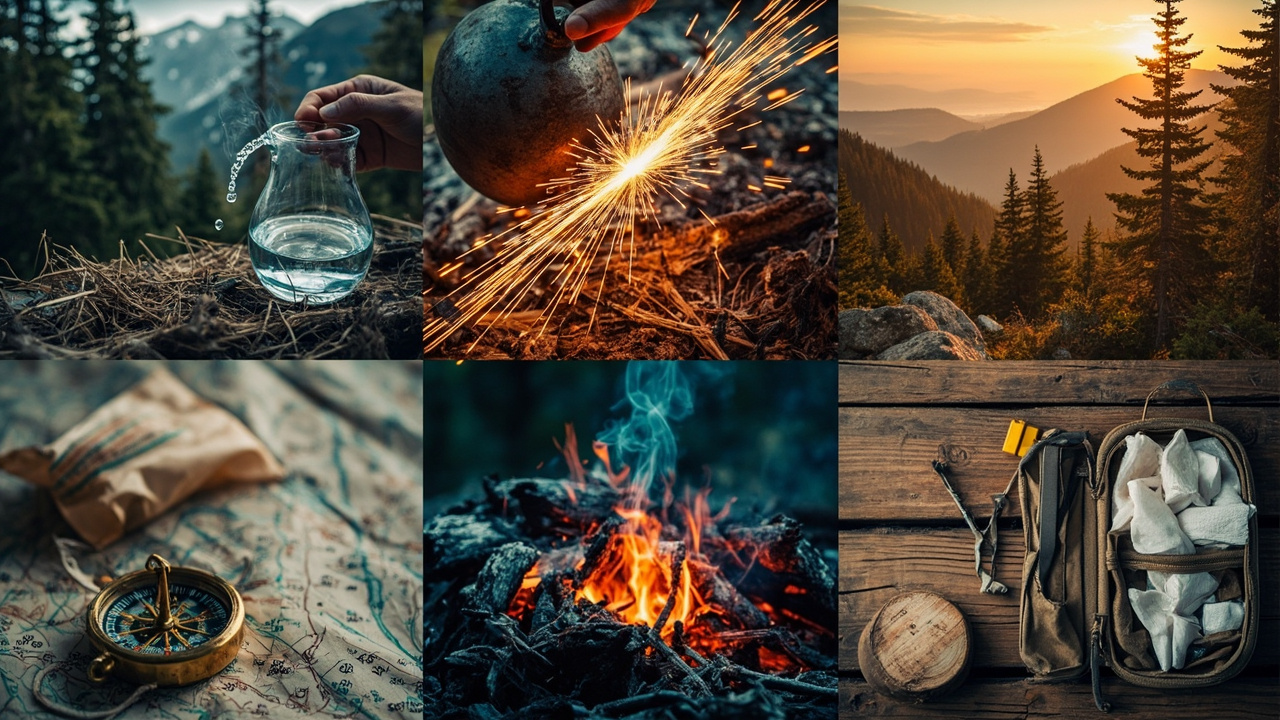
1. Water Procurement and Purification
The human body can survive roughly three days without water — less in heat, less with physical exertion. The first priority in any survival situation is securing safe drinking water.
Key techniques include:
- Collecting rainwater using tarps or any clean surface
- Finding natural sources (moving water is generally safer than standing water)
- Boiling: one minute at a rolling boil kills pathogens (three minutes above 6,500 feet elevation)
- Improvised filtration: layering cloth, charcoal, sand, and gravel to remove sediment before chemical treatment
The Savvy Survivalist's Core Survival Skills Guide (thesavvysurvivalist.com/core-survival-skills-guide) identifies water procurement as the single highest-priority skill for emergency preparedness, noting that "survival skills are critical for emergency preparedness because they provide the capabilities to sustain life when infrastructure fails."
2. Shelter Construction
Exposure kills faster than almost anything else in a wilderness emergency. Hypothermia can set in within hours in wet, windy conditions even at temperatures above freezing.
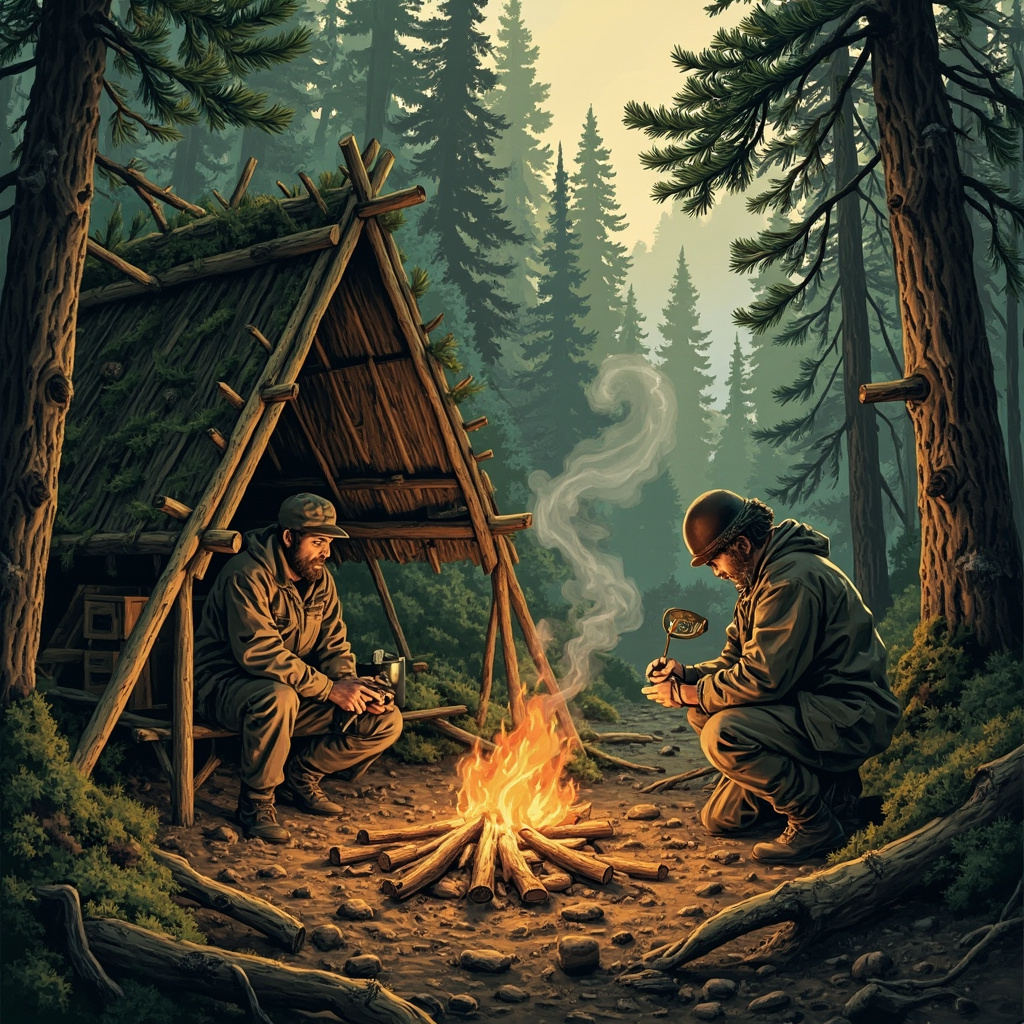
Three beginner-accessible shelter types:
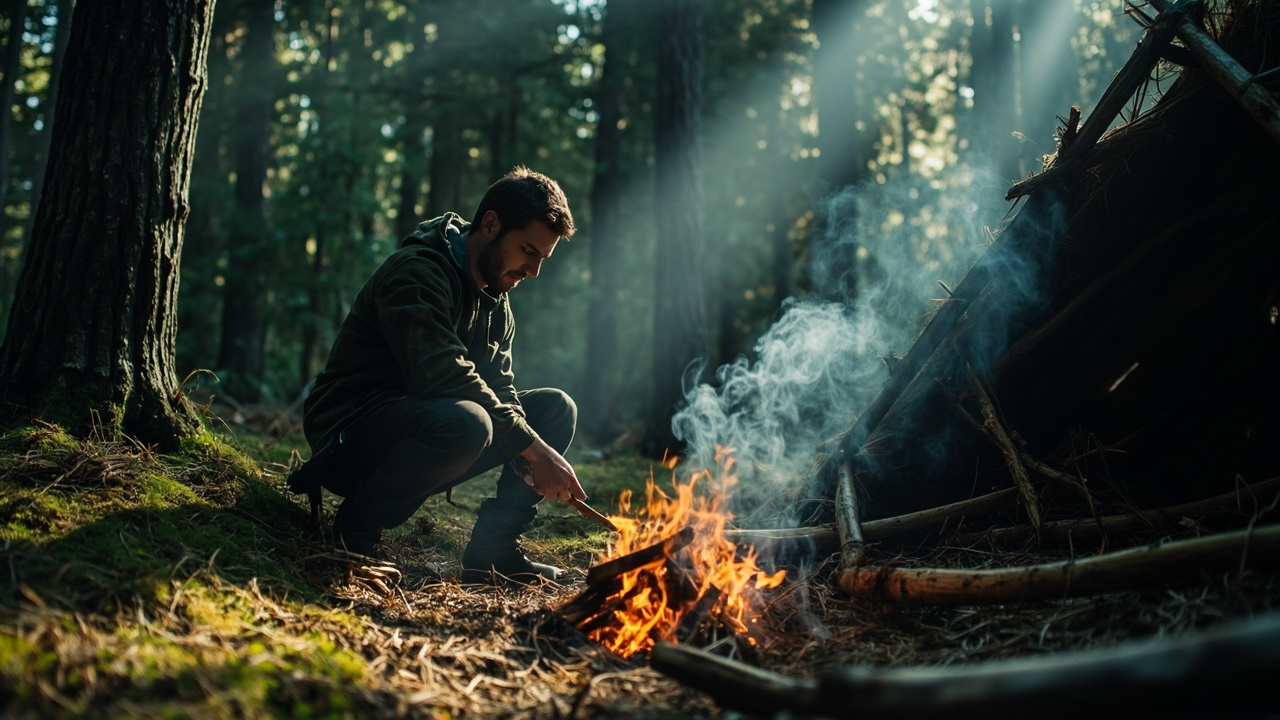
- Debris hut: pile dead leaves and branches over a simple ridgepole frame; the debris provides insulation
- Lean-to: lash branches between two trees to form a slanted roof; fast to build, good in rain
- Emergency bivy: in an urban or vehicle context, mylar emergency blankets reflect 90% of body heat and fold to the size of a deck of cards
Learning to assess a site — avoiding flood zones, widow-makers (dead branches overhead), and cold air drainage areas — is as important as the construction itself.
3. Fire Starting
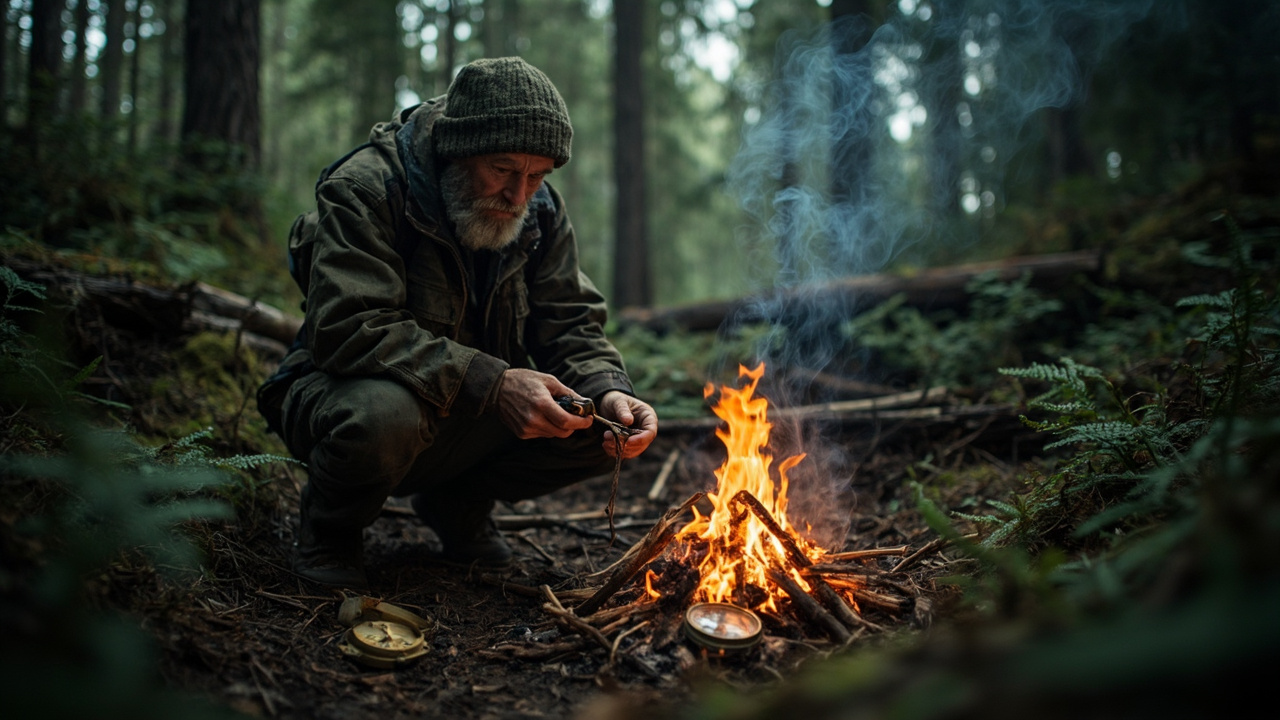
Fire provides warmth, water purification, food preparation, signaling, and psychological comfort. Critically, you should be able to start a fire with at least two methods.
- Ferrocerium rod (ferro rod): works wet, works in wind, lasts thousands of strikes; the single best backup to a lighter
- Friction fire (bow drill): requires practice but zero equipment; takes most beginners 10–20 hours of practice to master reliably
- Tinder preparation: the most common fire-starting failure is poor tinder, not poor technique; dry birch bark, cattail fluff, and cedar bark shredded fine all ignite readily
4. Basic First Aid and Wound Care
In a prolonged emergency, minor injuries become life-threatening when infection sets in and medical care is unavailable. The American Red Cross estimates that bystander CPR can double or triple survival rates for cardiac arrest — a skill that takes roughly 30 minutes to learn.
High-priority skills:
- Bleeding control: direct pressure, wound packing for deep wounds, tourniquet application (the Stop the Bleed campaign, launched by the Department of Defense in 2015, trains this in 30 minutes)
- Wound cleaning: irrigation with clean water is more effective than antiseptic alone
- Fracture immobilization: splint with any rigid material padded with cloth
- Recognition of shock: pale/clammy skin, rapid weak pulse, confusion; keep patient warm and flat
5. Navigation Without Electronics
GPS fails when batteries die, when devices are damaged, or when satellite signals are blocked by canyon walls and dense canopy. A topographic map and baseplate compass are the gold standard backup — and learning to use them takes one afternoon.
Alternatively: the sun rises roughly east and sets roughly west. At noon in the Northern Hemisphere, the sun is due south. A wristwatch analog face can be used as a compass. These are not substitutes for a real compass, but they prevent the most common navigation error: walking in circles.
Mental Resilience: The Skill Behind the Skills
Every survival instructor returns to the same theme: the brain is the most important survival tool. Panic causes people to walk away from functional shelter, drink contaminated water impulsively, or exhaust themselves in the first hour of an emergency.
According to Preparedness.info's article "Why Traditional Survival Skills Are Still Relevant" (preparedness.info/why-traditional-survival-skills-are-still-relevant), practicing survival skills in simulations — not just reading about them — builds the psychological muscle memory that allows people to act deliberately rather than reactively under stress. The article notes that even simple exercises, like starting a fire in the backyard on a rainy day, build the kind of calibrated confidence that translates directly to crisis performance.
This is why the military and wilderness medicine programs use scenario-based training almost exclusively. Reading a manual does not prepare the nervous system the way doing the thing does.
How to Build Survival Skills Starting This Weekend
You do not need to move to a homestead or buy $3,000 in gear. Here is a realistic on-ramp:
Weekend 1: Take the Stop the Bleed course (free, 30 minutes, offered in most US cities and online). Practice boiling water over a camp stove or backyard fire.
Weekend 2: Build a debris shelter in your backyard or a local park. Time yourself. Do it again.
Weekend 3: Buy a ferro rod ($12–$20) and practice fire starting with it alongside a lighter until you can reliably produce fire with the rod alone.
Month 2: Take a Wilderness First Aid (WFA) course — typically a 16-hour weekend course offered by NOLS Wilderness Medicine, SOLO, or the Red Cross. WFA certifies you to manage medical emergencies for up to 72 hours with limited resources.
Ongoing: Join a local Community Emergency Response Team (CERT). FEMA's CERT program is free, nationally standardized, and available in hundreds of cities. Participants train alongside neighbors, building both skills and the social networks that research consistently identifies as the strongest predictor of community disaster survival.
The Bottom Line
Having no survival skills in 2025 is common, understandable, and entirely fixable. Modern infrastructure is reliable enough that most people never need these skills — right up until the moment they desperately do. The five skills above — water, shelter, fire, first aid, and navigation — can all be learned to a functional level within 30 days of deliberate weekend practice. That's not a lifestyle commitment; it's an insurance policy that costs only time.
The tweet that launched a thousand relatable laughs is also an honest diagnostic. If you recognized yourself in it, the practical response is straightforward: pick one skill from the list above and practice it this weekend. Skills compound. Start now.