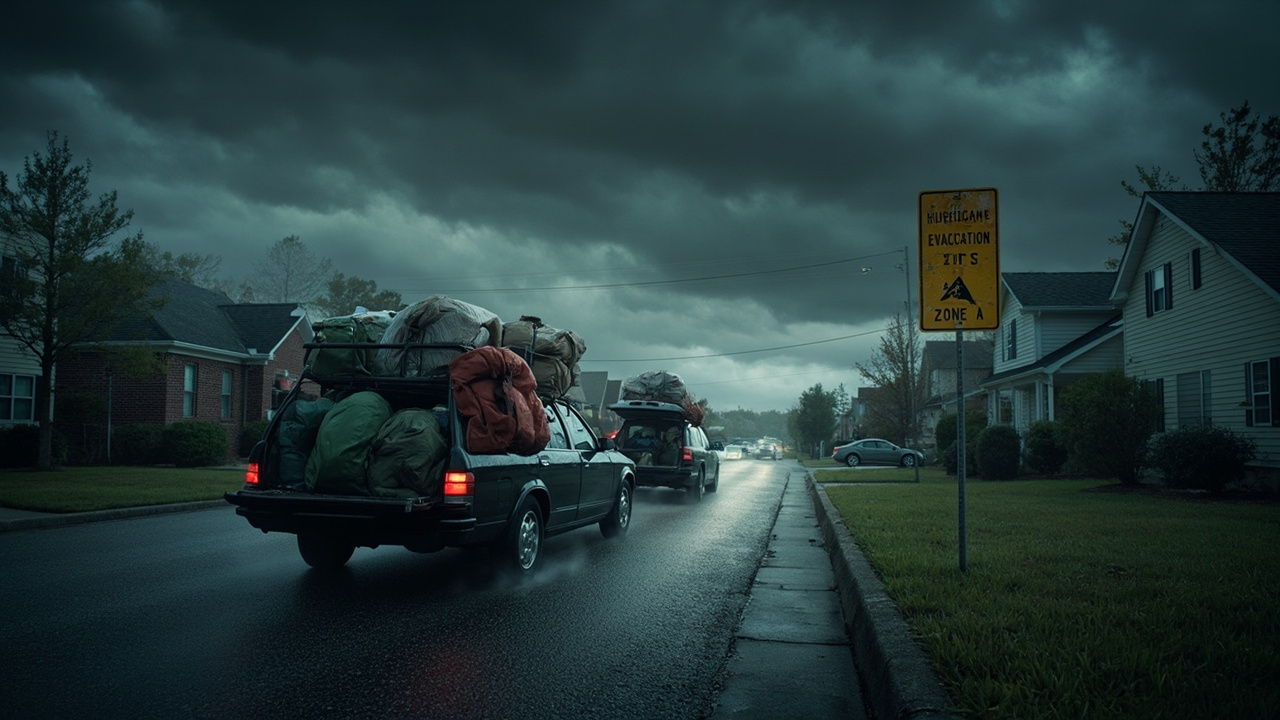
TL;DR: In North Carolina, local officials decide who must evacuate, and current local instructions are posted on the official Evacuation Orders pages maintained by NC DPS and ReadyNC.
Where to check current evacuation instructions
Households should start with the state's official listing pages when a storm threatens.
According to Evacuation Orders | NC DPS, the state hosts a page titled "Local governments have ordered or issued the following evacuation instructions." That page is presented as the place to see instructions when a storm threatens the North Carolina coast.
According to Evacuation Orders | Ready NC, ReadyNC maintains a parallel listing with the same heading. The ReadyNC contact listing identifies North Carolina Emergency Management at 1636 Gold Star Drive, Raleigh, NC 27607, phone 919-825-2500.
According to Evacuation Orders | NC DPS, the NC DPS contact for the program is 512 North Salisbury Street, Raleigh, with a mailing address of 4201 Mail Service Center, Raleigh, NC 27699-4201, and phone 919-710-8885. Families can use those contacts when they need help understanding an official posting.
The practical step is simple. Check the official evacuation-order listings, then listen to county officials, local media, and other trusted sources for zone-specific direction.
Who orders an evacuation in North Carolina
Local officials maintain responsibility for ordering evacuations in North Carolina.
According to Know Your Zone | NC DPS, residents should listen to local officials, local media outlets, and other trusted sources to maintain awareness of evacuation decisions. No state-level order replaces that local decision.
The state's mapping system reflects that local structure. The ReadyNC evacuation map service describes four display categories: zone under mandatory evacuation order, zone under voluntary evacuation order, county has mandatory evacuation orders, and county has voluntary evacuation orders.
That distinction matters for household planning. A mandatory designation applies to a zone placed under a mandatory order. A voluntary designation applies to a zone placed under a voluntary order. County-level indicators show when a county has mandatory or voluntary orders in effect.
According to Know Your Zone | NC DPS, evacuations are called only when lives and safety of people in the area being evacuated will be at risk. Following the order protects both the household and first responders.
What Know Your Zone is and why it exists
North Carolina Know Your Zone is a tiered evacuation system for coastal emergencies.
According to Know Your Zone | NC DPS, twenty-one coastal counties have established predetermined evacuation zones to simplify the coastal evacuation process in an emergency. Everyone living or vacationing in North Carolina's coastal areas should know their zone.
According to Frequently Asked Questions about Know Your Zone | NC DPS, the system highlights areas most vulnerable to impacts from hurricanes, tropical storms, and other hazards. Zones highlight areas most at risk to storm surge and flooding.
According to Know Your Zone | NC DPS, the lookup tool is a color-coded interactive map that lets a person determine the evacuation zone for where they live, work, or are visiting based on street address.
The program is intended to streamline evacuations and support personal readiness for hazardous weather. According to Frequently Asked Questions about Know Your Zone | NC DPS, the design helps people avoid unnecessary evacuation travel, eases overcrowding at local storm shelters, and increases public safety.
The 21 counties with predetermined zones
Predetermined zones exist in a defined set of eastern counties.
According to Know Your Zone | NC DPS, the 21 counties are Beaufort, Brunswick, Camden, Carteret, Chowan, Craven, Currituck, Dare, Duplin, Hyde, Jones, Lenoir, New Hanover, Onslow, Pamlico, Pasquotank, Pender, Perquimans, Pitt, Tyrrell, and Washington.
Households in those counties can use the KYZ Lookup Tool to see whether an address falls inside an evacuation zone. People outside those county areas may still receive emergency instructions from local officials for major emergencies.
According to Frequently Asked Questions about Know Your Zone | NC DPS, if an area has no predetermined evacuation zones, evacuation due to hazardous storm conditions is not expected. That does not remove the need to know how to protect the family and to listen closely to emergency communications during severe weather or another emergency.
Zone letters also vary by county. According to Frequently Asked Questions about Know Your Zone | NC DPS, local officials designed zones based on vulnerability to storm surge and flooding, population density, and historical knowledge. Some counties have only Zone A and Zone B, while other counties have additional zones including Zone C, Zone D, and Zone E.
How local officials use Zones A, B, C, D, and E
Zone letters set the expected order of evacuation.
According to Know Your Zone | NC DPS, areas in Zone A will typically be evacuated first, followed by areas in Zone B, and so on. Local officials determine which areas should be evacuated in a particular event.
According to Frequently Asked Questions about Know Your Zone | NC DPS, when a storm is approaching, local officials determine which zones face the greatest threat and assess which residents should evacuate. All zones will not be evacuated in every event.
Public notice comes through established channels. According to Know Your Zone | NC DPS, emergency managers will work with local media and use other outreach tools to notify residents and visitors of impacted zones and evacuation instructions.
Households should therefore learn their zone before storm season, then watch for the specific zones named in each event. Knowing the letter in advance prevents confusion when officials announce that only certain zones must leave.
How to look up your zone by address
The lookup process uses a street address and an interactive map.
According to Frequently Asked Questions about Know Your Zone | NC DPS, the user opens the interactive map, enters an address in the search bar at the upper left, and the map zooms to that location. A pop-up box then shows details for that evacuation zone.
An alternative method is also described. A person can zoom into a chosen location and click on the map to see zone information.
According to Know Your Zone | NC DPS, the same tool works for home, work, and vacation addresses. That feature helps families check a rental property as well as a primary residence.
The state also points users to supporting tools. According to Know Your Zone | NC DPS, linked resources include a digital toolkit for Know Your Zone education, the North Carolina Hurricane Guide for download, traffic and travel information through DriveNC.gov covering congestion, road incidents, traffic cameras, and work zones, and current weather alerts with National Weather Service warnings, watches, and advisories.
What to prepare before an evacuation is ordered
State guidance asks households to arrange destinations, supplies, vehicles, and family needs early.
According to Frequently Asked Questions about Know Your Zone | NC DPS, families should make a plan to stay with family or friends or at a hotel if evacuation becomes necessary. People who do not need to evacuate can offer to host evacuating family or friends. A shelter should be a place of last resort during evacuation, not the primary option.
The same guidance calls for a family emergency supply kit that includes key family papers and extra cash. Vehicles should be filled with gasoline, and drivers should be familiar with alternate routes. People without a car should consider how they will evacuate and make arrangements with others if necessary.
According to Frequently Asked Questions about Know Your Zone | NC DPS, the North Carolina Hurricane Guide is a resource for information before, during, and after a storm. People with nowhere else to go who need an emergency shelter can find open storm shelters on the ReadyNC website.
Children need direct attention during planning. According to Frequently Asked Questions about Know Your Zone | NC DPS, hurricanes and leaving home can be frightening for some children, so parents should talk with them and hear their concerns. The state describes a fun kids packet created to help children learn evacuation zones and become more familiar with terms they may hear when tropical weather is approaching.
What to do after your zone is ordered to leave
Speed and basic home security are the priorities once an order covers your zone.
According to Frequently Asked Questions about Know Your Zone | NC DPS, residents should gather belongings, including the emergency supply kit, and leave as soon as possible for personal safety. If time allows, they should secure the home by locking doors and windows.
Compliance is framed as protection for the whole community. By following evacuation orders, residents protect themselves and first responders who would otherwise face added risk.
Households that need shelter should use official shelter information rather than assuming a nearby school or community building is open. According to Frequently Asked Questions about Know Your Zone | NC DPS, open storm shelters can be found on the ReadyNC website for people with nowhere else to go.
After departure, continued monitoring remains important. Residents should keep listening to local officials and local media for impacted-zone updates, travel guidance, shelter changes, and instructions about when conditions allow further action.