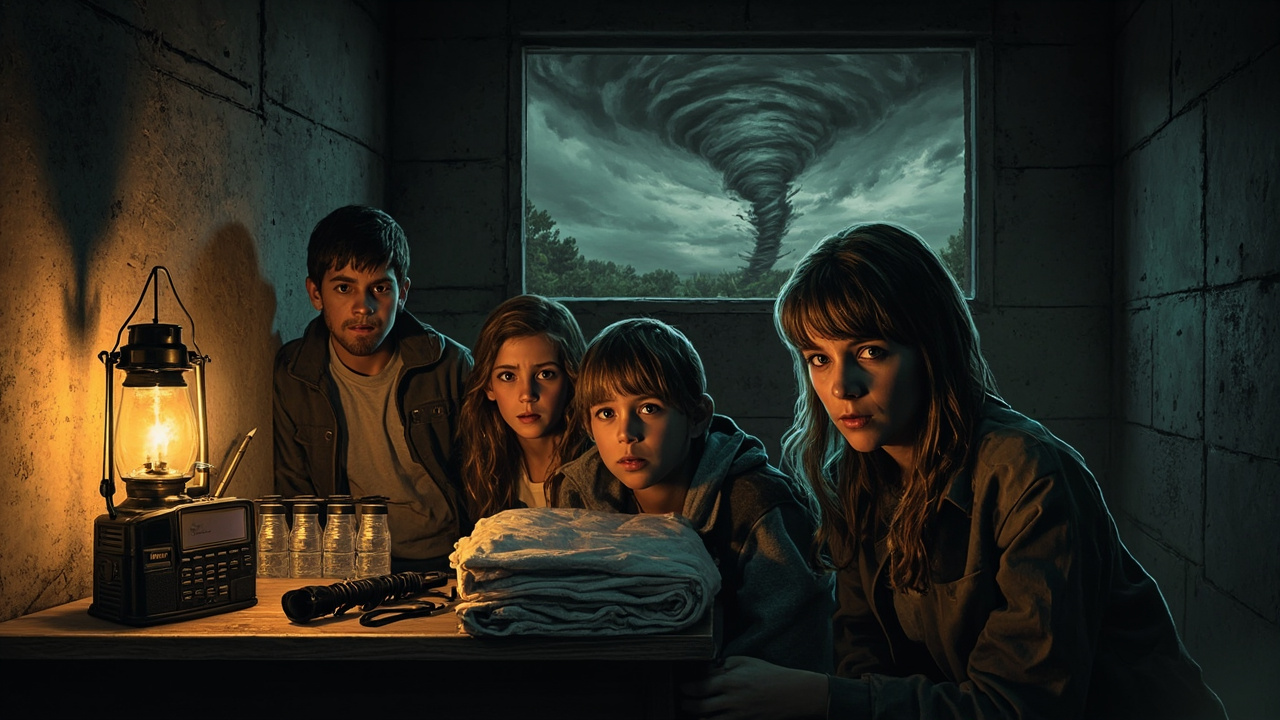
Understand Tornado Alerts: What Watch, Warning and Emergency Mean for Your Family
TL;DR: A Tornado Watch means tornadoes are possible — get ready. A Tornado Warning means a tornado is happening or about to happen — take shelter immediately. A Tornado Emergency means a violent, confirmed tornado is causing catastrophic damage — seek refuge in the safest location possible.
According to Understand Tornado Alerts from the National Weather Service, those three levels are the core system every household should know. A Watch covers a large area and calls for preparation. A Warning covers a much smaller area and calls for immediate action. An Emergency is the highest alert level and signals a severe threat to human life and property.
1. Tornado Watch: Be Prepared
A Tornado Watch means tornadoes are possible in and near the watch area, according to Understand Tornado Alerts.
Watches are issued by the Storm Prediction Center for counties where tornadoes may occur. The watch area is typically large, covering numerous counties or even states.
What to do during a Watch:
- Review and discuss your emergency plans
- Take inventory of your supplies and check your safe room
- Be ready to act quickly if a warning is issued or you suspect a tornado is approaching
The National Weather Service notes that acting early helps to save lives.
According to Understand Forecast Information from the National Oceanic and Atmospheric Administration, the rule during a Tornado Watch is simple: know your safe place and be ready to act quickly if a Warning is issued.
For households, that means a Watch is work time. Check the forecast regularly to see if you are at risk for tornadoes, and listen to local news or a NOAA Weather Radio to stay informed about tornado watches and warnings, according to Prepare! Don't let Tornadoes Take You by Surprise.
Know how your community sends warnings. According to that same National Weather Service preparedness guide, some communities have outdoor sirens, while others depend on media and smart phones to alert residents of severe storms capable of producing tornadoes.
2. Tornado Warning: Take Action
A Tornado Warning means a tornado has been sighted or indicated by weather radar, according to Understand Tornado Alerts. There is imminent danger to life and property.
Warnings are issued by your local forecast office. Warnings typically encompass a much smaller area, around the size of a city or small county, that may be impacted by a tornado identified by a forecaster on radar or by a trained spotter or law enforcement who is watching the storm.
According to Understand Forecast Information, a Tornado Warning means a tornado is happening or about to happen — immediately seek shelter in your safe place.
The required move, according to Understand Tornado Alerts:
- Move to an interior room on the lowest floor of a sturdy building
- Avoid windows
- If in a mobile home, a vehicle, or outdoors, move to the closest substantial shelter and protect yourself from flying debris
If you are under a Tornado Warning, find safe shelter right away, according to the Federal Emergency Management Agency fact sheet BE PREPARED FOR A TORNADO. Go to a safe room, basement, or storm cellar. If there is no basement, get to a small, interior room on the lowest level. Stay away from windows, doors, and outside walls.
That FEMA information sheet describes tornadoes as violently rotating columns of air that extend from a thunderstorm to the ground, which can destroy buildings, flip cars, and create deadly flying debris. It notes tornadoes can happen anytime and anywhere, can bring intense winds, can look like funnels, and can exceed 200 MPH.
3. Tornado Emergency: Seek Shelter Immediately
A Tornado Emergency is the National Weather Service's highest alert level, according to Understand Tornado Alerts.
It is issued when a violent tornado has touched down in the watch area. There is a severe threat to human life and property, with catastrophic damage confirmed.
Required actions during an Emergency:
- Immediately seek refuge in the safest location possible
- Call friends and family who are within the watch area to ensure they are aware of the situation
- If you see a tornado approaching, do not attempt to outrun it in a vehicle; shelter in place
- Once safe, monitor your local forecast for the latest updates
Do not try to outrun a tornado in a vehicle, according to BE PREPARED FOR A TORNADO. If you are in a car or outdoors and cannot get to a building, the sheet advises covering your head and neck with your arms and covering your body with a coat or blanket, if possible.
4. Know the Signs Even Without an Alert
Some tornadoes strike quickly without time for a tornado warning, so it is important to know the signs, according to Safety Guidelines: During a Tornado from the Centers for Disease Control and Prevention.
Take shelter if you see signs of a tornado. Signs listed by the CDC include:
- Rotating funnel-shaped cloud
- Approaching cloud of debris
- Dark or green-colored sky
- Large, dark, low-lying cloud
- Large hail
- Loud roar that sounds like a freight train
If you spot a tornado that is far away, the CDC advises seeking shelter and helping alert others by immediately reporting it to the newsroom of a local radio or TV station. Use common sense and exercise caution.
FEMA's BE PREPARED FOR A TORNADO lists the same core signs: a rotating funnel-shaped cloud, an approaching cloud of debris, or a loud roar similar to a freight train.
Stay tuned during the event. The CDC advises keeping tuned to local radio and TV stations, a NOAA weather radio, or your mobile phone. FEMA advises listening to the Emergency Alert System, NOAA Weather Radio, or local alerting systems for current emergency information and instructions.
5. Pick and Practice Your Safe Place Now
Pick a safe room in your home, such as a basement, storm cellar, or an interior room on the lowest floor with no windows, according to Prepare! Don't let Tornadoes Take You by Surprise.
Create a communications plan that includes an emergency meeting place and related information. If you live in a mobile home or home without a basement, identify a nearby safe building you can get to quickly, such as a church or family member.
Practice your plan. Conduct a family severe thunderstorm drill regularly so everyone knows what to do if a tornado is approaching, according to that National Weather Service guide. Make sure all members of your family know to go to the safe room when tornado warnings are issued. Do not forget pets if time allows.
For more family-plan ideas, the guide points households to https://www.ready.gov/make-a-plan.
Consider having your safe room reinforced. Plans for reinforcing an interior room to provide better protection are available on the Federal Emergency Management Agency website, according to the same guide.
FEMA's tornado sheet adds construction benchmarks: identify and practice going to a safe shelter such as a safe room built using FEMA criteria or a storm shelter built to ICC 500 standards. The next best protection is a small, interior, windowless room in a sturdy building on the lowest level. Households can consider constructing a safe room that meets FEMA or ICC 500 standards.
6. Where to Shelter by Location
The safest place in the home is the interior part of a basement, according to Safety Guidelines: During a Tornado.
If you do not have a basement, go to an inside room, without windows, on the lowest floor. This could be a center hallway, bathroom, or closet. Avoid taking shelter where there are heavy objects on the floor directly above you, because heavy objects such as refrigerators or pianos could fall through the floor if the tornado strikes your house.
For added protection, get under something sturdy such as a heavy table or workbench. If possible, cover your body with a blanket, sleeping bag, or mattress, and protect your head with anything available — even your hands. One basic rule from the CDC is avoid windows, because an exploding window can injure or kill.
Other locations:
- Mobile home: Do not stay in a mobile home during a tornado. Mobile homes can turn over during strong winds, and even mobile homes with a tie-down system cannot withstand the force of tornado winds, according to the CDC. Go to a nearby building, preferably one with a basement. If there is no shelter nearby, lie flat in the nearest ditch, ravine, or culvert and shield your head with your hands.
- Work or school: Follow your tornado drill and proceed to your tornado shelter location quickly and calmly. Stay away from windows and do not go to large open rooms such as cafeterias, gyms, or auditoriums.
- Mall, theater, or gym: Long-span buildings such as malls, theaters, and gyms are especially dangerous because the roof is usually supported only by the outside walls, according to the CDC. Get to the lowest level, the basement if possible, and stay away from windows. If there is not time to get lower, try to get under a door frame or get up against something that will support or deflect falling debris. In a department store, get up against heavy shelving or counters. In a theater, get under the seats. Protect your head.
- Vehicle: Do not try to outrun a tornado. Drive to the closest shelter. Cars, buses, and trucks are easily tossed by tornado winds, and a motor vehicle is the least desirable place to be. If unable to make it to safe shelter, either get down in the vehicle and cover head and neck or leave the vehicle and seek shelter in a low-lying area such as a ditch or ravine. Stay away from highway overpasses and bridges.
- Outside: If there is no shelter nearby, go to a low-lying area such as a ditch or ravine and lie flat. Protect your head and neck with an object or with your arms. Avoid areas with many trees.
If you are in a wheelchair, the CDC advises getting away from windows and going to an interior room, seeking shelter under a sturdy table or desk if possible, and covering the head with anything available. If unable to move from a bed or chair and assistance is not available, protect against falling objects by covering up with blankets and pillows.
7. After the Tornado: Stay Clear and Stay Connected
Keep listening to the Emergency Alert System, NOAA Weather Radio, and local authorities for updated information after a tornado, according to BE PREPARED FOR A TORNADO.
- If trapped, cover your mouth with a cloth or mask to avoid breathing dust. Try to send a text, bang on a pipe or wall, or use a whistle instead of shouting.
- Stay clear of fallen power lines or broken utility lines.
- Do not enter damaged buildings until you are told that they are safe.
- Save phone calls for emergencies. Phone systems are often down or busy after a disaster. Use text messaging or social media to communicate with family and friends.
- During clean-up, wear thick-soled shoes, long pants, and work gloves.
Help your neighbor when it is safe. The National Weather Service preparedness guide encourages households to encourage loved ones to prepare and to take CPR training so you can help if someone is hurt.