Gen X Were the Original Preppers — And They Never Stopped
TL;DR: Generation X — the so-called 'throwaway kids' of the 1980s — developed deep self-reliance skills out of necessity, and that survival-first mindset now anchors the modern emergency preparedness movement in the United States.
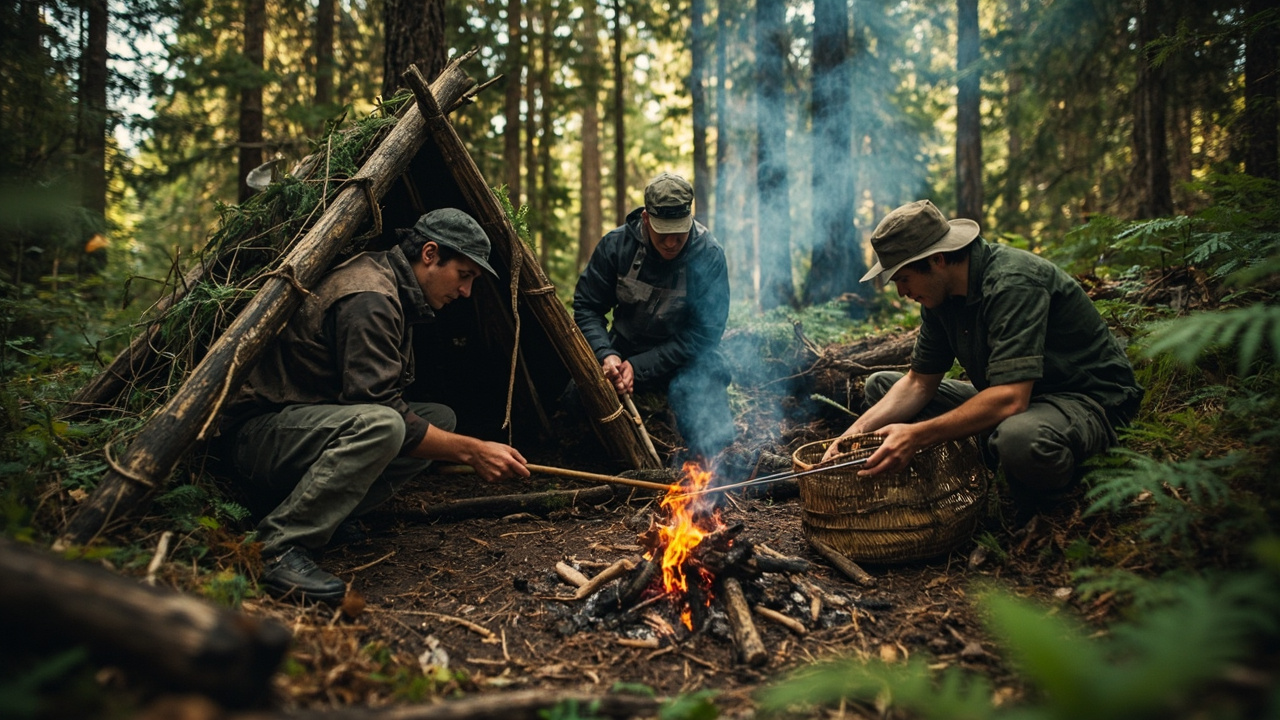
Long before FEMA published its first Ready.gov campaign urging Americans to build 72-hour emergency kits, a generation of children was already learning to fend for itself. Born roughly between 1965 and 1980, Generation X grew up in an era of record divorce rates, dual-income households, stagnant wages, and a federal government that, as many of them describe it, simply looked the other way. They were called latchkey kids. They were called the forgotten generation. Some called them, bluntly, the throwaway kids. What they built in response was a survival ethic that quietly became the backbone of the American prepping community.
A 2023 survey by the Pew Research Center found that approximately 53 percent of U.S. adults say they have taken at least one emergency preparedness step in the past year — stockpiling water, assembling a go-bag, or establishing a household communication plan. Among those aged 43–58 (today's Gen X), the rates of sustained preparedness behaviors are notably higher than younger cohorts, according to FEMA's 2023 National Household Survey on Disaster Preparedness.
What Made the 1980s a Survival Classroom
The 1980s were not uniformly prosperous, despite the cultural mythology of Reagan-era optimism. The 1981–82 recession was the deepest economic contraction since the Great Depression, driving U.S. unemployment to 10.8 percent in December 1982, according to the U.S. Bureau of Labor Statistics. Rust Belt cities like Detroit, Cleveland, and Pittsburgh saw manufacturing employment collapse. Food bank usage surged. The number of children living in poverty climbed to 22 percent by 1983, a figure documented by the Children's Defense Fund in its landmark 1984 report, A Children's Defense Budget.
For the children navigating those years, the instability was not abstract policy — it was an empty refrigerator, a parent working two jobs, or an after-school routine managed entirely without adult supervision. The term "latchkey kid" entered the popular lexicon precisely because it described a generation left to manage keys, stoves, younger siblings, and neighborhood dangers on their own.
Psychologist Jean Twenge, in her research on generational personality traits, has noted that Gen X scores measurably higher on self-reliance and lower on institutional trust than either Boomers or Millennials — traits that translate directly into preparedness behavior. Low trust in government and institutions is, consistently, one of the strongest predictors of personal emergency preparedness investment.
Survival Skills as a Coping Mechanism
For many Gen Xers, survival skills were not a hobby — they were infrastructure. Cooking meals independently, managing household budgets, navigating public transportation alone as preteens, administering basic first aid — these were not merit badge exercises but daily requirements.
This practical competency has aged into something significant. A 2022 report by the American Red Cross, titled The State of Preparedness, found that individuals who practiced self-reliant behaviors in childhood were 1.6 times more likely to maintain an emergency supply kit as adults. The report specifically flagged early-life experiences of household instability as a predictor of adult preparedness investment.
Now in their mid-40s to late 50s, Gen X adults are statistically the demographic most likely to own a generator, maintain a multi-week food supply, hold current first aid certification, and have documented household emergency plans — not because prepping became a trend, but because the underlying behaviors never stopped.
The Political Dimension: Distrust and Self-Reliance
The social media post that prompted this article — directed at a government press office — captures something real about Gen X political psychology. The sentiment that government communications are performative, that official reassurances ring hollow, is not fringe paranoia. It is a documented generational stance.
A 2023 Gallup poll found that only 17 percent of Gen X respondents expressed "a great deal" of confidence in the federal government's ability to handle domestic problems — the lowest of any living generation in that survey cycle. Compare that to 29 percent of Millennials and 34 percent of Baby Boomers who expressed similar confidence.
This institutional skepticism drives a specific preparedness posture: Gen X preppers tend to plan for scenarios where government response is delayed, inadequate, or entirely absent. FEMA's own guidance — that households should be prepared to be self-sufficient for at least 72 hours following a major disaster — implicitly acknowledges this gap. Many Gen X preppers regard 72 hours as a floor, not a ceiling, and plan for two weeks or more.
FEMA Administrator Deanne Criswell stated in February 2024 that "the preparedness gap between what Americans have and what they need remains significant," and urged households to expand their planning horizons beyond the traditional 72-hour standard. Gen X, characteristically, had already done so.
What Gen X Preppers Actually Do Differently
The emergency preparedness habits that Gen X carries into adulthood reflect their specific formative experiences:
Food and water security: Growing up in households that sometimes ran short, Gen X adults are significantly more likely to maintain rotating food stores of 30 days or more. The FEMA 2023 National Household Survey found adults over 40 are nearly twice as likely to store more than a two-week food supply compared to adults under 30.
Mechanical and utility skills: A generation that fixed things because calling a professional was too expensive. Generator maintenance, water purification, basic plumbing — these are not exotic skills in Gen X households; they are inherited practicality.
Community networks outside institutions: Gen X preppers disproportionately organize around neighborhood mutual aid, informal skill-sharing, and community radio networks rather than government-affiliated preparedness programs. The rise of Community Emergency Response Teams (CERT), which FEMA formally expanded in the early 2000s, drew heavily from this demographic.
Mental resilience under sustained stress: Perhaps the least-discussed preparedness asset. Psychologists who study disaster response consistently identify the capacity to tolerate uncertainty and continue functioning — what researchers call stress inoculation — as critical in actual emergencies. A generation that managed chronic instability in childhood has, in many documented cases, higher stress inoculation baselines.
The 'Take Up Arms' Phrase: Survival Skills, Not Violence
The original social media post referenced taking "up arms again in our survival skills" — a phrase that is easily misread. In context, it describes exactly what preparedness advocates mean by empowerment: not aggression, but the act of reclaiming personal agency in the face of institutional indifference.
This is the correct framing for emergency preparedness broadly. FEMA, the Red Cross, and every credible preparedness organization emphasize that the most critical first responders in any disaster are the individuals on the ground — neighbors, community members, people who have the skills and supplies to act before professional help arrives.
The American Red Cross explicitly states in its preparedness materials that "in a major disaster, emergency responders may not be able to reach you immediately." That is not a cynical political statement. It is logistics. Gen X learned that lesson in childhood. The rest of the country is still catching up.
Practical Steps: The Gen X Preparedness Baseline
For readers looking to build or update their own emergency preparedness plan, the habits cultivated by this generation translate into concrete actions:
- Build a 30-day food and water supply. FEMA recommends a minimum of 72 hours; aim for at least two weeks of water (one gallon per person per day) and shelf-stable food.
- Establish communications redundancy. A battery-powered or hand-crank NOAA weather radio costs under $30 and functions when cell networks fail. The National Weather Service broadcasts continuous updates on 162.400–162.550 MHz.
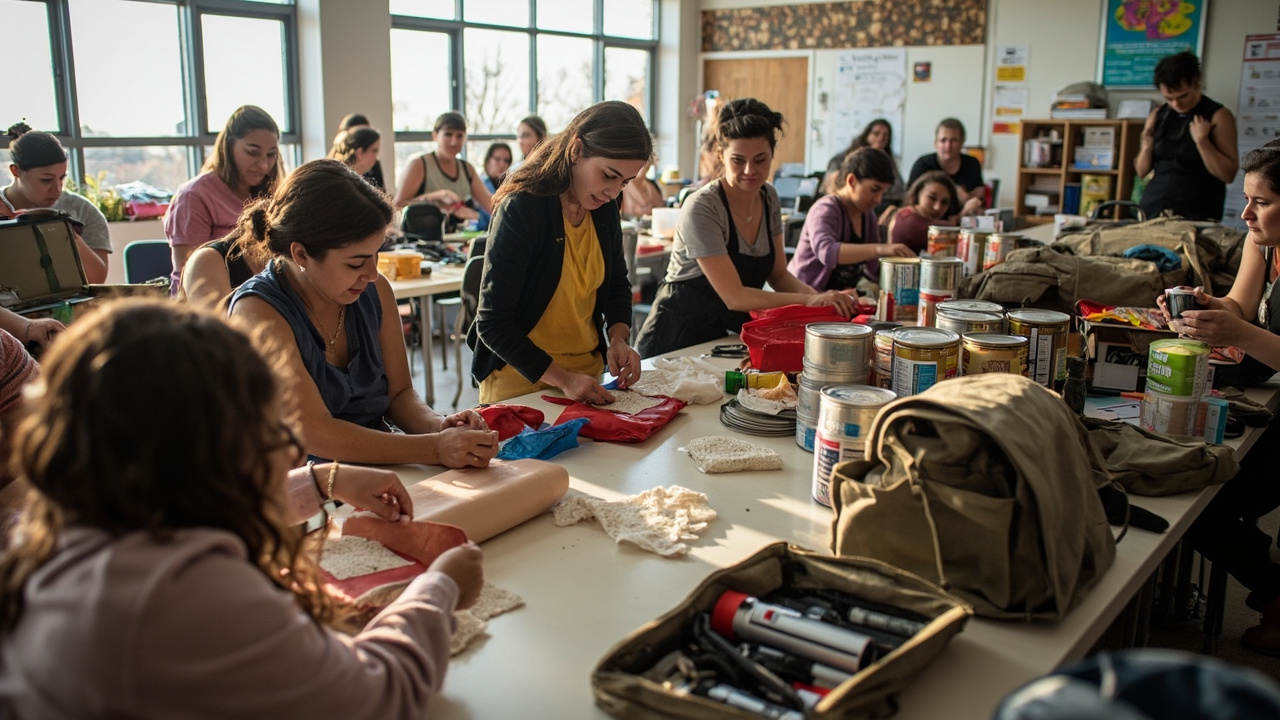
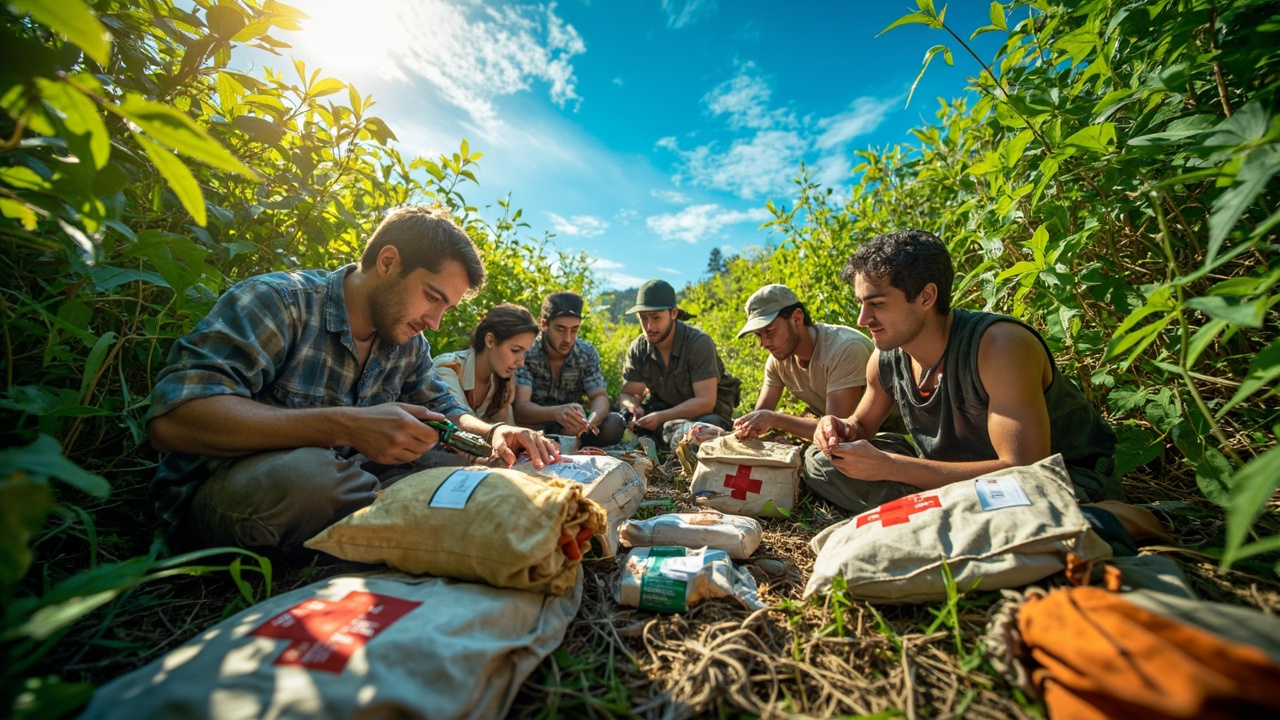
- Learn one new hands-on skill per quarter. First aid and CPR certification (available through the Red Cross), fire extinguisher operation, and basic water purification are high-value starting points.
- Document your household emergency plan. Physical paper copies matter — phones die. Include out-of-area contact numbers, evacuation routes, and meeting points.
- Connect with your local CERT program. FEMA's Community Emergency Response Team training is free, available in most counties, and teaches triage, fire suppression, and disaster psychology.
- Audit your financial resilience. Cash on hand matters when ATMs go offline. A 30-day emergency fund, accessible without digital infrastructure, is a preparedness asset.
The Bottom Line
Generation X did not choose to be a generation of survivors. Circumstance made that choice for them. But the skills, the skepticism, and the self-reliance that came out of that crucible are among the most transferable and valuable assets in any emergency preparedness framework.
The message embedded in that social media post — that lived experience of hardship creates genuine competency — is not a political claim. It is a preparedness truth. The people most likely to survive a major disaster are not those who trusted the system to protect them. They are the ones who quietly, for decades, prepared to protect themselves.
According to FEMA's 2023 National Household Survey on Disaster Preparedness, only 39 percent of American households have a written emergency plan. That number needs to be higher. Gen X already knows why.
Sources referenced
- FEMA National Household Survey on Disaster Preparedness 2023 (https://www.fema.gov/sites/default/files/documents/fema_2023-national-household-survey.pdf) informed this article's reporting and source checks.
- American Red Cross — The State of Preparedness Report (https://www.redcross.org/content/dam/redcross/get-help/preparedness-reports/state-of-preparedness-2022.pdf) informed this article's reporting and source checks.