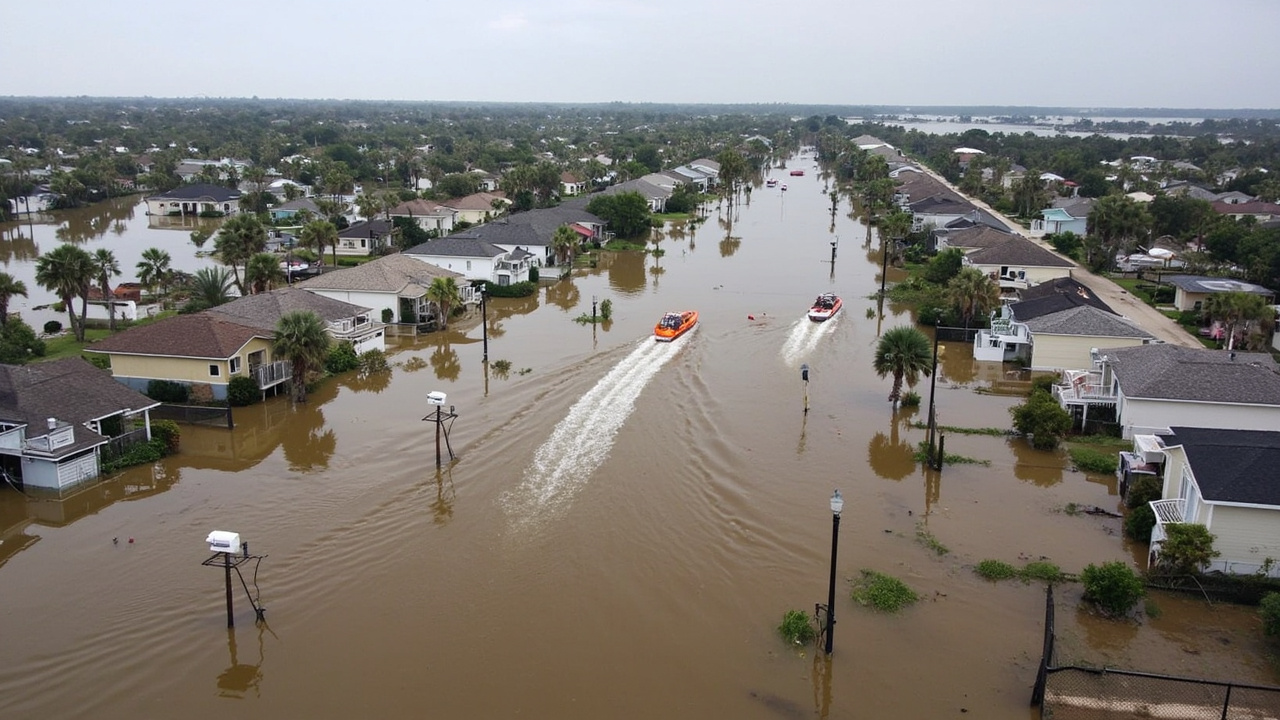
St. Lucie County Activates Dual Shelters as Record Rain Forces 120 Water Rescues
St. Lucie County, Florida opened two emergency shelters on November 3 after 12 to 16 inches of rain inundated neighborhoods, prompted more than 120 high-water rescues, and displaced residents throughout the county — the largest flooding response the area had seen in recent memory, according to CBS12's coverage of the event.
The shelters became operational within hours of each other as the county's Emergency Operations Center escalated to a partial Level 2 activation.
Where the Shelters Are and When They Opened
The general population shelter opened at 11 a.m. at Northport K-8 School, located at 250 N.W. Floresta Drive, Port St. Lucie. Two hours later, at 1 p.m., a special medical needs shelter began accepting residents at the Havert L. Fenn Center, 2000 Virginia Avenue, Fort Pierce, according to the City of Port St. Lucie's official announcement.
The dual-shelter arrangement was designed to separate households with standard displacement needs from those requiring ongoing medical support — including residents who rely on oxygen equipment or other life-sustaining devices.
What to Bring If You Must Use a Shelter
The City of Port St. Lucie's announcement specified the items residents should pack before heading to either location:
- Pillows, blankets, and linens
- At least one gallon of water per person per day
- A three-day supply of non-perishable food
- Prescription medications and medical equipment, including oxygen tanks
- Important personal documents
These packing guidelines apply whether a household is heading to Northport K-8 School or to the Havert L. Fenn Center medical needs shelter.
Scale of the Flooding: Rain Totals and Rescue Numbers
The rainfall that triggered the shelter openings was described by local officials as historically severe. Twelve to sixteen inches of rain fell across multiple areas of St. Lucie County, overwhelming drainage infrastructure and submerging roadways in neighborhoods including Creekside and Tradition, CBS12 reported.
Fire and Emergency Services logged 518 calls related to water rescues during the event. Within the first 36 hours, crews completed 120 high-water rescues, according to CBS12. The Emergency Operations Center's partial Level 2 activation kept multi-agency coordination running continuously as rescue calls arrived.
Official Warning: Turn Around, Don't Drown
Interim County Administrator Mayté Santamaria publicly cautioned residents against traveling through flooded roads, urging them to avoid unnecessary trips and to minimize hazards by staying home when possible. The City of Port St. Lucie's announcement repeated the standard emergency-management directive: "Turn Around, Don't Drown."
Road closures were widespread, and authorities asked drivers to treat any water over a roadway as impassable regardless of how shallow it appeared.
Schools Closed, Reopening Timeline Uncertain
St. Lucie County schools shut down as officials assessed storm damage and evaluated transportation routes. Superintendent Dr. Jon R. Prince said the district was working with local agencies to determine when roads would be safe enough to resume bus service and reopen campuses, according to CBS12. No confirmed reopening date was announced in the reports reviewed for this article.
Health Warnings: Floodwater Contamination
Clint Sperber, health officer for St. Lucie and Okeechobee counties, warned residents to avoid contact with standing water because of potential bacterial and chemical contamination, CBS12 reported. He advised boiling or chemically disinfecting tap water before consumption and said any food items or household goods that had come into direct contact with floodwater should be discarded.
The Florida Department of Health was actively monitoring conditions across the county as the floodwaters receded.
How to Report Flood Damage to Your Home
Residents whose properties were affected can call the 1PSL hotline at 772-871-1775 to report the extent of water damage, according to the City of Port St. Lucie. The city described this reporting step as a way to document storm impacts across the municipality — information that could support future FEMA assistance applications. Officials noted that calling the hotline does not replace filing an individual insurance claim.
Documenting damage promptly matters because federal disaster assistance eligibility often depends on verified records of property loss, and the hotline provides a direct channel for that documentation.
Preparedness Lessons From the St. Lucie Response
The speed at which St. Lucie County moved from a rainfall event to dual-shelter activation — opening both facilities within the same afternoon — illustrates what an effective local emergency response framework looks like under pressure. Several factors stand out for households in flood-prone regions.
Know your shelter options before disaster strikes. The county maintained separate general and medical needs shelters, each with a fixed address and opening time. Residents already familiar with the county's emergency plan could act immediately rather than searching for information during the event.
Pack a go-bag aligned with shelter requirements. The supplies the City of Port St. Lucie specified — water, three days of food, medications, documents — mirror standard 72-hour emergency kit guidance. Having those items pre-packed allows households to leave within minutes of an evacuation call.
Use official reporting channels. The 1PSL hotline at 772-871-1775 gives residents a direct line to document losses that could matter for disaster assistance. Calling the hotline, photographing damage, and notifying insurers are three separate but equally important steps.
Follow health guidance on water safety immediately. Health officer Clint Sperber's advice to boil or disinfect tap water and discard flood-contaminated food should be treated as a Day 1 priority — waterborne illness can compound a flooding crisis quickly.
St. Lucie County's shelter network remained active as recovery crews continued high-water rescues and infrastructure assessments. Residents can track shelter status and road closures through the City of Port St. Lucie's official website and county emergency management communications.
Sources referenced
- City of Port St. Lucie — SLC Opens Shelters to Address Residents Impacted by Flood (https://www.cityofpsl.com/News-Stories/2026/SLC-Opens-Shelters-to-Address-Residents-Impacted-by-Flood)
- CBS12 — St. Lucie County Reports 120 Water Rescues as Flooding Response Continues, Schools Closed, Shelters Open (https://cbs12.com/news/local/st-lucie-county-reports-120-water-rescues-as-flooding-response-continues-schools-closed-shelters-open-historic-flooding-caution-floods-rain-downpour)