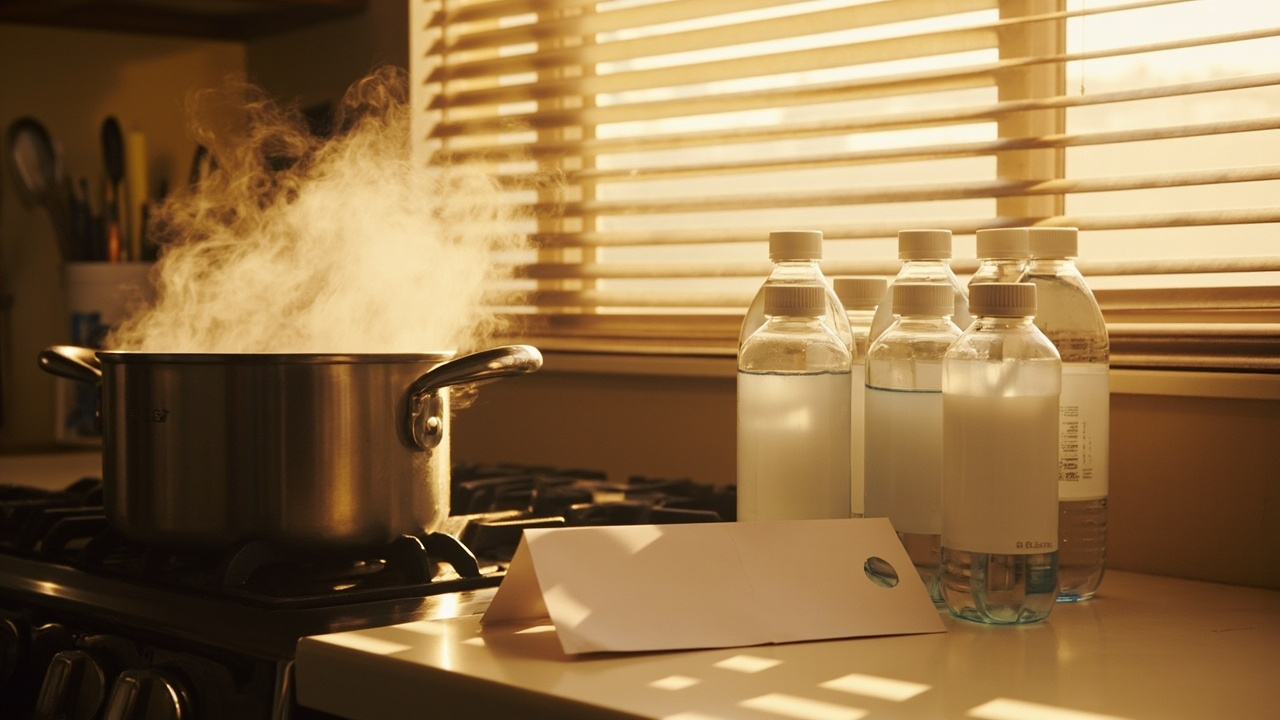
Pembroke Pines has issued a precautionary boil water notice for an estimated 40 homes on Northwest 15th Court after a 2-inch water main break on Wednesday, Nov. 25, 2026, and the city says the order will stay in effect until bacterial tests come back clear.
The affected stretch is Northwest 15th Court, from North Hiatus Road to Northwest 113th Way, WSVN 7News reported. Mayor Angelo Castillo told the outlet that the rupture involved a 2-inch water main and that roughly 40 homes are affected. Pembroke Pines posted a boil water order at 12:59 p.m. on Nov. 25 and said the affected homes received door hanger notices. The city labels the action a boil water order; the station described it as a precautionary notice.
The notice advises households in the covered block to boil tap water before drinking it, cooking with it, brushing teeth or preparing food. The city said the order would be lifted once bacterial tests were cleared and that impacted residents would be told. The Florida Department of Health in Escambia County says a boil water notice tells people to boil water before they consume it; the measure is intended to get rid of bacteria, viruses and parasites that may have gotten into the water supply.
The notice covers one block, not the whole city
Pembroke Pines described the scope as several homes along that stretch of Northwest 15th Court. The estimate of about 40 came from the mayor. The order applies to that area rather than to the city's water system as a whole.
It is separate from an earlier Pembroke Pines order near Northwest 11th Court and Northwest 81st Avenue. The city issued that notice on Nov. 19 for about 54 homes and 16 businesses after damage to a nearby water service pipe, its Alert Center says. Pembroke Pines Today reported that the earlier order was lifted at 4:12 p.m. on Tuesday, Nov. 24.
Boil tap water for one minute
The Centers for Disease Control and Prevention lists commercially bottled water or boiled tap water as options for drinking and food preparation. Without bottled water, the agency advises a rolling boil lasting one minute, extended to three minutes above 6,500 feet, followed by cooling.
A home filter does not remove the need to boil. The CDC says tap water should be boiled even when it has gone through a refrigerator, pitcher or other household filter, and that water or ice from appliances connected to a water line should not be used.
The Florida Department of Health in St. Johns County describes a backup method for households that cannot boil. For clear water, the county's recipe is one-eighth teaspoon — eight drops, or roughly 0.75 milliliters — of unscented liquid household bleach in 16 cups of water, mixed and left to stand for at least half an hour. Cloudy water should be filtered through a clean cloth first. If it remains cloudy after filtering, the county advises adding another one-eighth teaspoon and waiting 30 minutes; water that is still cloudy after that should be discarded or replaced with bottled water. Treated water should be stored in clean, disinfected containers. The same county guidance says coffee and tea should be made with clean or bottled water, and fruit and vegetables should be washed with it before eating.
Ice, dishes, teeth and baths
The St. Johns County health office says ice from trays, dispensers or ice makers should not be used while the notice is active; commercially made ice is the alternative until the order is lifted. The CDC also advises discarding ice made before the advisory and stopping ice production.
Brush teeth with boiled or bottled water, the CDC says. Adults can bathe or shower as long as they avoid swallowing water, and the agency recommends a sponge bath for babies and young children to reduce the chance that they swallow water.
For dishes, the CDC suggests disposable plates, cups and utensils when possible. A household dishwasher is considered safe if its final rinse reaches at least 150 degrees Fahrenheit or it has a sanitizing cycle. Dishes washed by hand should be soaked for at least one minute in one teaspoon of unscented liquid bleach per gallon of warm water, then air-dried.
Laundry can be done as usual, according to the CDC. Pets should get bottled water, or boiled water once it has cooled. For formula-fed infants, the agency recommends ready-to-use formula when possible. Tap water is still acceptable for houseplants and gardens.
Handwashing is usually possible with tap water and soap during an advisory, the CDC says, though local health guidance takes precedence; it recommends scrubbing for at least 20 seconds. If soap and water are unavailable, the CDC suggests an alcohol-based hand sanitizer containing at least 60% alcohol. For washable toys and surfaces, the CDC lists bottled water, boiled water or bleach-disinfected water as cleaning options.
Why the order was issued
Castillo attributed the notice to a 2-inch water main break that happened on Wednesday. The city's own notice did not state a cause, Pembroke Pines Today reported.
The order was issued on a day when Broward County was under a flood watch. Pembroke Pines Today reported 4.76 inches at North Perry Airport from 8 p.m. Tuesday to about 1 p.m. Wednesday, standing water that kept Waste Pro from finishing residential pickup in parts of Pines Village, and a flood watch in effect until 1 a.m. Thursday.
When the order is lifted
Pembroke Pines said it would notify affected residents after bacterial tests clear. The city's notice lists 954-450-1060 as the Utilities Department contact.
Pinellas County publishes a general routine for households after a notice ends: let cold water run from each tap for at least five minutes, discard one batch of ice from automatic ice makers, and resume normal use of dishwashers and washing machines. The county says refrigerator and under-sink filters do not need to be replaced after the lines are flushed.
What to keep ready for the next notice
The CDC's household guidance puts commercially bottled water first and boiled tap water second. It also treats a filter as insufficient by itself, so a filter pitcher is not a substitute for boiling during an advisory.
For babies who are formula-fed, the agency recommends ready-to-use formula when possible. For pets, it recommends bottled water or cooled boiled water. The St. Johns County health office adds that treated water should be stored in clean, disinfected containers.