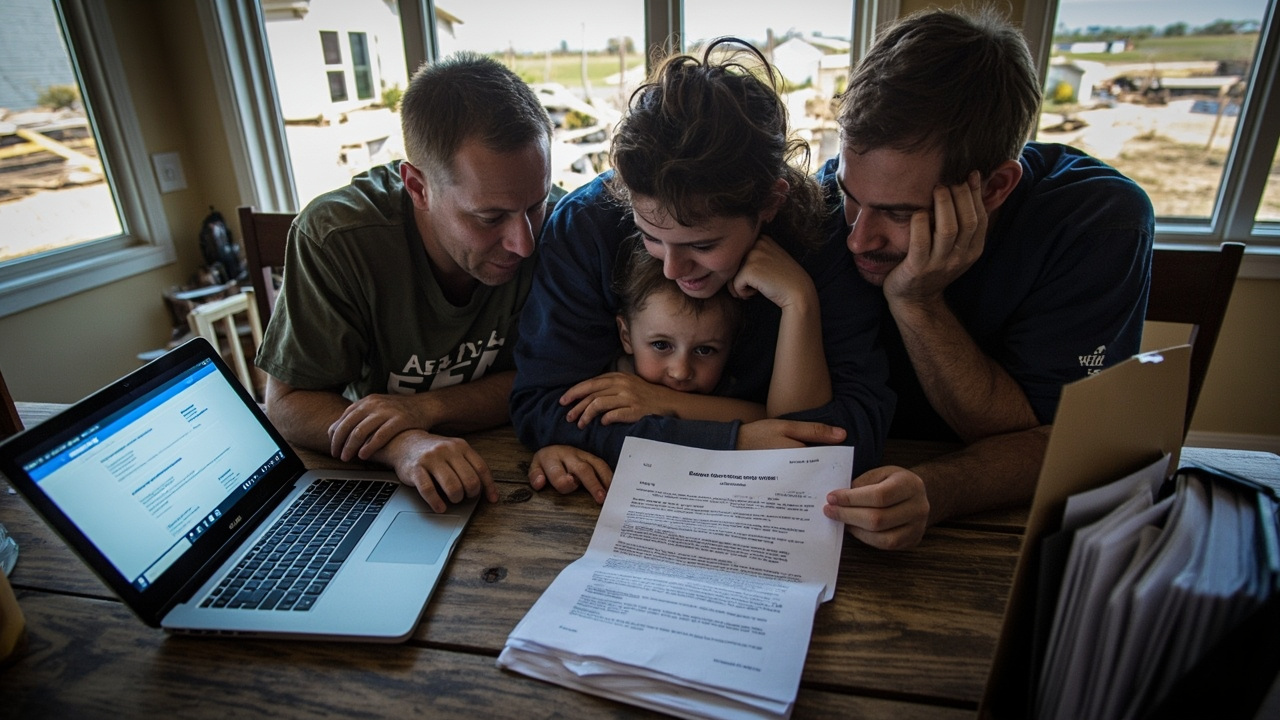
TL;DR: Households with uninsured disaster needs in a declared area can seek FEMA Individuals and Households Program help by meeting citizenship, identity, occupancy and insurance rules, registering through one of four channels, and appealing within 60 days if they disagree.
What the Individuals and Households Program covers
FEMA's Individuals and Households Program provides financial assistance and direct services to eligible individuals and households affected by a disaster who have uninsured or under-insured necessary expenses and serious needs, according to the page titled Individuals and Households Program | FEMA.gov.
That same FEMA program page states that assistance is not a substitute for insurance and cannot compensate for all losses caused by a disaster. The stated purpose is to meet basic needs and supplement disaster recovery efforts.
Households should plan around basic-needs support, not full restoration. FEMA lists the following types of help under the program:
- Funds for temporary housing while a household cannot live at home, such as rental assistance or reimbursement for hotel costs
- Funds to support repair or replacement of owner-occupied homes that serve as the household's primary residence, including privately owned access routes such as driveways, roads or bridges
- A temporary housing unit, if approved for the disaster, when rental assistance cannot be used because available housing resources are lacking
- Funds for hazard mitigation assistance to help eligible homeowners repair or rebuild stronger, more durable homes
- Funds for other uninsured or under-insured disaster-caused expenses and serious needs
The program page, last updated July 28, 2026, also notes that FEMA is committed to providing equal access to disaster recovery resources and assistance, and asks survivors to tell FEMA if anyone in the household has a disability or language need.
Two related forms are identified on that program page. Applicants who want FEMA to share disaster assistance records with a third party must complete FEMA FORM FF-104-FY-21-118: Authorization for the Release of Information Under the Privacy Act and return it to FEMA, because the Privacy Act requires written consent before sharing records. Applicants seeking Continued Temporary Housing Assistance may request additional assistance by completing FEMA Form FF-104-FY-21-115: Application for Continued Temporary Housing Assistance and returning it with supporting documentation.
Who can receive help
Citizenship and identity
FEMA checks eligibility requirements before giving assistance, according to the page titled Eligibility Criteria for FEMA Assistance | FEMA.gov.
Only United States citizens, non-citizen nationals, or qualified aliens are eligible to receive assistance, that eligibility page states. FEMA states that it needs to verify all applicants' status before providing assistance.
Applicants must prove identity with a valid Social Security number. FEMA usually checks identity using public records when a person applies, and may ask for more information if identity cannot be verified that way.
The fact sheet titled FEMA Individuals and Households Program Application Eligibility, Registration and Appeals, released October 23, 2024, describes one special application rule for children. The parent or legal guardian of a minor child who is a U.S. citizen, non-citizen national or qualified non-citizen applies on behalf of the minor child, so long as they live in the same household. In that situation, the parent or legal guardian must apply as the co-applicant, and the minor child must be under age 18 when the disaster occurred.
Home occupancy, ownership and insurance
For certain types of assistance, FEMA must confirm that the disaster-damaged home is the applicant's primary residence. For Home Repair or Replacement Assistance, FEMA also needs to confirm that the applicant owned the residence at the time of the disaster.
FEMA usually verifies occupancy or ownership through an automated public-records search when a person applies. If that search does not confirm status, FEMA may ask the applicant to provide additional documents.
Another eligibility condition concerns other payments. FEMA cannot provide assistance for disaster needs already met by another source, like insurance or other programs. If insurance or another program does not cover all disaster-caused needs, the applicant may still be eligible for FEMA help toward the uncovered portion.
The October 23, 2024 fact sheet summarizes the same four areas as citizenship status, identity verification, ownership and occupancy verification, and insurance verification. Households preparing paperwork should therefore expect questions in each area, rather than assuming damage alone establishes eligibility.
How to register for Individual Assistance
Four application channels
The October 2024 fact sheet says there are multiple ways to apply for Individual Assistance, and applicants should choose the method that works best for them. The four listed options are:
- Online at DisasterAssistance.gov
- Download and apply through the FEMA App
- Call 800-621-3362
- In person at a FEMA Disaster Recovery Center, with locations searchable at fema.gov/drc
Help completing the application
FEMA states that its programs are accessible to people with disabilities and others with access and functional needs. People calling FEMA can use multilingual operators.
People who need help completing an application for any reason can call the FEMA Helpline from 7 a.m. to 10 p.m. in their time zone, seven days a week. FEMA says hours may be longer during periods of high activity.
Applicants who use a relay service, such as video relay service, captioned telephone service or another service, are asked to give FEMA the number for that service. Providing that number allows the Helpline to communicate through the applicant's preferred relay method.
Households can reduce delays by applying once for the address and keeping contact information current. FEMA typically allows only one application per household or address, so the single household application should include details of losses from all individuals in the home.
How to read the determination letter
Once FEMA has reviewed the application, inspection results or documentation submitted, the applicant receives a letter explaining whether assistance is approved, how much assistance will be received, how the assistance must be used, and how to appeal if the applicant does not agree, according to the page titled Disagreeing with FEMA's Decision | FEMA.gov.
The letter is sent by email or mail based on the preference selected when the application was completed. The October 2024 fact sheet adds that applicants can also expect a reply explaining application status by U.S. mail or online, and can check application status online at DisasterAssistance.gov.
FEMA urges applicants to read the determination letter carefully. If found eligible, the letter will include the amount and information on permitted uses of the funds. If found ineligible, the letter will state the eligibility decision and the reason.
An ineligible notice is not always a final denial. The October 2024 fact sheet says a determination letter saying a survivor is ineligible after Tropical Storm Helene may not be a denial or final decision, and sometimes FEMA needs more information or supporting documentation. The letter might ask the survivor to send additional information or supporting documentation so FEMA can continue reviewing the application.
Why FEMA finds applicants ineligible
Missing information and insurance overlap
All survivors who apply receive a letter stating the eligibility decision and reason, and survivors who disagree have the right to appeal. The fact sheet identifies several common reasons that households can often correct.
One reason is that the applicant has not sent requested documents or information. In that case, FEMA advises reading the letter thoroughly and sending the requested information, or telling FEMA why that information is not available.
Another reason is that damage or loss is covered by insurance or other sources. By law, FEMA cannot provide financial assistance if the applicant received funding for the same disaster-caused need from other sources. The fact sheet lists insurance, crowdfunding, local or state programs, and financial assistance from voluntary agencies as examples.
When other funds were received, applicants are asked to send documentation showing how those funds were used. That documentation must prove the funds were not enough to cover disaster-related expenses or were intended for another purpose. In some underinsured-loss cases, FEMA may cover part of the loss, but insurance settlement documents are required to show what insurance did not cover.
Household, ownership and occupancy issues
More than one application filed for the household can also trigger a problem. Because FEMA typically allows one application per household or address, households should ensure the one application includes losses for everyone in the home. Applicants who did not file more than one application are asked to call the FEMA Helpline at 800-621-3362, because a fraudulent application may have been filed for the address.
FEMA also asks disaster survivors seeking home-repair financial assistance for proof of ownership. FEMA verifies ownership using public and government records, documents submitted by the applicant, or verification at the time of property inspection. Applicants are asked to contact FEMA to submit ownership documents.
A separate fact sheet titled How to Appeal FEMA's Decision, released December 30, 2024, lists proof of insurance, proof of occupancy and proof of ownership among common reasons for an ineligible or no-decision determination. It describes occupancy documents as records proving the damaged home or rental was the primary residence at the time of the disaster, and ownership documents as mortgage or insurance documents, tax receipts or a deed.
How to appeal within the deadline
What to include
Applicants who disagree with FEMA's decision or the amount awarded may appeal within 60 days of the date of the letter, according to the Disagreeing with FEMA's Decision page.
The FEMA letter provides additional information on the documents needed for that specific decision. For example, applicants appealing for additional home-repair help are advised to provide receipts, bills or repair estimates for disaster-caused repairs.
An appeal form appears at the end of the FEMA letter and can be used to send additional information. Applicants may also download the appeal form. The form helps ensure FEMA receives needed information and provides space to explain important context, but sending the form or a letter with additional information is optional; a written letter alone is accepted.
When submitting documentation, applicants must include the FEMA application number and disaster number on every page. A signed and dated appeal letter should explain the reasons for appeal and include the applicant's full name, phone number, current address, address of the damaged dwelling, FEMA application number, disaster number, signature and date. The nine-digit FEMA application number appears at the top of the determination letter.
If someone other than the applicant or co-applicant writes the appeal, that person must sign it and provide a statement signed by the applicant authorizing the individual to act on the applicant's behalf, unless those documents are already on file. The same third-party authorization rule applies when a third party submits an appeal on behalf of an applicant.
Where to send the appeal
Appeals can be managed through an online account. Applicants who set up an account can visit DisasterAssistance.gov, log in, and upload supporting documents through the Correspondence Upload Center.
Three other channels are available:
- In person by taking appeal documentation to a Disaster Recovery Center
- By mail to FEMA - Individuals & Households Program National Processing Service Center, P.O. Box 10055, Hyattsville, MD 20782-8055
- By fax to 800-827-8112, Attention: FEMA - Individuals & Households Program
What happens next
All appeals are reviewed. Decisions usually are made within 30 days of receiving the appeal, although the decision may take up to 90 days, according to the Disagreeing with FEMA's Decision page. FEMA may request additional information if it does not have enough information to decide.
Applicants are notified in writing of the appeal response, either by mail or through the DisasterAssistance.gov account created during the application. People with questions about the letter or how to file an appeal can call the FEMA Helpline at 1-800-621-3362.
A separate debt-related appeal process applies after a Notice of Potential Debt letter. In that Individuals and Households Program debt-collection process, the recipient may appeal in writing and request a hearing within 60 days from the date of receiving the debt letter. Oral hearings are scheduled when FEMA determines that the debt question cannot be resolved solely through review of the paper file, and a hearing offers an opportunity to present testimony or additional documents.