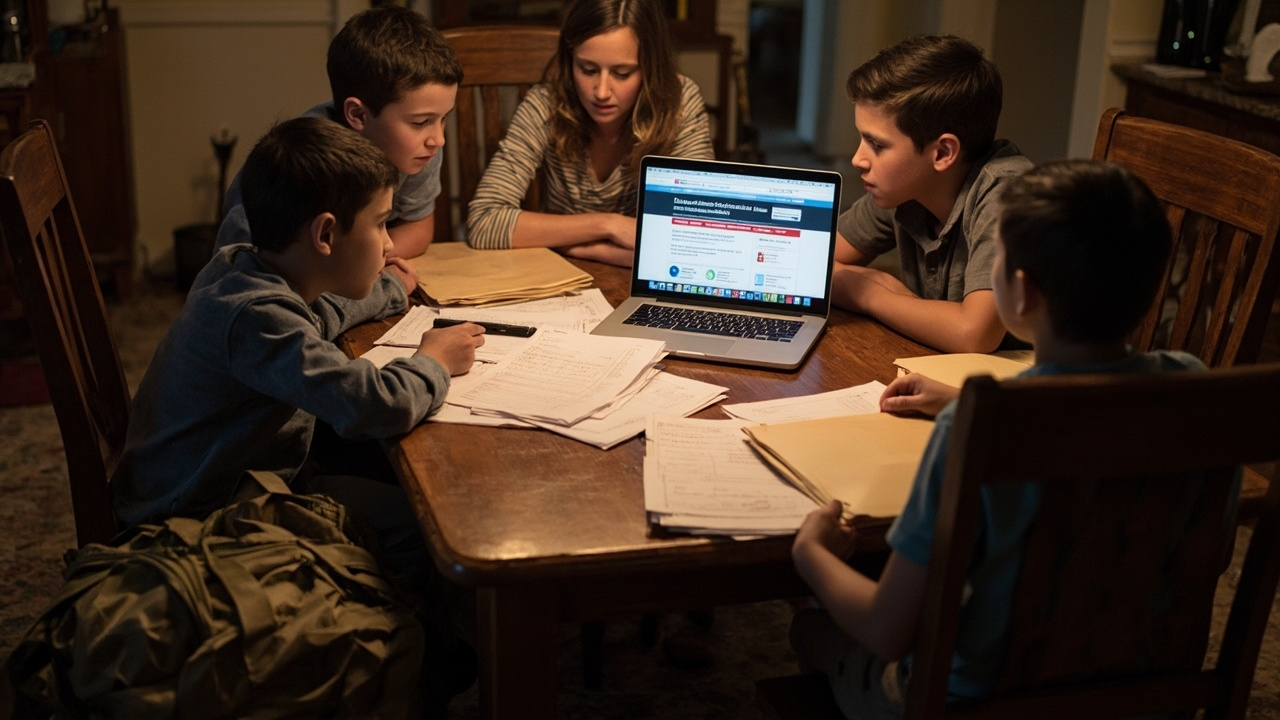
TL;DR: Start at DisasterAssistance.gov, by phone, app, or recovery center
TL;DR: Households in a federally declared disaster area apply for FEMA help at DisasterAssistance.gov, through the FEMA App, at 800-621-3362, or in person at a Disaster Recovery Center, and receive a nine-digit application number.
According to How to Fill Out and Submit the Disaster Recovery Check-in Form - LegalClarity, published Jun 5, 2026, the application collects identity, address, insurance details, and a description of damage so FEMA can determine whether a household qualifies for grants covering temporary housing, home repairs, and other disaster-caused expenses. The same guide reports the maximum grant under the Individuals and Households Program is $43,600 for housing assistance and another $43,600 for other needs, for disasters declared on or after October 1, 2024, citing a Federal Register notice on maximum assistance. The guide notes FEMA adjusts these caps annually and applicants should confirm the current figure when applying.
A separate example of deadlines and scale comes from KOMO News reporting on June 4, 2026, that Washington flood survivors from severe storms, flooding, landslides, and mudslides between Dec. 5 and Dec. 19, 2025, faced a June 10 application deadline for FEMA disaster assistance and U.S. Small Business Administration disaster loans. KOMO News reported about 4,000 homes statewide were damaged by the December storms, 1,800 applications had been submitted, and FEMA had approved more than $9 million in assistance for registrants. Those funds, according to KOMO News, can help pay for temporary housing, home repairs, personal property losses, displacement costs, and other disaster-related expenses.
Who can submit a check-in application
Presidential declaration and declared area
According to How to Fill Out and Submit the Disaster Recovery Check-in Form - LegalClarity, FEMA's authority for individual assistance comes from the Stafford Act, codified at 42 U.S.C. § 5174, which allows the President to offer financial help and direct services to individuals and households with necessary expenses and serious needs as a direct result of a major disaster who cannot meet those needs through other means. A presidential major disaster declaration triggers the program for a specific geographic area, and only residents of that declared area are eligible.
According to Which Agency Helps With Disaster Responses? FEMA and More - LegalClarity, some declarations activate only Public Assistance for governments and infrastructure, while others include Individual Assistance for households, and the scope shapes what help is available. KOMO News listed eligibility for the Washington December 2025 event in Chelan, Grays Harbor, King, Lewis, Pacific, Pierce, Skagit, Snohomish, Thurston, and Whatcom counties, as well as several federally recognized tribal nations affected by the disaster.
Citizenship, residence, and insurance rules
According to How to Fill Out and Submit the Disaster Recovery Check-in Form - LegalClarity, at least one member of the household must be a U.S. citizen, non-citizen national, or qualified alien. Qualified aliens include lawful permanent residents, refugees, asylees, and holders of T or U visas, among other categories. If no adult in the household meets these criteria, a parent or legal guardian can still apply on behalf of a minor child who qualifies, as long as that child lived in the household and was under 18 when the disaster hit, citing FEMA citizenship guidance.
The damaged property must be the applicant's primary residence. According to the same LegalClarity check-in guide, FEMA verifies ownership and occupancy through automated public records searches when a person applies, and asks for documentation when those searches cannot confirm status. Applicants must also file any applicable insurance claims before FEMA will finalize assistance. Federal regulations at 44 CFR 206.191 prohibit duplicating benefits, meaning FEMA will not pay for losses insurance already covers, and a later insurance settlement for something FEMA already paid may require repayment of the federal funds.
What information the form collects
Identity, addresses, insurance, and bank details
According to How to Fill Out and Submit the Disaster Recovery Check-in Form - LegalClarity, citing FEMA's How to Apply for Assistance and What FEMA Will Want to Know When I Apply for Disaster Assistance, having documents ready before starting saves time and prevents back-and-forth that slows processing. The application asks for the primary applicant's Social Security number, the full street address and ZIP code of the pre-disaster primary residence, a working phone number, and a temporary mailing address if displaced.
The same guide states the form asks for insurance information, including policy details and any settlement letters already received covering homeowners, flood, or renters coverage, plus account and routing numbers when the applicant wants assistance deposited directly rather than mailed as a check. KOMO News similarly advised Washington applicants to be prepared to provide a Social Security number, contact information, the address of the damaged property, insurance information where applicable, and documentation of losses, including photographs or video when available.
How to describe damage
According to How to Fill Out and Submit the Disaster Recovery Check-in Form - LegalClarity, applicants should provide a specific description of damage. The guide contrasts detailed accounts that state water height on a first floor or which portion of a roof was removed with a general label of significant damage, explaining that specific language gives FEMA more to work with. Under the Individuals and Households Program described in Which Agency Helps With Disaster Responses? FEMA and More - LegalClarity, covered categories include temporary housing through rental assistance or in some cases a FEMA-provided temporary unit while a home is repaired, home repairs to restore an owner-occupied residence to safe and livable condition including eligible hazard mitigation measures, assistance toward replacing a destroyed owner-occupied home, and help with disaster-related medical, dental, childcare, funeral, and personal property expenses.
How to prove ownership and occupancy
Ownership documents
According to How to Fill Out and Submit the Disaster Recovery Check-in Form - LegalClarity, citing Understanding Your FEMA Eligibility Letter, when an automated records search cannot confirm ownership, an applicant can provide a deed, mortgage statement, property tax receipt or bill, manufactured home certificate or title, receipts for major home repairs or improvements, or a letter from a public official such as a mayor or postmaster confirming ownership. For heirship properties or mobile homes without traditional documentation, FEMA allows self-certification of ownership as a last resort.
Households preparing for this step should store a copy of at least one ownership paper outside the home or as a phone photo, so the document remains reachable after displacement. Keeping mortgage, tax, and repair receipts together reduces delays when FEMA requests proof after the records search.
Occupancy documents
According to the same LegalClarity check-in guide, citing Verifying Home Ownership or Occupancy, FEMA accepts a single document from a long list to prove the applicant lived at the address. Accepted items include a lease, utility bill, pay stub showing the address, bank or credit card statement, driver's license, voter registration card, medical bill, motor vehicle registration, school documents for a child in the household, or a letter from a mobile home park manager.
Most documents can be dated within one year before the disaster. Driver's licenses and state IDs are the exception: they must have been issued before the disaster and not expired at the time of submission. Families should therefore keep one recent mailed bill or statement per adult and keep IDs unexpired, because a single current paper can satisfy the occupancy check.
How to file by web, app, phone, or in person
Four submission paths
According to How to Fill Out and Submit the Disaster Recovery Check-in Form - LegalClarity, FEMA offers three main ways to submit, with online filing at DisasterAssistance.gov described as the fastest. Applicants can also apply through the FEMA App, which walks through the same questions and allows document uploads from a phone. Those unable to use online or app options can call the FEMA Helpline at 800-621-3362, TTY 800-462-7585, open 7 a.m. to 11 p.m. Eastern, seven days a week. For face-to-face help, Disaster Recovery Centers open in the affected area after a declaration, and staff can walk applicants through the application on-site, with locations listed through the Disaster Recovery Center Locator.
KOMO News gave the same four paths for Washington applicants: online at DisasterAssistance.gov, by calling FEMA at 800-621-3362, through the FEMA mobile app, or by visiting a disaster recovery center in person. According to the LegalClarity check-in guide, every method produces a nine-digit application number on completion, which the applicant should write down and keep with insurance and ID papers.
What happens after submission
Inspection, decision, grants, and loans
According to Which Agency Helps With Disaster Responses? FEMA and More - LegalClarity, after applying, FEMA sends an inspector to verify losses before making a determination. KOMO News reported that FEMA never charges for such inspections, assistance is not income based, and people with insurance are encouraged to apply because federal programs may cover losses not covered by policies. KOMO News also reported that FEMA provides grants not loans, while the U.S. Small Business Administration offers separate low-interest disaster loans to homeowners, renters, businesses, and nonprofit organizations. In the Washington event, homeowners could qualify for loans up to $500,000 to repair or replace a primary residence, while renters and homeowners could borrow up to $100,000 to replace personal property.
Pierce County Emergency Management told KOMO News that 180 people had registered in that jurisdiction ahead of the June 10 deadline, and teams were visiting hard-hit communities to help residents register or update existing applications. KOMO News quoted applicant Elaine Simons of Maple Valley Highlands describing roof failure around a chimney after two weeks of rain and reimbursement after inspection, and reporting that an inspector said many eligible survivors had not yet responded to outreach.
If the decision is denied
According to Which Agency Helps With Disaster Responses? FEMA and More - LegalClarity, citing Disagreeing with FEMA's Decision, applicants have 60 days from the date on the decision letter to file an appeal. The appeal must be in writing and should include supporting documentation such as repair estimates, receipts, or contractor assessments. Every page submitted needs the FEMA application number and disaster number, and applicants who want another person to handle the appeal should include a signed authorization letter.
According to Appealing a FEMA Decision - TexasLawHelp, last reviewed May 28, 2026 and last edited June 5, 2026, an appeal is a written request to review the file again with additional information that may affect the decision, and a person may appeal any decision on individual assistance. That TexasLawHelp guide states appeals may relate to initial eligibility decisions, the amount or type of assistance, late applications, requests to return money, or denial of Continued Temporary Housing Assistance. Households should therefore keep the decision letter, mark the 60-day date, and file added proof with both numbers on each page.