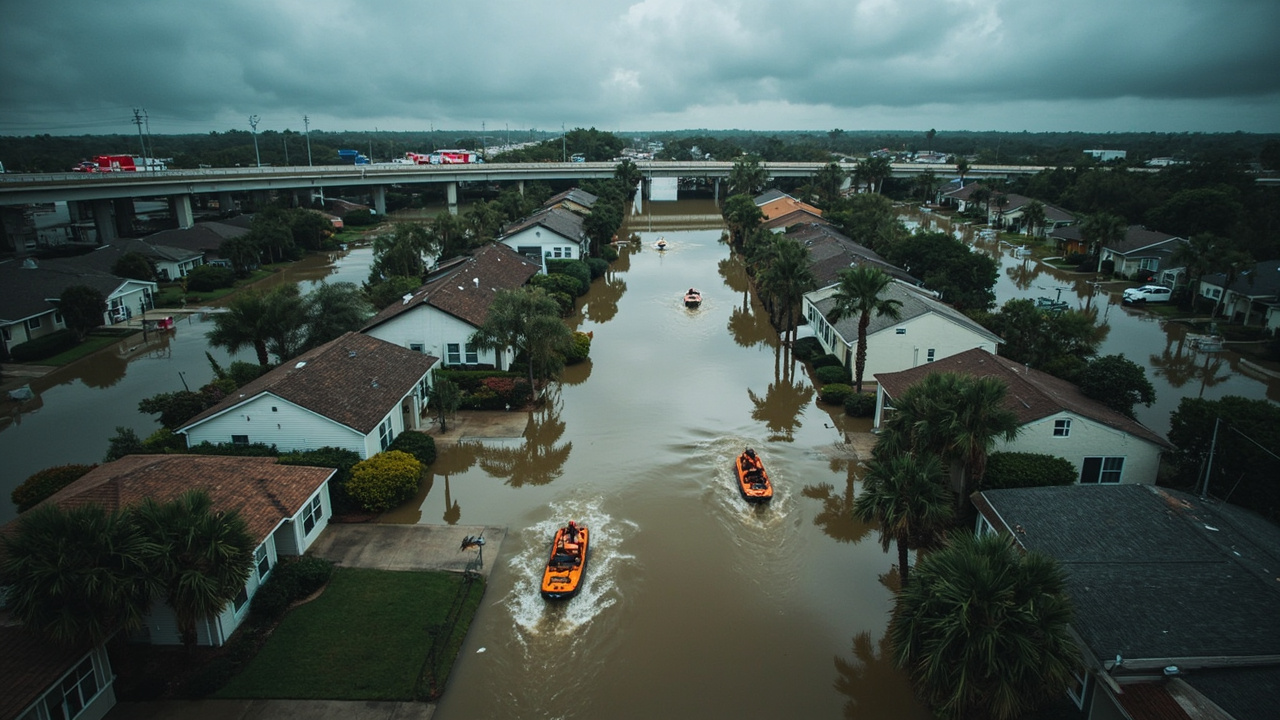
Brevard County Opens Two Shelters as Flooding Triggers Mass Rescues
Brevard County activated two emergency shelters to house residents displaced by severe flooding, with southern parts of the county receiving up to 20 inches of rainfall after heavy rains began on November 1, according to Florida Today's report on the historic flooding.
The two shelters — the Wickham Park Senior Center in Melbourne and the South Mainland Community Center in Micco — were opened to absorb evacuees while local emergency responders conducted hundreds of water rescues across the affected area. Two fatalities were reported in connection with the flooding event, according to Florida Today.
What the Flooding Looked Like on the Ground
The scale of the event was significant. Southern Brevard County bore the worst of the rainfall, with storm totals reaching 20 inches in some locations. That volume of water overwhelmed low-lying neighborhoods near the St. Johns River and triggered an emergency response that pulled in multiple agencies simultaneously.
According to Florida Today, rescue operations involved local fire departments alongside the Florida Fish and Wildlife Commission, with boats deployed to reach residents trapped in flooded structures. Schools were closed for at least one day as conditions made road travel dangerous. County officials issued urgent safety advisories directing residents in low-lying areas to evacuate and avoid driving through standing water.
Emergency managers repeated the well-known flood safety warning: turn around, don't drown. As noted by Spectrum News 13, that guidance was central to the county's public messaging during the event.
Shelter Locations, Hours, and What to Bring
The Wickham Park Senior Center, located at 2785 Leisure Way in Melbourne, opened as the first county shelter and operates in partnership with the American Red Cross. The Red Cross is providing basic needs services at that site.
The South Mainland Community Center at 3700 Allen Ave in Micco serves as the second shelter and was set up specifically to accommodate residents with pets and individuals requiring special needs assistance, making it the more inclusive option for families who cannot leave animals behind.
Both shelters provide meals, according to Hometown News Brevard. However, residents arriving at either location are expected to bring their own personal supplies, including bedding, prescription medications, hygiene products, and personal entertainment items. County officials emphasized that bringing these items eases pressure on shelter operations and makes stays more comfortable.
Residents seeking information about shelter availability, eligibility, or other flood-related services were directed by county officials to call 2-1-1, the Community Information Hotline, for updated guidance.
Multi-Agency Response Underway
The flooding response drew on resources from across Brevard's public safety infrastructure. Local fire departments handled immediate rescue calls while the Florida Fish and Wildlife Commission provided boat support, according to Florida Today's coverage of the rescue operations.
The American Red Cross, operating at the Wickham Park Senior Center shelter, managed intake and service delivery for evacuees arriving from the hardest-hit neighborhoods. Officials noted that community cooperation was essential to the ongoing response, urging residents to share information about available shelter locations and check on neighbors who might need help evacuating or accessing services.
Brevar County's emergency management team remained the coordinating body for the overall response, tracking shelter capacity and coordinating rescue priorities across the county.
What Flood-Displaced Residents Need to Know
For anyone still in a flood-affected area of Brevard County, the two shelters represent the fastest path to safe housing. The Wickham Park Senior Center in Melbourne is the general-population option, backed by the Red Cross. The South Mainland Community Center in Micco is the right destination for anyone traveling with a pet or requiring special accommodations.
According to Hometown News Brevard, bringing personal supplies — particularly medications and bedding — is not optional guidance but an operational expectation at both sites, since shelters operating under emergency conditions focus their resources on meals and safety rather than personal comfort items.
For residents who have not yet evacuated but are in low-lying areas near the St. Johns River or in southern Brevard neighborhoods that experienced the heaviest rainfall, officials' advisories as reported by Spectrum News 13 remained clear: do not drive through flooded roadways, and use the 2-1-1 hotline to locate transportation assistance if needed.
The Brevard County Government's emergency management page serves as the official source for shelter status updates and any changes to activated locations as recovery efforts continue.
A Pattern That Demands Household Readiness
The Brevard flooding follows a pattern visible in emergency management data nationally: when extreme rainfall events hit, the gap between households that have a go-bag and those that do not becomes immediately consequential. Residents who arrived at Brevard's shelters without medications, bedding, or hygiene supplies faced avoidable hardships in the first hours of displacement.
The lesson from this event is structural. Brevard County's two-shelter activation, with one site specifically designated as pet-friendly and special-needs accessible, reflects how local emergency management systems have evolved. But the operational guidance issued by county officials — bring your own supplies, call 2-1-1, avoid flooded roads — places the first line of readiness squarely on individual households.
For residents across Florida's coastal and low-lying counties, the Brevard response offers a concrete reference point: know your nearest Red Cross shelter, confirm whether pets are allowed, pre-pack medications and bedding, and save 2-1-1 in your phone before the next rain event arrives.
Sources referenced
- Historic flooding in Brevard County, Palm Bay triggers massive rescue response (https://www.floridatoday.com/story/news/2026/11/04/historic-flooding-in-brevard-county-palm-bay-triggers-massive-rescue-response/92607616007/)
- Brevard opens second shelter as flooding displaces residents (https://www.hometownnewsbrevard.com/news/local/melbourne/brevard-opens-second-shelter-as-flooding-displaces-residents/article_69249c64-67a5-57aa-a43d-275a3ca418c4.html)