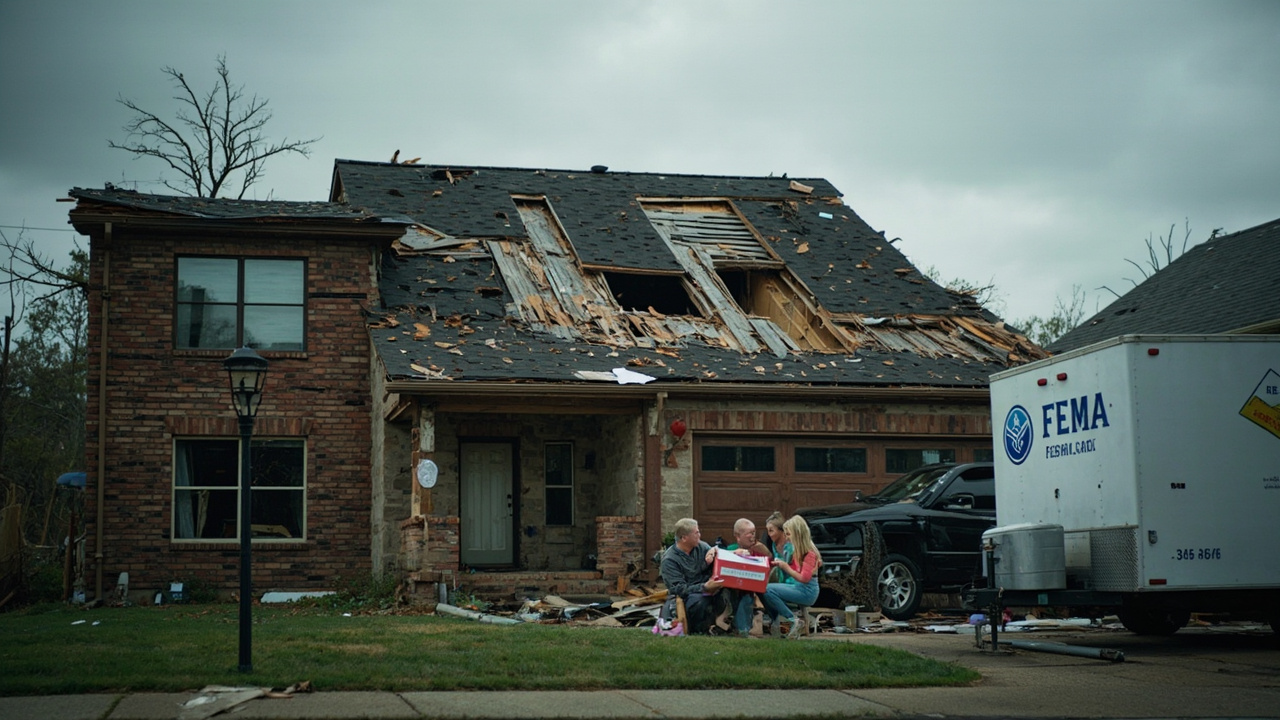
TL;DR: FEMA Individual Assistance under Section 408 of the Stafford Act provides capped grants and direct housing to eligible primary-residence households in a presidentially declared disaster area as a supplement to insurance, not a replacement.
What Individual Assistance Is Under the Law
Section 408 of the Robert T. Stafford Disaster Relief and Emergency Assistance Act, codified at 42 U.S.C. § 5174, authorizes the Individuals and Households Program (IHP), according to the LegalClarity guide titled "What Is FEMA Individual Assistance Under the Stafford Act?" published May 16, 2026.
The IHP is the primary channel for FEMA financial grants and direct services for disaster-caused expenses and serious needs, according to that same LegalClarity guide.
The program is structured as a supplement, not a replacement for insurance or other aid, according to the LegalClarity guide.
The maximum IHP grant described in that guide is $43,600 for housing assistance and a separate $43,600 for other needs assistance per household per disaster, under the most recent published adjustment cited in the guide.
Those caps are adjusted annually for inflation, and applicants are advised to check FEMA's website for the current figure before applying, according to the LegalClarity guide.
A companion LegalClarity explainer on continued temporary housing states the $43,600 housing cap applies to disasters declared on or after October 1, 2024, with an overall assistance period limit of 18 months from the date of the presidential disaster declaration.
Declaration Required Before Anyone Can Apply
Everything starts with a presidential major disaster declaration, according to the LegalClarity Individual Assistance guide.
The President may issue the declaration based on a governor's request, and only people living in the designated disaster area are eligible, according to that guide.
That declaration trigger is central for household planning because Individual Assistance does not activate for every storm, flood, fire, or power outage.
The Hawaii example from May 2026 shows how disaster-specific windows work. The Maui News reported May 15, 2026 that residents affected by March weather events described as Kona low storms could seek case management through the Kona Low Disaster Case Management Program by calling Aloha United Way 211, visiting ready.hawaii.gov, or emailing [email protected].
The same Maui News report listed a May 14 deadline to apply for FEMA Serious Needs Assistance for that event and a June 14 deadline to apply for FEMA Individual Assistance and Small Business Administration physical disaster loans.
Who Qualifies: Residence, Citizenship, and Insurance Rules
Primary residence is the threshold test
The damaged property must be the applicant's primary residence, meaning the applicant lived there most of the year, according to the LegalClarity Individual Assistance guide.
Vacation homes and investment properties do not qualify, according to that guide.
A related LegalClarity guide on primary residence requirements explains that federal regulations define primary residence as the home where a person normally lives during the major portion of the calendar year.
The regulation does not set a rigid six-month threshold and instead looks at whether the applicant lived there more than anywhere else during the year, according to that primary-residence guide.
If a disaster strikes early in the calendar year, FEMA evaluates whether the home was the sole permanent residence based on overall living pattern and intent to stay, according to that guide.
A home also can qualify based on proximity to a job that provides at least 50 percent of household income, even if the household spends more calendar days elsewhere, according to that guide.
That job-proximity rule matters for agricultural workers, seasonal employees, and people who maintain a home near work while family lives elsewhere part of the year, according to that guide.
Temporary absences for work, education, or military service do not disqualify a home when intent to return remains, according to that guide.
Citizenship and household rules
At least one adult or minor child in the household must have a Social Security number and must be a U.S. citizen, non-citizen national, or qualified noncitizen, according to the LegalClarity Individual Assistance guide, citing the DisasterAssistance.gov application checklist.
Not every household member needs documentation, and a household with mixed immigration status can still qualify as long as one eligible member meets both requirements, according to that guide.
FEMA generally issues one award per pre-disaster household covering everyone who lived together before the disaster, according to that guide, citing FEMA rumor-control material.
Roommates who shared a home but are not financially dependent on one another may be evaluated separately, according to that guide.
The same separate evaluation can apply to households split apart by the disaster or homes where an owner rented space to boarders, according to that guide.
Roommates should state that status in the application so FEMA can assess the situation individually, according to that guide.
Insurance comes first and duplication is barred
Federal law prohibits FEMA from duplicating benefits received from insurance or any other source, according to the LegalClarity Individual Assistance guide, citing 42 U.S.C. 5155.
If insurance covers the full cost of repairs, the applicant will not receive FEMA money for the same work, according to that guide.
Partial insurance coverage does not disqualify an applicant because FEMA looks at the gap between what the insurer paid and what the applicant actually needs, according to that guide.
A person waiting on an insurance settlement can still apply for FEMA assistance as long as the person agrees to repay any amount that later proves to be a duplicate, according to that guide.
The primary-residence guide adds that applicants with homeowner's, renter's, or flood insurance must file a claim with the insurer before FEMA will process the application.
FEMA can step in when an insurance claim is denied, when a settlement is insufficient, or when payout is significantly delayed through no fault of the applicant, according to that LegalClarity primary-residence guide, citing 44 CFR 206.191 on duplication of benefits.
Applicants should not wait for the insurance decision before registering with FEMA because the application deadline will not wait for the insurer, according to that guide.
If FEMA pays while an insurance payment is pending, the applicant must repay FEMA for any amount insurance eventually covers, according to that guide.
Housing Help: Rental, Repair, Replacement, and Direct Units
Housing assistance under IHP divides into financial grants and direct housing, with the type depending on damage severity, local rental availability, and renter-or-owner status, according to the LegalClarity Individual Assistance guide.
Rental assistance
Rental assistance provides money to lease a temporary place while a home is repaired or rebuilt, according to that guide.
The initial award may cover a security deposit and up to two months' rent, with three-month extensions available for up to 18 months from the date of the disaster declaration while the household remains eligible and continues toward a permanent housing plan, according to that guide, citing FEMA rental-assistance material.
The primary-residence guide states rental assistance can include reimbursement for hotel costs while a home is uninhabitable.
The continued-housing LegalClarity guide states FEMA calculates rental assistance based on Department of Housing and Urban Development Fair Market Rent for the area, adjusted for bedrooms required.
Eligible expenses can include monthly rent, security deposits up to one month of applicable Fair Market Rent, essential utilities including gas, water, and electricity, and transportation and utility hookup fees for a manufactured housing unit, according to that continued-housing guide, citing 44 CFR 206.117.
Cable, internet, and telephone service are excluded, according to that guide.
Repair and replacement grants
Repair grants help homeowners fix structural damage to make a home safe, sanitary, and functional, according to the Individual Assistance guide.
The statute covers the residence itself, utilities, and residential infrastructure such as a private access road, according to that guide, citing 42 U.S.C. 5174.
The goal is livability, not full restoration to pre-disaster condition, according to that guide.
The primary-residence guide similarly describes home repair as money to restore an owner-occupied primary residence to safe, functional condition rather than pre-disaster quality.
It also states FEMA assistance can cover privately owned access routes such as driveways, roads, or bridges connected to the primary residence, citing the FEMA Individuals and Households Program.
Replacement grants apply when a home is destroyed beyond repair as a lump-sum payment to help acquire a new residence, according to the Individual Assistance guide.
In remote areas such as U.S. territories where no rental housing or alternative resources exist, the statute also authorizes assistance for permanent or semi-permanent housing construction, according to that guide.
All housing grants fall under the $43,600 per-disaster housing cap described in that guide.
Direct housing when rentals are unavailable
When local rental housing is not available, FEMA can provide a temporary housing unit directly, typically a travel trailer or manufactured home placed on or near the applicant's property while rebuilding proceeds, according to the Individual Assistance guide, citing FEMA sheltering and housing material.
FEMA may also lease and repair damaged multifamily rental buildings to create temporary housing for eligible survivors, according to that guide.
Direct housing is a last resort used only when financial assistance alone cannot solve the housing problem, according to that guide.
The primary-residence guide also lists hazard mitigation funds to help rebuild in ways that reduce future disaster damage.
Upfront Money: Serious Needs and Displacement Payments
Before the full application is processed, FEMA may issue faster upfront payments for the first days after a disaster, according to the Individual Assistance guide.
Serious Needs Assistance is described as a one-time flexible payment of $750 per household under the most recent published amount cited in that guide, with annual adjustment.
For the Hawaii Kona low event, the Maui News listed Serious Needs Assistance as a one-time payment of $790, showing that published amounts can differ by disaster notice and adjustment cycle.
Households should therefore verify the current Serious Needs amount in the specific disaster declaration notice rather than assuming one national figure.
How to Prove Occupancy and Keep Rental Aid
One occupancy document can decide eligibility
Only one document is needed to prove occupancy at the damaged address, according to the primary-residence guide.
Accepted items listed in that guide include driver's license, state-issued ID, voter registration card showing the damaged address, lease or rental agreement, rent receipts, utility bill for electric, water, or gas dated within one year before the disaster, employer documentation such as a pay stub showing the home address, bank or credit card statement, medical provider's bill, motor vehicle registration, school records showing a child's address and the applicant's name, social service organization documents such as Meals on Wheels records, public official's letter from a police chief, mayor, or postmaster, and mobile home park letter confirming occupancy at the time of disaster.
FEMA expanded the acceptable date range for documents such as utility bills from three months to one year before the disaster, according to that guide, citing FEMA documentation guidance.
The accepted list was expanded under a 2024 rule to include social service records, school documents, motor vehicle registrations, and court affidavits, according to that guide, citing the Federal Register notice on Individual Assistance Program Equity.
The name on the document must match the name on the FEMA application exactly to avoid processing delays, according to that guide.
Continued rental aid requires receipts and a housing plan
A home is classified as uninhabitable when it fails FEMA's safe or sanitary standard, according to the continued-housing guide, citing 44 CFR 206.111.
Safe means secure from hazards or threats, sanitary means free of health hazards, and functioning means capable of being used for its intended purpose, according to that guide.
Applicants who believe an inspector missed damage have 60 days from the date on the decision letter to appeal with contractor estimates, repair bills, or photographs, according to that guide, citing FEMA appeal guidance.
For each recertification for continued rental aid, regulations at 44 CFR 206.114 require exhaustion of prior funds shown through rent receipts, ongoing financial need, a realistic written permanent housing plan, and documentation of active efforts toward that plan, according to that guide.
Active efforts can include applying for a mortgage, finalizing home repairs, or searching for a long-term rental, according to that guide.
Stating that the household is waiting for insurance without follow-up activity will not satisfy the requirement, according to that guide.
How to Apply, Check Status, and Appeal
The FEMA Help Desk assists with applying for Individual Assistance, checking application status, updating address or bank details, appealing a denial, understanding eligibility, and finding other resources such as Small Business Administration loans, according to the legalwin.org guide "How to Contact FEMA Help Desk: A Complete Guide for Disaster Assistance" published May 15, 2026.
The toll-free helpline is 1-800-621-3362, operating 7 a.m. to 10 p.m. local time seven days a week, with English and Spanish service and interpretation for other languages, according to that guide.
TTY service is available at 1-800-462-7585 during the same hours, and Video Relay Service users can call the main helpline through a VRS provider, according to that guide.
Online applications and status checks are handled at DisasterAssistance.gov, where applicants create an account, enter disaster and damage details, check "My Applications," and use the Message Center, with responses typically within one to two business days, according to that guide.
In-person help is available at Disaster Recovery Centers, which can be found through the FEMA DRC Locator, by texting DRC and a ZIP code to 43362, or by calling the helpline, according to that guide.
The FEMA mobile app for iOS and Android includes helpline links, portal access, DRC locator, shelter locator, application-status checks, and disaster alerts, and can be obtained by texting ANDROID or APPLE to 43362, according to that guide.
Non-urgent email inquiries go to [email protected] with the FEMA application number, damaged property address, current mailing address, phone number, and only the last four digits of the Social Security number, with responses typically within one to two business days, according to that guide.
Sources referenced
- What Is FEMA Individual Assistance Under the Stafford Act? - LegalClarity (https://legalclarity.org/what-is-fema-individual-assistance-under-the-stafford-act/)
- FEMA Disaster Assistance Primary Residence Requirements - LegalClarity (https://legalclarity.org/fema-disaster-assistance-primary-residence-requirements/)