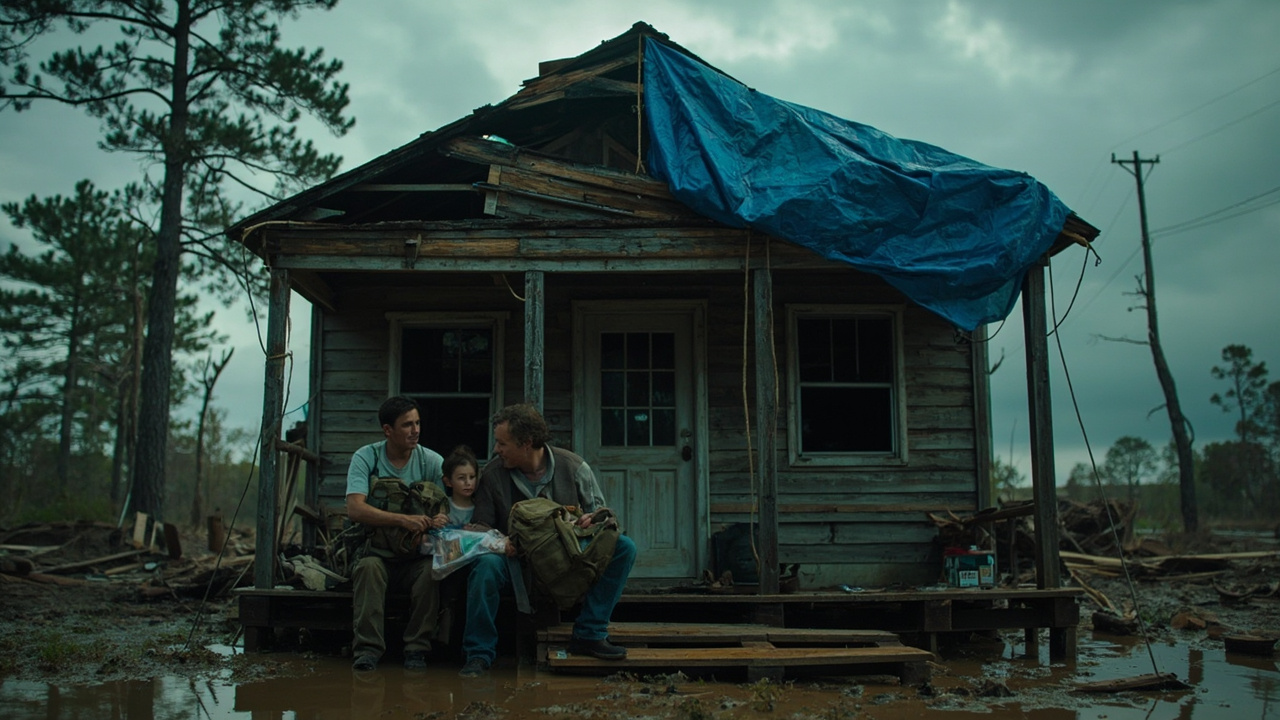
TL;DR: Mississippi households in five counties hit by May 6–7, 2026 storms can seek federal recovery aid after the June 30, 2026 major disaster declaration DR-4922-MS.
Disaster declaration answers household questions
Federal aid is available to supplement state, tribal and local recovery efforts in areas affected by severe storms, straight-line winds, tornadoes, and flooding from May 6-7, 2026, according to the FEMA Major Disaster Declaration – Mississippi Severe Storms, Straight-line Winds, Tornadoes, and Flooding report from Safeguard.
The declaration is identified as Mississippi Severe Storms, Straight-line Winds, Tornadoes, and Flooding (DR-4922-MS), according to that same Safeguard alert.
President Donald J. Trump approved the major disaster declaration for Mississippi, according to that same Safeguard alert.
Individual Assistance was approved for Franklin, Lamar, Lawrence, Lincoln, and Wilkinson, according to that same Safeguard alert.
Public Assistance was approved for Franklin, Lamar, Lawrence, and Lincoln, according to that same Safeguard alert.
Federal disaster aid with individual assistance was made available to supplement recovery efforts in the areas affected by Severe Storms, Straight-line Winds, Tornadoes, and Flooding 05/06/2026-05/07/2026, according to the Disaster Declaration for the State of Mississippi notice from LoanStream Wholesale.
The impacted counties listed in that LoanStream Wholesale notice are Franklin County, Lamar County, Lawrence County, Lincoln County, and Wilkinson County.
The declaration date for all counties in that LoanStream Wholesale notice is 06/30/2026.
The FEMA Notice Date in that LoanStream Wholesale notice is June 30, 2026.
Inspections were required on or before 8/7/2026 for properties in those counties, according to that LoanStream Wholesale notice.
Physical disaster loans for homes in five primary counties
Residents and businesses in several counties can now apply for low-interest disaster loans to help repair damage or recover lost income, according to the Mississippi Tornadoes Trigger Federal Disaster Aid summary from PolicyRisk, identified as 2026-13853 | Presidential Declaration of a Major Dis… | PRIA.
If a home was damaged by the May 6–7, 2026 storms in the declared primary counties of Franklin, Lamar, Lawrence, Lincoln, and Wilkinson, residents can apply for low-interest physical disaster loans, according to that PolicyRisk summary.
Physical damage loan applications are due by August 31, 2026, according to that PolicyRisk summary.
Interest rates listed for homeowners include 5.750% for homeowners with credit available elsewhere and 2.875% for homeowners without credit available elsewhere, according to that PolicyRisk summary.
Families in Franklin County who sustained home damage in the May 6–7, 2026 storms fall within the primary-county group described for physical disaster loans, according to that PolicyRisk summary.
Families in Lamar County who sustained home damage in the May 6–7, 2026 storms fall within the primary-county group described for physical disaster loans, according to that PolicyRisk summary.
Families in Lawrence County who sustained home damage in the May 6–7, 2026 storms fall within the primary-county group described for physical disaster loans, according to that PolicyRisk summary.
Families in Lincoln County who sustained home damage in the May 6–7, 2026 storms fall within the primary-county group described for physical disaster loans, according to that PolicyRisk summary.
Families in Wilkinson County who sustained home damage in the May 6–7, 2026 storms fall within the primary-county group described for physical disaster loans, according to that PolicyRisk summary.
Households preparing a loan file should keep the August 31, 2026 physical-damage deadline with their repair estimates and insurance papers, because that date controls physical applications described in that PolicyRisk summary.
Economic injury loans and where businesses can apply
Businesses, small agricultural cooperatives, and private nonprofit organizations in the listed primary counties and contiguous counties may apply for Economic Injury Disaster Loans, according to that PolicyRisk summary.
The Mississippi contiguous counties listed are Adams, Amite, Copiah, Covington, Forrest, Jefferson, Jefferson Davis, Marion, Pearl River, Pike, Simpson, and Walthall, according to that PolicyRisk summary.
The Louisiana contiguous counties listed are Concordia, East Feliciana, and West Feliciana, according to that PolicyRisk summary.
EIDL applications are due by March 30, 2027, according to that PolicyRisk summary.
Interest rates listed include 4.000% for businesses and small agricultural cooperatives without credit available elsewhere and 3.625% for private nonprofit organizations without credit available elsewhere, according to that PolicyRisk summary.
Applications can be submitted online at the MySBA Loan Portal at https://lending.sba.gov or in person at locally announced locations, according to that PolicyRisk summary.
For help, applicants can contact the SBA disaster assistance customer service center at 1-800-659-2955 or by email at [email protected], according to that PolicyRisk summary.
TTY users may dial 7-1-1, according to that PolicyRisk summary.
Business owners in a primary county should use the March 30, 2027 EIDL date for working-capital recovery planning, because that date controls EIDL applications described in that PolicyRisk summary.
Business owners in Adams, Amite, Copiah, Covington, Forrest, Jefferson, Jefferson Davis, Marion, Pearl River, Pike, Simpson, or Walthall in Mississippi fall within the contiguous-county group described for EIDL, according to that PolicyRisk summary.
Business owners in Concordia, East Feliciana, or West Feliciana in Louisiana fall within the contiguous-county group described for EIDL, according to that PolicyRisk summary.
Private nonprofit organizations in the listed primary and contiguous counties are included in the EIDL group described in that PolicyRisk summary.
Small agricultural cooperatives in the listed primary and contiguous counties are included in the EIDL group described in that PolicyRisk summary.
USDA help for Mississippi farms after flooding
Agricultural operations in Mississippi have been significantly impacted by recent flooding, according to the USDA Offers Disaster Assistance to Agricultural Producers in Mississippi Impacted by Recent Flooding release from the Farm Service Agency dated June 29, 2026.
The release was issued in Jackson, Miss., on June 29, 2026, according to that Farm Service Agency release.
The U.S. Department of Agriculture has technical and financial assistance available to help farmers and livestock producers recover from these adverse weather events, according to that Farm Service Agency release.
Farm Production and Conservation Under Secretary Richard Fordyce said USDA has a suite of programs to support farmers and ranchers as they recover from disasters, according to that Farm Service Agency release.
Fordyce encouraged impacted producers to contact their local USDA Service Center to report losses and learn more about program options available to assist in their recovery from crop, land, infrastructure, and livestock losses and damages, according to that Farm Service Agency release.
State Executive Director for FSA in Mississippi Chris McDonald said impacted producers should timely report all crop, livestock and farm infrastructure damages and losses to their local FSA county office as soon as possible, according to that Farm Service Agency release.
McDonald said producers should gather farm records, herd inventory, receipts and pictures of damages or losses as they evaluate their operation, according to that Farm Service Agency release.
Households that keep farm records, herd inventory, receipts, and pictures of damages or losses together will have the documents named in that Farm Service Agency release ready for a county-office visit.
Livestock, honeybee, and fish programs and filing windows
Producers who experience livestock deaths in excess of normal mortality or sell injured livestock at a reduced price may be eligible for the Livestock Indemnity Program, according to that Farm Service Agency release.
To participate in LIP, producers must provide acceptable documentation of death losses or evidence of reduced sales resulting from an eligible adverse weather event, according to that Farm Service Agency release.
LIP participants must submit a notice of loss to the USDA Farm Service Agency no later than March 1, 2027, for 2026 calendar year losses, according to that Farm Service Agency release.
The Emergency Assistance for Livestock, Honeybees, and Farm-Raised Fish Program provides eligible producers with compensation for feed and grazing losses, according to that Farm Service Agency release.
For honeybees, ELAP may cover colony loss and damage to hives and purchased or produced feed, according to that Farm Service Agency release.
ELAP may also cover purchased or produced farm-raised fish feed losses for feed that was intended to be fed to eligible farm-raised fish along with any physical inventory loss of the eligible farm raised fish, according to that Farm Service Agency release.
For ELAP, producers are required to complete a notice of loss and submit an application for payment to their local FSA office no later than March 1, 2027, for 2026 calendar year losses, according to that Farm Service Agency release.
Eligible orchardists and nursery tree growers may be eligible for cost-share assistance through the Tree Assistance Program to replant or rehabilitate eligible trees, bushes or vines, according to that Farm Service Agency release.
TAP complements the Noninsured Crop Disaster Assistance Program or crop insurance coverage, which covers the crop but not the plants or trees in all cases, according to that Farm Service Agency release.
For TAP, a program application must be filed within 90 days of the disaster event or the date when the loss of the trees, bushes or vines is apparent, according to that Farm Service Agency release.
Farm loans, storage loans, and repayment options
FSA offers direct and guaranteed farm loans, including operating and emergency farm loans, to producers unable to secure commercial financing, according to that Farm Service Agency release.
Producers in counties with a primary or contiguous disaster designation may be eligible for low interest emergency loans to help them recover from production and physical losses, according to that Farm Service Agency release.
Emergency loans can help producers replace essential property, purchase inputs like livestock, equipment, feed and seed, cover family living expenses or refinance farm-related debts and other needs, according to that Farm Service Agency release.
FSA offers loan servicing options for borrowers who are unable to make scheduled payments on their farm loan programs debt to the agency because of reasons beyond their control, according to that Farm Service Agency release.
The Farm Storage Facility Loan Program provides low-interest financing so producers can build, repair, replace or upgrade facilities to store commodities, according to that Farm Service Agency release.
Loan terms under that storage program vary from three to 12 years, according to that Farm Service Agency release.
Producers who incurred damage to or loss of their equipment or infrastructure funded by the FSFL program should contact their insurance agent and their local USDA Service Center, according to that Farm Service Agency release.
Producers in need of on-farm storage should also contact USDA, according to that Farm Service Agency release.
Crop insurance steps and conservation recovery
Producers with NAP coverage should report crop damage to their local FSA office and must file a Notice of Loss (CCC-576) within 15 days of the loss becoming apparent, except for hand-harvested crops, which should be reported within 72 hours, according to that Farm Service Agency release.
Producers with risk protection through Federal Crop Insurance should report crop damage to their crop insurance agent within 72 hours of discovering damage and follow up in writing within 15 days, according to that Farm Service Agency release.
Roddric Bell, Director of USDA’s Risk Management Agency Regional Office that covers Mississippi, said disasters can be trying for producers and they should stay in close contact with their crop insurance agent, according to that Farm Service Agency release.
Bell said producers can be assured that the Approved Insurance Providers, loss adjusters and agents are experienced and well-trained in handling these types of events, according to that Farm Service Agency release.
FSA’s Emergency Conservation Program and Emergency Forest Restoration Program can assist landowners and nonindustrial private forest owners with financial assistance to restore damaged farmland and conservation structures or forests, according to that Farm Service Agency release.
The Natural Resources Conservation Service is available to provide technical assistance during the recovery process by assisting producers to plan and implement conservation practices on farms and working forests impacted by natural disasters, according to that Farm Service Agency release.
The Environmental Quality Incentives Program can help producers plan and implement conservation practices on land impacted by natural disasters, according to that Farm Service Agency release.
What damage teams reported and why records matter
Federal and state agencies began joint damage assessments after severe storms and major flooding struck Mississippi, according to the Mississippi News Group report titled FEMA, state begin joint damage assessments after Mississippi storms dated June 29, 2026 at 10:47 pm CDT by Jon Myers.
FEMA, the Mississippi Emergency Management Agency, the U.S. Small Business Administration and local officials began validation work, according to that Mississippi News Group report.
The agencies reported homes destroyed 150, major damage 152, minor damage 154 and affected 109, according to that Mississippi News Group report.
The agencies reported businesses destroyed 3, major damage 6 and minor damage 6, according to that Mississippi News Group report.
The agencies reported farms with major damage 4 and minor damage 1, according to that Mississippi News Group report.
The agencies reported public roads destroyed 16, major damage 24 and minor damage 56, according to that Mississippi News Group report.
The agencies reported bridges with major damage 2 and minor damage 2, according to that Mississippi News Group report.
The agencies reported public buildings with major damage 5 and minor damage 5, according to that Mississippi News Group report.
The agencies reported public utilities with major damage 6 and minor damage 18, according to that Mississippi News Group report.
Three shelters remained open at Hancock County Necaise Shelter, 30360 Highway 603, Perkinston; Harrison County Safe Room, 23715 Saucier Lizana Road, Saucier; and Stone Middle School Shelter, 532A E. Central Ave., Wiggins, according to that Mississippi News Group report.
The post said the State of Mississippi will continue to deploy resources as requested by local emergency managers, according to that Mississippi News Group report.
Sources referenced
- FEMA Major Disaster Declaration - Mississippi Severe Storms, Straight-line Winds, Tornadoes, and Flooding (https://safeguardproperties.com/fema-major-disaster-declaration-mississippi-severe-storms-straight-line-winds-tornadoes-and-flooding-3/)