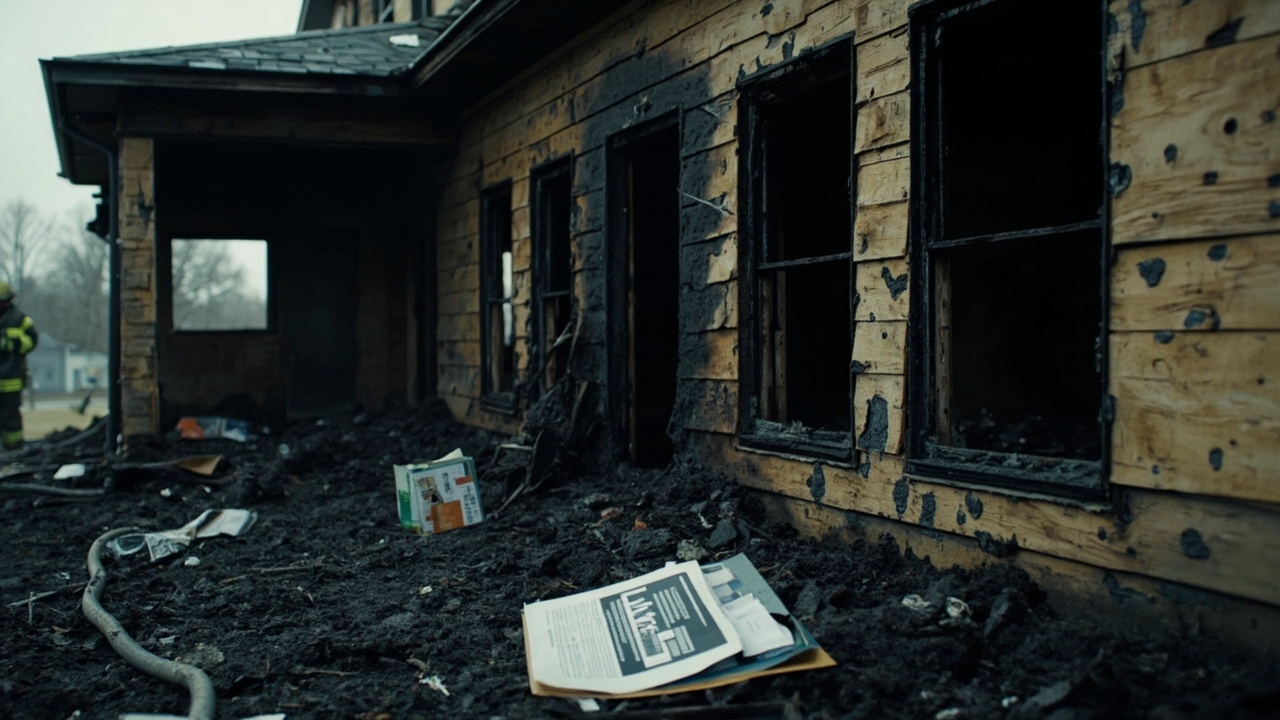
TL;DR: After a house fire, get fire-department clearance, secure the property, save every receipt, build a room-by-room inventory, file the insurance claim immediately, and seek Red Cross shelter and Additional Living Expenses coverage for costs above normal living expenses.
What happens in the first hours
When a fire breaks out, the fire department extinguishes the flames and protects lives. According to What Happens When Your House Burns Down: Insurance and Aid - LegalClarity, crews establish a perimeter around the property and residents are not allowed inside while crews work.
That restriction continues after flames are out. According to What Happens When Your House Burns Down: Insurance and Aid - LegalClarity, firefighters must cool hot spots, check for structural instability, and make sure the fire does not reignite. Once they finish, responsibility for the building returns to the homeowner.
Before entering, get clearance from the fire department or fire marshal. According to What Happens When Your House Burns Down: Insurance and Aid - LegalClarity, floors that look solid can collapse and soot and standing water can contain toxic residue. The same guide cites U.S. Fire Administration guidance on hazards after fire.
If investigators remain on scene, they can accompany residents inside to retrieve medication, identification, and important documents. According to What Happens When Your House Burns Down: Insurance and Aid - LegalClarity, residents should not attempt a full cleanout during this first visit.
A fire investigator or fire marshal inspects the property to determine cause and origin and whether the structure is safe to enter. According to What Happens When Your House Burns Down: Insurance and Aid - LegalClarity, findings go into an official fire report. Residents can usually request a copy from the fire department or municipal clerk's office.
Get the fire report early. According to What Happens When Your House Burns Down: Insurance and Aid - LegalClarity, insurers will ask for it. Financial obligations continue during this period, and the same guide states the mortgage is still due and property taxes still accrue.
How to stay safe before re-entry
Confirm the property is safe to enter before going inside. Guidance summarized by Manhattan Public Adjustment in A Guide to the First 24 Hours After a Fire Damage Loss describes checking that the fire department has cleared the structure, there are no active structural concerns, electrical systems are safe, and air quality is reasonably safe for entry.
Hidden hazards can remain even when fire appears minor. The same Manhattan Public Adjustment guide lists structural weakening, electrical hazards, unsafe air conditions, compromised ceilings or flooring, hidden heat sources, and smoke contamination.
Broken glass is an additional danger. According to A Guide to the First 24 Hours After a Fire Damage Loss, firefighters routinely break windows to release heat and smoke, creating dangerous conditions on the ground and above the property. The guide advises making sure the surrounding area has been cleared for safe access before approaching.
Wildfire-return guidance reinforces the same caution. According to Prioritizing Safety Upon Returning Home, residents should not head home until authorities say it is okay, because crews may be mopping up hot spots, clearing debris, or repairing utility lines. That guide advises returning only when local fire department or emergency officials have marked return as safe.
Check utilities before using them. According to Prioritizing Safety Upon Returning Home, residents should contact gas, electric, and water providers, keep services shut off until safety is verified, and call utility companies or emergency responders if electric or gas lines show damage. The same guide advises leaving the house and calling from a safe distance if gas is smelled, without using a phone or flipping light switches inside.
How to secure the property
Once the property is returned to the owner, the owner is legally responsible for keeping it secured. According to What Happens When Your House Burns Down: Insurance and Aid - LegalClarity, that means boarding up broken windows and doors and covering exposed areas of the roof to prevent further weather damage, theft, or injuries to people who enter the property.
Professional board-up services handle this work quickly. According to What Happens When Your House Burns Down: Insurance and Aid - LegalClarity, costs typically run from a few hundred dollars to around $1,500 depending on how many openings need covering. Many local ordinances require securing within a day or two of fire, and costs are usually reimbursable through homeowners insurance.
Preserve the scene for inspection. According to A Guide to the First 24 Hours After a Fire Damage Loss, the property should remain as close to immediate post-loss condition as possible until documented and inspected. That guide advises preserving burn areas with flames, heat, melting, charring, or combustion damage, because burn patterns help establish severity, spread, and scope.
Do not clean, discard, or alter conditions too early. According to A Guide to the First 24 Hours After a Fire Damage Loss, removing damaged materials too early can remove evidence about extent of loss before evaluation. Smoke patterns with staining, discoloration, shadowing, and residue trails also document how smoke moved through the structure.
Take reasonable steps to prevent further damage. According to How do I file a home insurance claim? | ClearValue Lending, most policies require reasonable steps such as covering a broken window or drying a flooded room. Do not permanently repair damage until the adjuster has inspected it.
Where to find emergency shelter
The American Red Cross responds to home fires regardless of whether a federal disaster has been declared. According to What Happens When Your House Burns Down: Insurance and Aid - LegalClarity, which cites American Red Cross Disaster Relief Services, the organization provides emergency shelter, meals, comfort kits with basic personal supplies, and emergency financial assistance for immediate needs like clothing and toiletries.
Mental health support is also available. According to What Happens When Your House Burns Down: Insurance and Aid - LegalClarity, the Red Cross offers mental health support after home fires.
Recent responses show how that assistance works. According to reporting by FireRescue1 on the Edison apartment fire, about a dozen residents were rescued using ladders after a three-alarm fire tore through an Edison apartment complex on Wednesday night. Authorities responded to Marina Drive at 11:13 p.m. and found multiple residents trapped at windows, according to the office of Mayor Samip Joshi.
Police officers and firefighters rescued 10 to 12 residents from Valley Manor Apartments using truck and ground ladders. According to FireRescue1, a woman who uses a wheelchair was transported to Robert Wood Johnson Hospital for smoke inhalation and has since been released. Twenty apartments were deemed uninhabitable.
The American Red Cross responded to the scene and assisted seven people from two families, according to regional communications manager Sheri Ferreira as reported by FireRescue1. The organization expected to help around 33 additional residents on Thursday and offers temporary lodging, food, and clothing. The cause remained under investigation and was not being treated as suspicious.
Red Cross chapters also operate temporary shelters after multi-family fires. In a May 23 update, the American Red Cross Eastern New York Region reported volunteers operating a shelter at First Presbyterian Church at 1 Elm St. in Whitesboro for residents affected by a multi-family fire Friday night on John St. in Utica. The shelter provided a safe place to stay, food and beverages, and comfort and support, and residents needing follow-up assistance were directed to call 1-800-733-2767.
How Additional Living Expenses coverage works
Homeowners insurance almost always includes Additional Living Expenses coverage, sometimes called loss of use coverage. According to What Happens When Your House Burns Down: Insurance and Aid - LegalClarity, which cites National Association of Insurance Commissioners guidance on Additional Living Expenses, ALE pays for hotel stays, rental housing, restaurant meals, and other costs above normal living expenses while the home is uninhabitable.
Policies vary on whether they cap ALE by dollar amount, by time, or both. According to What Happens When Your House Burns Down: Insurance and Aid - LegalClarity, families should save every receipt from day one.
ALE covers the difference between temporary living costs and normal spending. According to What Happens When Your House Burns Down: Insurance and Aid - LegalClarity, if a grocery bill was $600 a month and restaurant spending is now $1,200, the extra $600 is reimbursable, not the full $1,200.
Loss-of-use guidance for homeowners and renters describes the same structure. According to Home Insurance Loss of Use: Essential Guide for Homeowners & Renters by Bergen Insurance Group, Loss of Use Coverage helps pay for certain extra costs when a covered loss makes a home temporarily unlivable. Examples may include hotel stays, temporary rental housing, restaurant meals, laundry expenses, additional transportation costs, pet boarding, and storage expenses.
Coverage typically applies only when the property becomes unlivable due to a covered loss. According to Bergen Insurance Group, covered perils can include fire, smoke damage, windstorm damage, certain water damage claims, falling objects, lightning, and other covered perils listed in the policy. The same guide states coverage generally does not apply to routine maintenance issues, flood damage unless covered under a flood policy, earth movement, wear and tear, and mechanical breakdowns not covered by the policy.
Renters insurance often includes the same protection. According to Bergen Insurance Group, renters insurance may help pay for temporary housing, hotel stays, restaurant meals, and additional living expenses after apartment fires, severe water damage, or storm-related losses. Condo owners may use their own HO-6 loss-of-use coverage for temporary housing even when a condo association master policy covers parts of the building.
Landlord coverage works differently. According to Bergen Insurance Group, landlord policies may include loss of rental income if a tenant cannot occupy the property due to a covered claim. Coverage limits and waiting periods vary by policy.
How to document losses room by room
Build a detailed room-by-room inventory of everything damaged or destroyed. According to What Happens When Your House Burns Down: Insurance and Aid - LegalClarity, inventory should include damage from fire, smoke, water, and firefighting efforts. For each item, record a description, approximate age, and estimated replacement cost.
Pre-fire photos help establish what was present. According to What Happens When Your House Burns Down: Insurance and Aid - LegalClarity, photos stored on phones, cloud services, or social media accounts are useful. Photograph overall property condition before cleanup, take close-up shots of specific damage, and record walk-through video with narration, as described in wildfire documentation guidance in Prioritizing Safety Upon Returning Home.
High-value items need special attention. According to What Happens When Your House Burns Down: Insurance and Aid - LegalClarity, standard homeowners policies typically cap jewelry and electronics at $1,000 to $2,000 per item. If a scheduled rider or floater covered specific valuables, that separate coverage applies. Without that rider, the sub-limit controls regardless of real value.
Find supporting records for valuables. According to What Happens When Your House Burns Down: Insurance and Aid - LegalClarity, purchase receipts, credit card statements, or appraisals help support value. Dates of purchase and model numbers for appliances and electronics help insurers calculate values more accurately.
Insurers eventually ask for a Proof of Loss form. According to What Happens When Your House Burns Down: Insurance and Aid - LegalClarity, it is a sworn document listing claimed losses and values. Take time with it, because signing a low inventory under oath limits later claims. More specific documentation leaves less room for discounting.
How to file and support the claim
File as soon as possible by calling the insurer's claims line or using its app. According to What Happens When Your House Burns Down: Insurance and Aid - LegalClarity, delays can move a homeowner further down the queue, especially when wildfire or widespread disaster generates thousands of claims.
Document damage before cleanup except for emergency stabilization. According to How do I file a home insurance claim? | ClearValue Lending, photograph and video structure, belongings, and contributing causes before touching anything, except actions such as tarping a roof or turning off water. Make a written list of damaged items with estimated values.
Keep every emergency-repair receipt. According to How do I file a home insurance claim? | ClearValue Lending, insurers should reimburse reasonable emergency repair costs as part of a claim, but homeowners should confirm before spending significant amounts. Most policies require prompt or timely notice, and delayed notice can give an insurer grounds to contest coverage.
Get a claim number in writing. According to How do I file a home insurance claim? | ClearValue Lending, homeowners should document the name of every representative and the date, and ask about the timeframe for submitting a proof-of-loss form, typically 60 days but variable by policy.
Be present for inspection and review offers carefully. According to How do I file a home insurance claim? | ClearValue Lending, policyholders have the right to be present during the adjuster's inspection and should take notes. The settlement reflects covered loss minus deductible, and homeowners should verify replacement-cost value treatment and inclusion of all damaged items before accepting and signing a release.
Sources referenced
- Home Insurance Loss of Use: Essential Guide for Homeowners & Renters - Bergen Insurance Group (https://www.bergeninsurancegroup.com/understanding-loss-of-use-coverage-for-homeowners-and-renters-after-a-covered-loss)