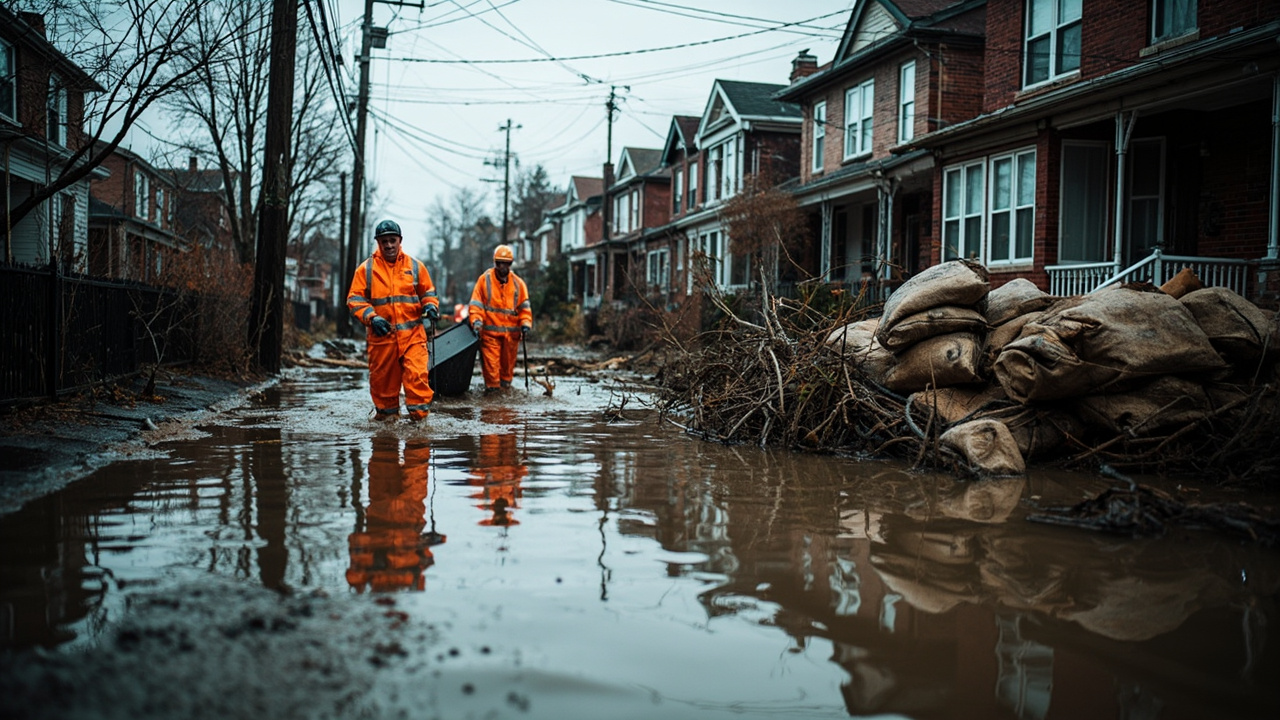
TL;DR: FEMA designation DR-4755-NY covers the September 28-30, 2023 New York severe storm and flooding, declared January 30, 2024, with $11,506,172.01 in Public Assistance and $2,673,103.09 in hazard mitigation obligated by May 19, 2026.
What DR-4755-NY Is
Federal records identify DR-4755-NY as New York Severe Storm and Flooding, according to the FEMA.gov disaster page titled DR-4755-NY.
The incident period listed for the designation is September 28, 2023 through September 30, 2023, according to the same FEMA.gov disaster page.
The declaration date listed for the designation is January 30, 2024, according to the same FEMA.gov disaster page.
The FEMA.gov disaster page provides recovery links for state and local resources, national recovery resources, social media, mobile app and text updates, and the Disaster Distress Helpline for 24/7 counseling.
Local information references on the page include the Incident Information System, the New York Office of the Governor, New York State and Local Referrals, and the State Emergency Management Office, according to the same FEMA.gov disaster page.
Households reviewing this archive should understand that federal aid under a major disaster is tied to named areas and programs, not to the statewide storm alone. The FEMA Individual Assistance Guide for Disaster Survivors published by GovFacts explains that the system activates only after the President issues a Major Disaster Declaration for specific areas at the request of a state governor.
That GovFacts guide states that assistance is not available until a county is officially named in a declaration that authorizes Individual Assistance.
Funding Obligated Under DR-4755-NY
The funding table on the FEMA.gov disaster page lists Emergency Work Categories A-B at $4,240,496.76 obligated, according to the FEMA.gov disaster page.
The same table lists Permanent Work Categories C-G at $6,789,415.36 obligated, according to the FEMA.gov disaster page.
Total Public Assistance grants obligated are listed as $11,506,172.01, according to the same FEMA.gov disaster page.
Hazard Mitigation Grant Program dollars obligated are listed as $2,673,103.09, according to the same FEMA.gov disaster page.
The funding figures carry a last-updated date of May 19, 2026, according to the same FEMA.gov disaster page.
For preparedness planning, the distinction matters because emergency work and permanent work support public facilities and systems, while household aid follows different rules. The GovFacts guide states that FEMA provides basic assistance, not full compensation for losses, and that programs are designed to supplement, not replace, other resources like insurance.
The same GovFacts guide states that FEMA assistance is not a substitute for insurance and cannot compensate for all losses.
It states that the goal is to meet basic, essential needs and help make a primary home safe, sanitary, and functional so residents can live there while long-term recovery continues.
It states that aid is not designed to return property to pre-disaster condition, and that average grant amounts are often modest because they cover essential costs not met by other means.
New June 9, 2026 Statewide Funding Release
On June 9, 2026, U.S. Senator Kirsten Gillibrand announced the release of $168,732,835 in long-delayed Federal Emergency Management Agency grants to New York State, according to the announcement titled Gillibrand Announces $168.7 Million in FEMA Funding For New York State.
The announcement describes the grants as disaster relief following Tropical Storm Fred, Hurricane Ida, the COVID-19 pandemic, and other severe weather events, according to the same Gillibrand announcement.
It states that some funds stem from disaster declarations dating as far back as 2013, according to the same Gillibrand announcement.
The announcement identifies Senator Gillibrand as a member of the Senate Appropriations Committee, according to the same Gillibrand announcement.
Within that statewide package, $834,760.22 was allocated to the New York State Division of Homeland Security and Emergency Services for costs related to management of Public Assistance grants under FEMA-DR-4755-NY for severe storm and flooding, according to the same Gillibrand announcement.
That management-cost award is one line in a longer project list that also includes older New York disasters. The list includes $136,118.27 for the Village of Mohawk for emergency electric power under FEMA-DR-4129-NY, according to the same Gillibrand announcement.
It includes $337,530.04 for the Village of Dexter for base, other, surface repair or replacement under FEMA-DR-4348-NY for flooding, according to the same Gillibrand announcement.
It includes $4,987,964.63 for the Village of Dolgeville for permanent repairs under FEMA-DR-4472-NY for severe storms, straight-line winds, and flooding, according to the same Gillibrand announcement.
It includes $375,816.00 for the Town of Cornwall for embankment repair or replacement under FEMA-DR-4723-NY for severe storms and flooding, according to the same Gillibrand announcement.
Larger Hurricane Ida awards in the same release include $7,447,392.48 for New York City Housing Authority residential building Leavitt in Queens, $9,378,812.60 for Watson Avenue in the Bronx, $17,605,545.89 for Fort Hamilton High School in Brooklyn, $5,726,180.29 for the New York Hall of Science in Queens, $14,595,812.37 for Latimer Gardens building and equipment in Queens, and $11,997,747.58 for Teller Avenue in the Bronx, according to the same Gillibrand announcement.
The release also lists $60,493,661.51 for the Jasper-Troupsburg Central School District in Steuben County for permanent repairs after the remnants of Tropical Storm Fred under FEMA-DR-4625-NY, where schools were significantly damaged by flash flooding, according to the same Gillibrand announcement.
It lists three Wyoming County COVID-19 awards of $293,525.47, $284,936.98, and $292,267.61 for emergency measures and contracted medical staffing under FEMA-DR-4480-NY, plus $1,055,557.75 for New York City emergency protective measures under the same COVID-19 declaration, according to the same Gillibrand announcement.
The announcement includes $31 million in federal funding for the New York State Division of Homeland Security and Emergency Services for state management costs related to Hurricane Ida, $1.9 million for COVID-19 relief in New York City and Wyoming County, and more than $40 million for the New York City Housing Authority, according to the same Gillibrand announcement.
Senator Gillibrand said:
“These dollars will help repair local infrastructure and prevent damage from future weather events and disasters in communities across the state.”
The announcement states that Senator Gillibrand’s office will continue to monitor distribution to ensure funds are delivered efficiently to impacted communities, according to the same Gillibrand announcement.
Why New York Flood Recovery Takes Years
New York has 20,190,196 residents and 62 counties and county equivalents, according to the PlainHazard compilation titled New York Natural Disasters (2026): #9 Nationally.
NOAA’s Storm Events Database records 56,795 storm events in New York since 1950, with 51,758 since 1996 when every event type began to be recorded, while the Storm Prediction Center counts 536 tornadoes in the state since 1950, according to the same PlainHazard compilation.
FEMA has made 118 declarations for New York since 1954, with 109 for natural hazards and 85 major disasters, according to the same PlainHazard compilation.
Floods and flash floods account for 6,836 records, with 2,434 in the last 10 years, 117 deaths, 50 injuries, and $5.3 billion in damage across 62 of 62 counties, according to the same PlainHazard compilation.
Severe thunderstorm wind events total 19,988 records, winter storm records total 13,456, and high wind and dust storms total 4,845, according to the same PlainHazard compilation.
The deadliest storm in the NOAA record for New York since 1950 is described as the December 23, 2022 blizzard, with 44 deaths and $15.6 million in damage in 2025 dollars across six records, according to the same PlainHazard compilation.
By law, FEMA cannot pay for expenses already covered by insurance or another program such as a state grant or charitable donation, according to the GovFacts Individual Assistance guide.
That guide states that applicants must file a claim with an insurance company before being considered for most types of FEMA assistance.
The Individuals and Households Program is described as the primary channel for aid to survivors, offering financial assistance and in some cases direct services for uninsured or under-insured necessary expenses and serious needs caused by a presidentially declared disaster, according to the same GovFacts guide.
The program is funded by the national Disaster Relief Fund and divided into Housing Assistance and Other Needs Assistance, according to the same GovFacts guide.
For fiscal year 2025, the maximum financial award for Housing Assistance is $43,600, and the maximum for Other Needs Assistance is also $43,600, with annual inflation adjustments, according to the same GovFacts guide.
Those amounts are maximums, not guarantees, and awards are based on specific, verified, and eligible disaster-caused needs, according to the same GovFacts guide.
Household Checklist Drawn From This Record
Residents should not assume past Public Assistance totals mean household aid remains open. Use the declaration number, incident dates, and county authorization when checking status.
FEMA Form 009-0-1 is the federal registration form used to apply for Individual Assistance after a presidentially declared disaster, according to the LegalClarity guide titled How to Fill Out a Natural Disaster Incident Form: FEMA Disaster Assistance.
Applications can be submitted online at DisasterAssistance.gov, by phone at 1-800-621-3362, or in person at a local Disaster Recovery Center, according to the same LegalClarity guide.
Applicants have 60 days from the date of the disaster declaration to apply, according to the same LegalClarity guide.
Before applying, the guide advises having a Social Security number, insurance policy numbers and coverage details, a plain-language description of damage, annual household income, contact information including a temporary address if displaced, and routing and account numbers for direct deposit, according to the same LegalClarity guide.
FEMA typically verifies ownership or occupancy through an automated public records search, and if no match is found may request a lease agreement, rent receipt, utility bill, or motor vehicle registration showing the damaged address, according to the same LegalClarity guide.
When records were destroyed, a signed written statement from a public official, tribal council member, or homeless outreach advocate with name, address, dates of occupancy, and contact information can substitute, according to the same LegalClarity guide.
Photographs of damage are not required to register, but they strengthen a case during inspection, according to the same LegalClarity guide.
The guide recommends taking clear photos of every damaged room, appliance, and structural element before repairs and keeping pre-disaster photos accessible when available, according to the same LegalClarity guide.
After registration, applicants receive a confirmation number to keep for every future interaction about the case, according to the same LegalClarity guide.
FEMA states a commitment to equal access without discrimination based on race, color, national origin, sex, age, disability, English proficiency, or economic status, and applicants who need disability accommodation or another language should inform FEMA when applying, according to the GovFacts Individual Assistance guide.
Sources referenced
- DR-4755-NY - FEMA.gov (https://www.fema.gov/disaster/4755)